
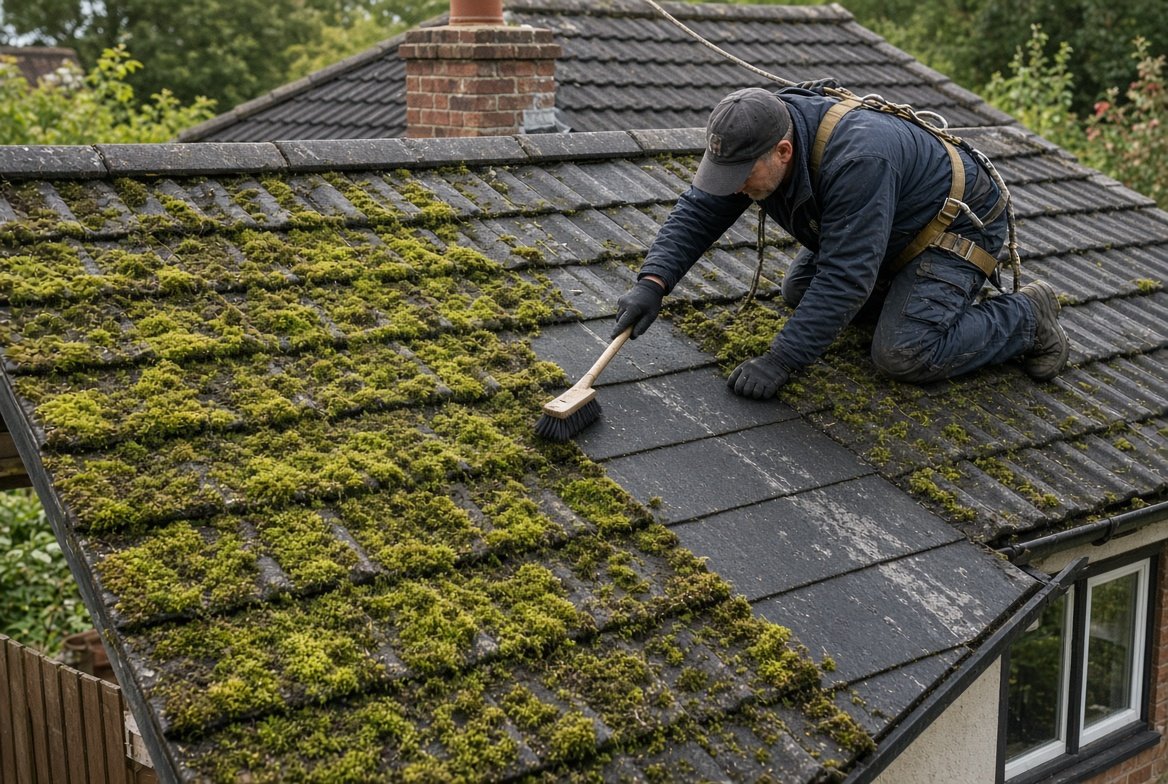
Moss on a roof is one of the most common maintenance problems in the UK. A little green on a north-facing slope is harmless, but thick cushions can hold water against tiles, block gutters and valleys and make the whole roof look neglected. The good news is that moss is easy to remove if you choose the right method and avoid the common mistakes. This guide explains why roof moss grows, how to remove it safely, what to use, what to avoid and how to stop it returning.
Why Does Moss Grow on Roofs?
Moss needs damp, shade and a surface it can grip. It thrives on north-facing slopes, roofs under trees, low-pitched roofs and rough, porous materials like concrete tiles. Debris such as leaves and dust gives it something to root in. Slate and glazed tiles are smoother and tend to collect less. Mild, wet UK winters mean moss can spread quickly if conditions are right.
Is Moss Actually Harmful?
Light moss is mostly cosmetic. Thick moss is different, because it can:
- Hold moisture against tiles for long periods, which in frost can contribute to surface damage.
- Block valleys, gutters and downpipes when pieces fall off, leading to overflow.
- Lift and trap the edges of tiles, letting water in at the laps.
- Add weight to an older or weaker roof, although this is rarely the main concern.
Removing it early is cheaper and gentler than waiting until it is deeply rooted. Our roof cleaning guide compares the wider cleaning methods and typical costs, including algae and lichen.
Want a number specific to your roof?
Get matched with local roofers for a free, no obligation quote.
Moss, Algae and Lichen: What Is the Difference?
- Moss: thick, green cushions that hold water and can lift tiles.
- Algae: dark streaks and staining, mainly cosmetic.
- Lichen: crusty, grey, orange or yellow patches that cling tightly and can be harder to remove.
Roof Moss Removal Methods Compared
| Method | Best for | Pros | Cons |
|---|---|---|---|
| Moss killer applied from the ground | Light to moderate moss | Low effort, no need to climb on the roof | Slow, moss needs to be cleared afterwards |
| Dry scraping or brushing by hand | Thick moss | Immediate result, no chemicals | Needs safe roof access, can damage tiles if done roughly |
| Soft washing with a biocide | Moss, algae and lichen together | Gentle, slows regrowth | Usually done by professionals |
| Pressure washing | Rarely suitable | Fast | Can strip tile surfaces, damage mortar and force water under tiles |
How to Remove Roof Moss Safely
This is a general guide for a low-risk roof, and the safest approach is always from the ground or from proper access equipment. Never climb onto a moss-covered roof without it.
- Choose the right day. Pick a dry, calm spell, ideally in spring or early autumn, and avoid frost and strong sun.
- Protect the area. Cover plants, ponds and cars if you are using a treatment, and keep pets away.
- Apply moss killer. Use a product made for roofs, follow the label for dilution and application, and spray evenly from the ground or a safe platform. Many contain quaternary ammonium compounds such as benzalkonium chloride, so read the label for safety and drainage advice.
- Wait for it to work. The moss usually turns brown or black over days or weeks, and rain gradually washes it away.
- Remove loose moss. Once it is dead and dry, a soft brush or plastic scraper from safe access can lift what remains. Work downwards from the ridge, not upwards against the overlap of the tiles, so you do not lift them.
- Clear the gutters. Moss debris ends up in the gutters and valleys. See our guide to gutter cleaning for a safe method.
- Check the roof afterwards. Look for cracked or slipped tiles and loose ridge mortar that the moss was hiding.
What to Avoid
- High pressure washing. It can wear away the surface of concrete tiles, making them rougher and more likely to grow moss again. Our guide to concrete roof tiles explains why the surface matters.
- Household bleach. It can harm plants, discolour surfaces and corrode metal flashings and gutters.
- Scraping wet moss with metal tools. This can chip or scratch the tiles.
- Walking on the roof. Tiles are fragile and slippery when mossy.
- Letting run-off reach ponds or drains. Biocides can harm wildlife, so follow the product label.
Check the Roof Afterwards
Moss can hide damage, so inspect the roof once it is clean. Slipped or cracked tiles can be replaced following our guide to how to replace roof tiles. Valleys and gutters that were choked with moss should be checked, as covered in our guide to roof valleys and guttering. Loose ridge mortar is also common, and our notes on dry ridge and ridge tiles show what a sound ridge looks like.
How to Prevent Moss Coming Back
- Trim overhanging branches to increase light and airflow.
- Keep the roof and gutters clear of leaves and debris.
- Apply a biocide treatment after cleaning to slow regrowth.
- Consider zinc or copper strips near the ridge. They release ions that discourage growth on the slope below, but results vary and they are not a complete solution.
- Repeat gentle cleaning every few years, rather than waiting for heavy growth.
- Improve ventilation if the loft is damp, since a warmer, drier roof surface dries faster. See our roof ventilation guide.
DIY or Professional?
A ground-based moss killer is a reasonable DIY job on most homes. Anything involving climbing on the roof, steep pitches, two storeys or fragile materials is better left to a professional with proper access, because falls from roofs and ladders cause serious injuries. Professional moss removal commonly costs several hundred pounds for a typical home and can pass £1,000 on larger roofs or where scaffolding is needed, as set out in our roof cleaning guide. Ask for an itemised quote and ask how they will avoid damaging the tiles.
Safety and Asbestos
Working at height is dangerous. Moss is slippery when wet, and tiles can crack underfoot. Use proper access equipment, work with another person nearby and never clean a roof in wet, icy or windy weather.
Asbestos warning. Older corrugated cement sheets, slates and similar roofing materials may contain asbestos. Do not scrub, scrape or pressure wash them, and get them identified by a competent surveyor before any work.
Frequently Asked Questions
Is moss on a roof bad?
Light moss is mostly cosmetic. Thick moss can hold water against the tiles, block gutters and valleys and contribute to frost damage, so it is worth removing.
What is the best way to remove moss from a roof?
A moss killer applied from the ground, followed by gentle brushing once the moss is dead, is the safest and gentlest DIY method. Soft washing by a professional is another good option.
Can I pressure wash moss off my roof?
It is not usually recommended. High pressure can damage tile surfaces and mortar and force water under the tiles.
How long does moss killer take to work?
Typically days to a few weeks, depending on the product, the weather and how thick the moss is. Follow the label.
Will moss come back?
Often, yes, especially on shaded or north-facing roofs. Trimming trees, keeping the roof clean and using a biocide treatment can slow regrowth.
Do zinc strips stop moss?
They can help discourage growth on the roof below them, but results vary and they work best alongside regular cleaning.
Final Thoughts
Moss is a normal part of owning a roof, and it is easy to manage when you act early. Use a gentle method, avoid high pressure washing and bleach, clear the gutters afterwards and check the roof for hidden damage. Stay off the roof unless you have proper access, and treat old cement sheets as asbestos until proven otherwise.
Get a professional assessment
If you are unsure how much life your current roof has left, a local roofer can give you an honest assessment as part of a free inspection. Browse vetted roofers through our roofer directory, or get a quick replacement estimate using our free cost calculator.