
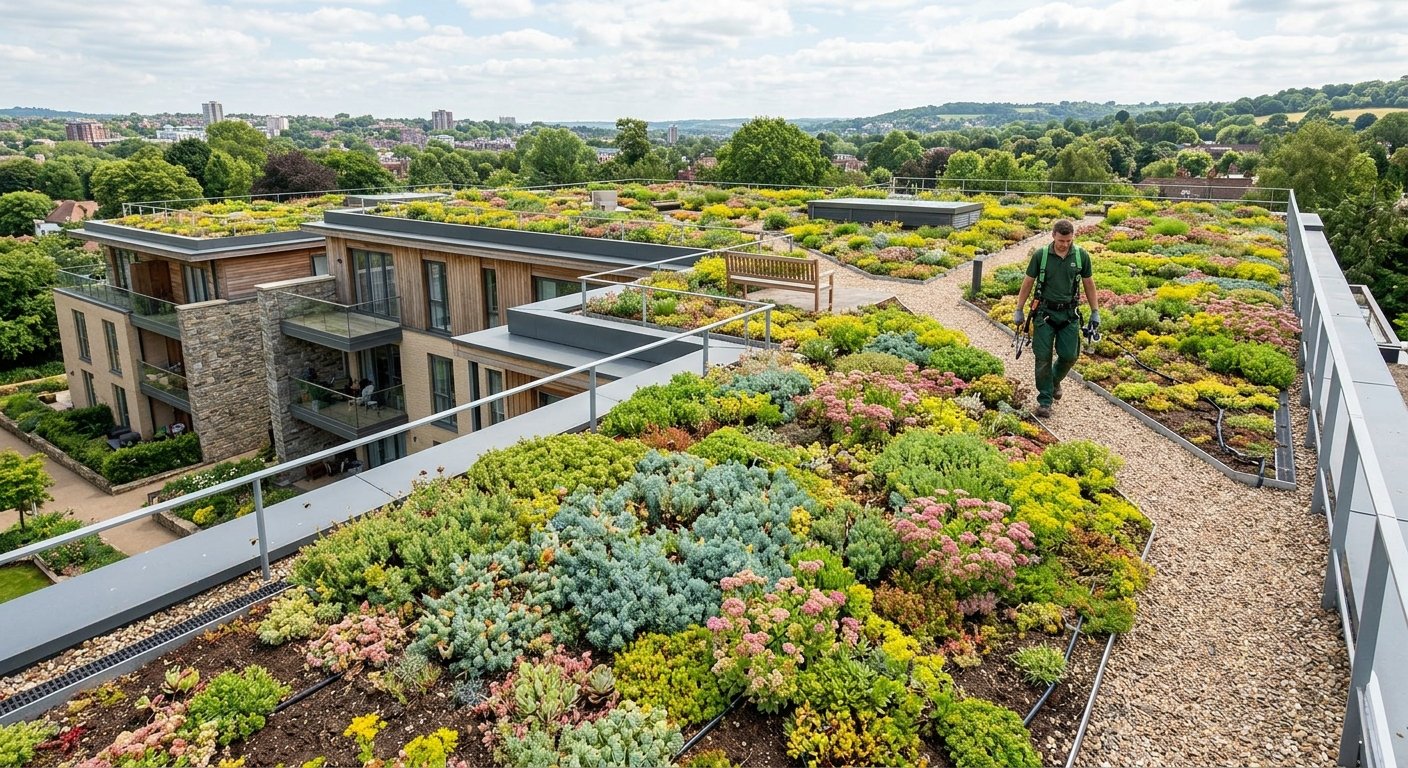
A green roof, often called a living roof, covers a roof with a layer of plants growing in a thin bed of substrate on top of a waterproof build-up. The classic UK version is a sedum roof, a low carpet of hardy succulents that turns from green to red and gold through the seasons. Green roofs help manage rainwater, add habitat for insects and birds and can make a plain flat roof far more attractive. They also add weight, need the right waterproofing and cost more than a standard covering. This guide explains the types of green roof, how they are built, the structure they need, typical UK costs, maintenance and planning rules.
What Is a Green Roof?
A green roof is a layered system. From the structure upwards it normally includes a roof deck, optional insulation, a root-resistant waterproof layer, a drainage or protection layer, a filter fleece, a growing medium called substrate and the planting. The plants live on the surface, while the waterproofing underneath does the real work of keeping the building dry. Green roofs are most often built on flat or low-pitched roofs, such as extensions, garages, garden rooms and sheds, and they are increasingly specified on new buildings.
Types of Green Roof
| Type | Description | Typical saturated weight | Maintenance |
|---|---|---|---|
| Extensive sedum roof | Shallow substrate, hardy sedum blanket or plugs | Roughly 60 to 150 kg/m² | Low, a few visits a year |
| Biodiverse or wildflower roof | Deeper, varied substrate with wildflowers and grasses | Often at the upper end of extensive loads | Low to moderate |
| Intensive roof garden | Deep soil with lawns, shrubs and sometimes trees | Roughly 200 to 500+ kg/m² | High, like a garden |
| Brown roof | Substrate left to colonise naturally | Similar to extensive | Very low |
Weights vary a lot between systems and suppliers, so use the manufacturer’s figure for the build-up you choose. Thin pre-grown sedum blankets can be much lighter than a deeper, seeded system.
How a Green Roof Is Built
- Roof deck. A sound structure, designed or checked for the extra load, and laid to a fall so water drains.
- Insulation. Usually a warm roof, with insulation above the deck and below the waterproofing, as described in our guide to warm roof construction.
- Waterproofing with root resistance. The membrane must resist roots, either as a root-resistant product or with a separate root barrier. See our guide to roof membranes and our article on single ply membrane roofing.
- Protection and drainage layer. A fleece or drainage board protects the membrane and lets excess water escape while holding some in reserve for the plants.
- Filter fleece. Stops fine substrate washing into the drainage layer.
- Substrate. A lightweight growing medium, usually 40 to 150 mm deep on extensive roofs.
- Planting. Pre-grown sedum blanket, plug plants, cuttings or seed, depending on the system.
Outlets and edges need special detailing, with clear zones and gravel strips so that drains stay accessible. Our guide to the roof gully explains why flat roof outlets must stay clear.
Want a number specific to your roof?
Get matched with local roofers for a free, no obligation quote.
Benefits of a Green Roof
- Rainwater management. The substrate and plants hold water and slow runoff, which can reduce pressure on drains.
- Biodiversity. Sedum and wildflowers support bees, butterflies and other insects, and some systems attract birds.
- Appearance. A green roof can soften an extension and make a flat roof look attractive from upper windows.
- Roof protection. The layers shield the waterproofing from sunlight and temperature swings, which can extend its life if installed correctly.
- Some insulation and cooling effect. Substrate adds a little thermal mass, though it does not replace proper insulation.
Drawbacks and Risks
- Weight. The roof structure must carry the saturated weight plus snow and maintenance loads.
- Cost. A green roof costs more than a standard flat roof covering.
- Waterproofing risk. A leak under a green roof is harder to find, so quality of installation matters.
- Maintenance. Even low-maintenance roofs need weeding, checking outlets and some watering in dry spells.
- Not suitable everywhere. Very steep roofs, weak structures and fragile roofs such as old cement sheets are not good candidates.
Weight and Structure
The structure is the most important question on any existing building. As a general guide, a saturated extensive sedum roof loads the structure at around 60 to 150 kg per square metre, while an intensive roof garden can be several times more. Most well-built new flat roofs and garden room decks can be designed for the lighter systems, but many older flat roofs cannot carry the extra weight without strengthening. The roof also needs to carry normal snow and maintenance loads on top. Always ask a structural engineer to confirm the roof can take the load before you order materials. Wet substrate is heavy, and a roof that has not been checked can sag or fail.
Green Roofs on Pitched Roofs
Green roofs are mainly for flat and low-pitched roofs. On pitched roofs, the substrate must be held in place, and many systems need battens, restraints and edge retention, with extra measures required as the slope increases. Pitches above about 10 degrees are often quoted as needing special anti-slip detailing, and steeper roofs call for specialist systems. If you are considering a pitched roof, ask the system supplier for specific advice on your pitch. Our overview of roof extension types shows which shapes are best suited to planting, and the butterfly roof guide covers a shape that is sometimes designed with planting in mind.
Green Roof Cost in the UK
Costs vary with the system, the roof area, access, structural work and region, and sources differ, so treat the figures below as general guides based on 2026 UK price guides.
| Type | Typical cost per m² (supplied and fitted) | Notes |
|---|---|---|
| Shed or outbuilding sedum roof | Roughly £40 to £85 | Small, simple roofs, often DIY-friendly |
| Basic extensive sedum roof | Roughly £60 to £120 | Includes drainage, substrate and planting |
| Enhanced biodiversity roof | Roughly £120 to £160 | More plant species and deeper substrate |
| Intensive roof garden | Roughly £120 to £250 or more | Heavier, needs engineering and irrigation |
The green layer is only part of the bill. The waterproofing, insulation, any structural strengthening, access and edge details can add significantly, and structural works can exceed the cost of the planting itself. Ask for an itemised quote that shows each layer, and compare it with the cost of a standard roof from our flat roof materials guide so you know the premium.
Maintenance
- First one to two years: new planting needs watering in dry spells and weeding while it establishes.
- Once or twice a year: remove weeds and unwanted seedlings, check edges and outlets, and clear leaves.
- Keep outlets clear: blocked drains cause waterlogging and can damage the membrane.
- Check for dead patches: fill with cuttings or plugs, particularly after a dry summer.
- Avoid walking on the planting: use stepping stones or paths for access.
- Keep fire breaks clear: keep gravel strips around edges and penetrations free of vegetation.
Planning and Building Regulations
Adding a green roof to a flat roof often does not need planning permission on its own, but it can be needed on listed buildings, in conservation areas and where the roof is used as a terrace or garden. Building regulations apply to structural loads, fire safety and insulation, so check with building control, and note that Scotland, Wales and Northern Ireland have their own systems. The Planning Portal explains the planning rules in England. Some local authorities encourage or require green roofs on new developments.
DIY or Professional?
Small sheds, bin stores and bike shelters with a pre-grown sedum blanket or tray system can be a manageable DIY job if the structure is sound and the waterproofing is suitable. House extensions, garden rooms with a long-term waterproofing guarantee and anything involving heights, heavy loads or complex details are better left to a specialist. Make sure any existing waterproofing is compatible and has a root-resistant layer, and ask whether the guarantee covers the roof under planting.
Safety and Asbestos
Working at height is dangerous. Lifting heavy substrate and plant trays onto a roof needs safe access and careful handling, and edge protection is important on any flat roof.
Fragile roofs. Do not install a green roof on old cement sheets or rooflight panels. They cannot take the weight and can break underfoot.
Asbestos warning. Old garages and outbuildings may have corrugated cement roof sheets containing asbestos. Do not drill, break or cover over them without advice, and get them identified by a competent surveyor first.
Frequently Asked Questions
How much does a green roof cost?
As a general guide, roughly £60 to £120 per square metre for a basic sedum roof and £120 to £250 or more for intensive systems, plus any structural or waterproofing work.
How heavy is a green roof?
An extensive sedum roof typically weighs about 60 to 150 kg per square metre when saturated, but it varies by system. Always confirm the figure with the supplier and a structural engineer.
Do green roofs leak?
A well-installed green roof with a root-resistant membrane should not leak, but leaks are harder to find, so installation quality and a leak-tested membrane matter.
What is the difference between a sedum roof and a green roof?
A sedum roof is one type of green roof, using hardy succulent plants in a shallow substrate. Other green roofs use wildflowers, grasses or deeper planting.
Does a green roof need planning permission?
Often not on its own, but it may be needed on listed buildings, in conservation areas or where the roof is used as a garden or terrace. Check with your local planning authority.
Can I put a green roof on my shed?
Often yes, if the frame can carry the weight. Use a lightweight sedum blanket or tray system, check the structure and make sure the waterproofing is suitable.
Final Thoughts
A green roof can be a rewarding way to manage rainwater, support wildlife and improve the look of a flat roof, as long as the structure and waterproofing are right. Start with an engineer’s check, choose a root-resistant membrane, budget for the whole build-up, not just the plants, and plan for light, regular maintenance. Stay off fragile roofs, and treat old cement sheets as asbestos until proven otherwise.
Get a professional assessment
If you are unsure how much life your current roof has left, a local roofer can give you an honest assessment as part of a free inspection. Browse vetted roofers through our roofer directory, or get a quick replacement estimate using our free cost calculator.