
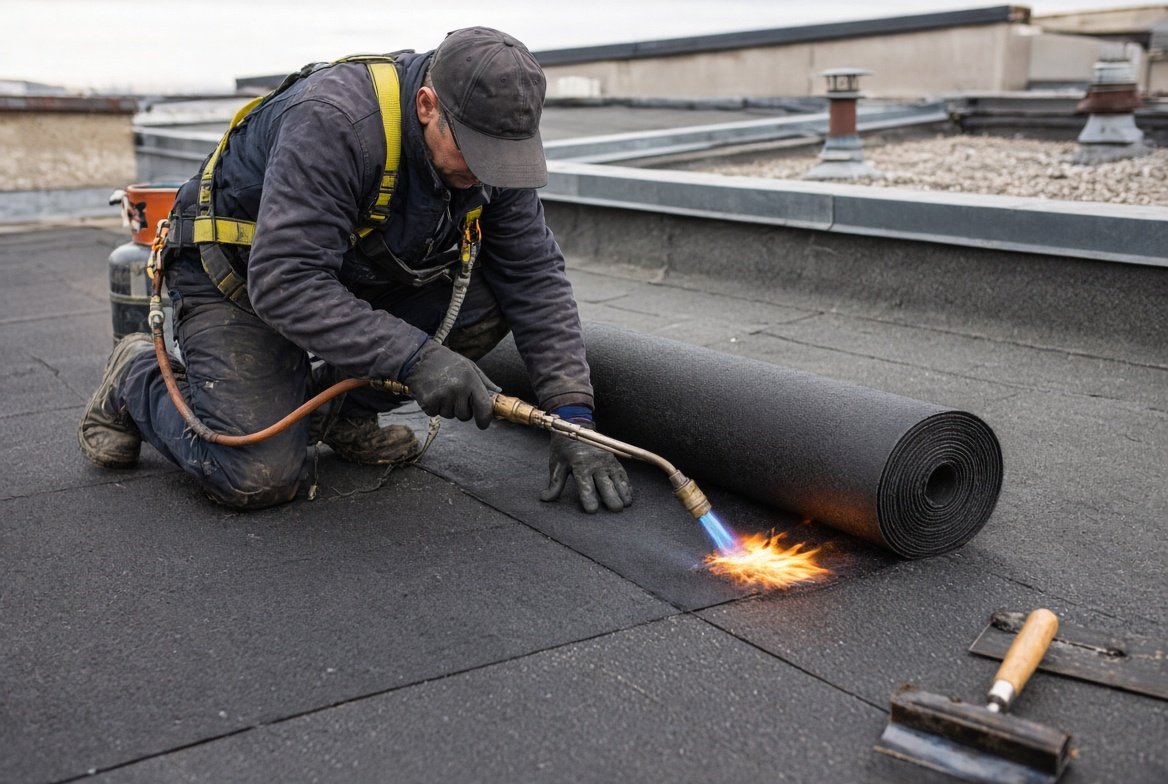
Torch on felt is one of the most common flat roof coverings in the UK. It is a bitumen-based waterproof membrane that is heat-bonded to the roof using a gas torch. When it is fitted well, it gives a tough, long-lasting surface that suits both small extensions and large commercial roofs.
This guide explains what torch on felt is, how it is installed, how long it lasts, and what to think about before you choose it. If you are still comparing options, our flat roof guide covers the other main systems.
What Is Torch on Felt?
Torch on felt is a type of roofing membrane made from bitumen reinforced with a polyester or glass fibre core. The underside of the sheet is coated in bitumen. A roofer uses a propane torch to heat the underside until the bitumen softens, then rolls the sheet out so it bonds to the surface below.
Modern torch-on sheets are normally modified with polymers. The two common types are:
Want a number specific to your roof?
Get matched with local roofers for a free, no obligation quote.
- SBS (elastomeric): flexible and good at coping with movement and temperature changes.
- APP (plastomeric): firmer and more resistant to heat and UV, often used on cap sheets.
This is different from the underlay used beneath roof tiles. If you are looking for that product, see our guide to roof felt and underlay.
How Torch on Felt Is Installed
A good installation is the biggest factor in how long the roof lasts. The usual steps are:
- Prepare the deck. The roof deck, usually timber boards or plywood, must be clean, dry, sound and laid to the correct fall.
- Fit the vapour control layer and insulation. Most flat roofs today are built as warm roofs, with insulation above the deck. See our guide to warm roof construction for how the layers go together.
- Lay the base layer. The first layer is bonded or mechanically fixed, depending on the system.
- Apply the cap sheet. The top layer, often with a mineral finish, is torched on with overlaps at the joints.
- Detail the edges. Upstands, drips, gutters and penetrations such as rooflights are finished with extra pieces of membrane or flashings.
Most good systems use at least two layers. Some higher-specification roofs use three. A single layer of torch-on is not recommended for most roofs, because there is little margin for error.
Advantages of Torch on Felt
- Proven and durable. Torch-on has been used for decades and performs well when installed properly.
- Good value. It is usually cheaper than systems such as EPDM or GRP for larger roofs, though prices vary with specification.
- Suits awkward shapes. The sheets can be cut and shaped around upstands, pipes and corners.
- Easy to repair. A damaged area can often be patched rather than replacing the whole roof.
- Wide choice of finishes. Mineral cap sheets protect the surface from sunlight and come in several colours.
Disadvantages of Torch on Felt
- Naked flame. The installation uses an open flame next to combustible materials, which is the main safety risk.
- Skill dependent. Overheating or underheating the sheet weakens the bond. Poor laps are a common cause of early failure.
- Not a DIY job. Because of the fire risk, it should be fitted by a trained roofer.
- Seams are weak points. Unlike a one-piece liquid or rubber membrane, torch-on has overlaps that must be bonded perfectly.
- Cheap products age poorly. Low-grade felts can crack, blister or split, especially on a poorly ventilated or badly insulated roof.
Fire Safety and Torch-On Work
Roofing fires caused by torch-on work are rare when the right precautions are taken, but they can be serious. A competent roofer will check for gaps and voids where heat could travel, keep fire extinguishers on the roof, and stay on site after the work to check for smouldering. Ask whether the contractor follows recognised trade guidance. The National Federation of Roofing Contractors (NFRC) publishes safety guidance for torch-on work and lists member contractors.
Also check that your insurance covers hot works. Some policies place conditions on this kind of work, so it is worth asking the contractor and your insurer before work starts.
How Long Does a Torch on Felt Roof Last?
The lifespan depends on the quality of the materials, the number of layers, the installation and how well the roof is maintained. As a general guide, a good-quality system fitted by a competent roofer can last around 15 to 25 years, and sometimes longer. Cheaper, single-layer or poorly detailed roofs may fail much sooner.
Roofs fail early for a few common reasons: water ponding on the surface, damage from foot traffic, poorly sealed edges and upstands, and blocked outlets. Regular checks go a long way towards avoiding all of these.
Flat Roof Fall and Drainage
Every flat roof needs a slight slope so that water runs off instead of sitting on the surface. As a general guide, designers aim for a fall of around 1 in 40, though the finished fall will be slightly less once the roof is built. A roof that holds standing water will age much faster. If you want to understand how slope is measured, try our roof pitch calculator.
Upstands, Flashing and Details
Most leaks on a torch-on roof start at the details rather than the main surface. Walls, chimneys, rooflight kerbs and pipes all need upstands and proper flashing. For the basics, read our guide to roof flashing. When you get quotes, check that the roofer has described how each of these details will be finished.
Maintaining a Torch on Felt Roof
Torch-on roofs are fairly low maintenance, but a short check twice a year can save you a lot of money. Look for:
- Blisters, splits or cracks in the surface.
- Lifted laps or seams.
- Standing water more than 48 hours after rain.
- Missing or worn mineral chippings.
- Blocked outlets, gutters or debris such as leaves.
- Moss or vegetation growing on the surface.
Keep foot traffic to a minimum and avoid walking on the roof when it is very hot, as the surface softens. Small problems can often be repaired quickly. If you already have a leak, our guide on how to fix a leaking roof will help you find the source.
What to Check Before You Hire a Roofer
- How many layers will be installed, and which product will be used?
- Is the roof being built as a warm roof, with insulation above the deck?
- How will the fall, edges, upstands and outlets be finished?
- Is the roofer trained in torch-on work, and is it covered by their insurance?
- What guarantee is offered, and does it cover the materials, the labour or both?
Get at least three written quotes, and compare them on specification as well as price. Our article on reading a roofing quote shows what a clear quote should include.
Frequently Asked Questions
What is torch on felt?
Torch on felt is a bitumen roofing membrane that is bonded to a roof by heating the underside with a gas torch. It is widely used on flat roofs.
How long does torch on felt last?
A good-quality, properly installed system can last about 15 to 25 years or more. Cheaper or poorly fitted roofs often fail sooner.
Is torch on felt a good flat roof covering?
Yes, when it is installed in at least two layers by a trained roofer. It is a proven, cost-effective option, but quality of workmanship matters more than the product alone.
Can I fit torch on felt myself?
It is not recommended. The open flame creates a real fire risk, and mistakes in the bonding or laps can cause leaks later. Use a trained contractor.
What is the difference between torch on felt and EPDM?
Torch on felt is a bitumen product bonded with heat, in overlapping sheets. EPDM is a rubber membrane, usually supplied in a single large sheet and fixed with adhesive, which means fewer seams.
Final Thoughts
Torch on felt remains a dependable choice for flat roofs, particularly on larger or awkward roofs where cost matters. The quality of the installation, the number of layers and the care taken at the edges make more difference than the brand name. Ask questions, compare written specifications and keep up with simple checks once the roof is in place.
Get a professional assessment
If you are unsure how much life your current roof has left, a local roofer can give you an honest assessment as part of a free inspection. Browse vetted roofers through our roofer directory, or get a quick replacement estimate using our free cost calculator.