
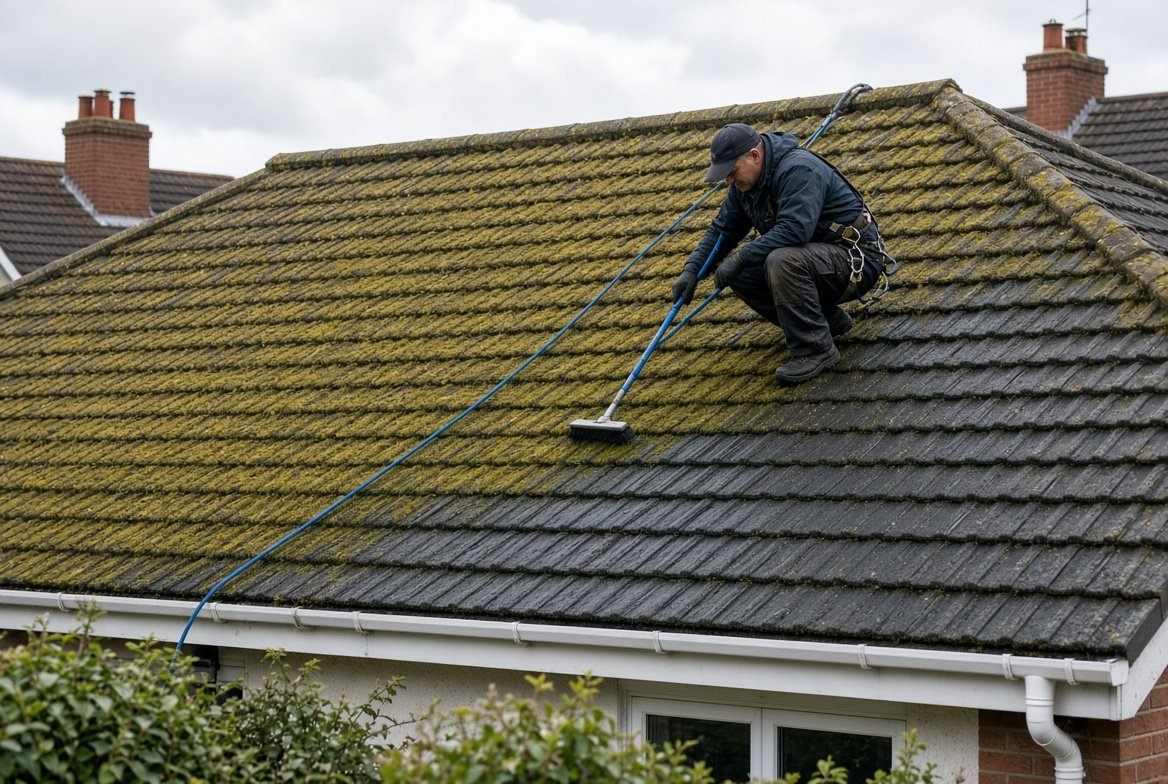
Green moss, black algae streaks and orange lichen make a roof look tired, and many homeowners wonder whether paying for a roof clean is worth it. The answer depends on what is growing, what your roof is made of and how it is cleaned. Done gently, cleaning can improve the look of a roof and keep gutters clear. Done badly, it can strip tiles, force water under the covering and shorten the roof’s life. This guide covers why roofs get dirty, the main cleaning methods, typical UK costs, DIY risks and how to choose a cleaner.
Why Roofs Get Dirty
Moss, algae and lichen grow where roofs stay damp and shaded: north-facing slopes, roofs under trees and roofs with a low pitch or rough surface. Concrete tiles are porous and tend to hold moisture, so they pick up growth more readily than smooth slate or glazed tiles. Algae mostly causes dark staining, while moss forms thick cushions that hold water against the surface and can drop debris into gutters.
Is Roof Cleaning Worth It?
Light staining is mainly cosmetic, and removing it is a choice rather than a necessity. Thick moss is different. It can keep tiles wet for long periods, block valleys and gutters and, in frosty weather, contribute to surface damage on tiles. Cleaning can also help you spot cracked tiles, slipped ridge mortar and worn flashing before they cause a leak. Bear in mind that growth usually returns, often within a few years, unless the conditions that encouraged it change or a treatment is applied afterwards.
Roof Cleaning Methods Compared
| Method | How it works | Pros | Cons |
|---|---|---|---|
| Manual scraping and brushing | Moss is lifted off by hand or with soft brushes | Gentle on most tiles, removes thick moss | Slow, labour intensive, needs safe roof access |
| Soft washing with a biocide | Low pressure cleaning solution kills moss, algae and lichen | Widely recommended, can be done from the ground, slower regrowth | Results appear over days or weeks, run-off needs managing |
| Pressure washing | High pressure water jet blasts growth off | Fast, visible result | Can strip tile surfaces, damage mortar and force water under tiles |
| Steam cleaning | Hot, low pressure steam loosens growth | Chemical-free option for some roofs | Slower, specialist equipment, can cost more |
Many roofers advise against high pressure washing on most UK roofs. Concrete tiles in particular have a surface layer that can be worn away, which makes them more porous and more likely to grow moss again. Our guide to concrete roof tiles explains how they are made and why the surface matters, while natural slate is harder wearing but can still be damaged if it is walked on or blasted, as covered in our slate roof guide.
Want a number specific to your roof?
Get matched with local roofers for a free, no obligation quote.
Roof Cleaning Cost in the UK
Prices vary widely with roof size, pitch, access, how much growth there is and the method used, and different UK price guides give different figures. As a general guide for 2026, professional cleaning commonly works out at roughly £6 to £14 per square metre, and the totals below are wide ranges for cleaning only. London and the South East are often higher.
| Property | Typical roof area | Typical cost range |
|---|---|---|
| Small terrace or bungalow | About 50 to 65 m² | About £350 to £700 |
| 3-bed semi-detached | About 70 to 110 m² | About £400 to £1,200 |
| Detached house | About 110 m² or more | About £700 to £1,800 or more |
Scaffolding, if it is needed for safe access, can add substantially to the bill. Gutter cleaning, biocide treatment, repairs to broken tiles and rubbish removal are often extras, so ask for an itemised quote. If you only need the gutters cleared, see our guide to gutter cleaning, which has its own cost ranges.
Can You Clean a Roof Yourself?
A ground-based approach, such as spraying a roof treatment from a garden sprayer and letting it work, carries the least risk. Anything that involves climbing onto the roof is much more dangerous, because moss makes tiles slippery and damaged tiles can crack underfoot.
Working at height is dangerous. Falls from roofs and ladders cause serious injuries every year. Never walk on a roof without proper access equipment, never work alone and never clean a roof in wet, icy or windy weather. If your roof is steep, high or difficult to reach, use a professional with scaffolding or a safe access platform.
Asbestos warning. Older corrugated cement sheets, slates, soffits and similar materials may contain asbestos. Never pressure wash, brush or scrape them, because it can release harmful fibres. If you are unsure what your roof is made from, get it checked by a competent surveyor first.
Preparing for a Roof Clean
- Check the roof condition first. Cracked tiles and failing ridge mortar can leak once cleaned, and our guide to how to replace roof tiles explains simple repairs.
- Clear gutters either side of the job, since loosened moss often ends up there.
- Cover or protect plants, ponds and cars if a biocide is being used.
- Choose a dry, mild spell, usually in spring or early autumn. Avoid frost.
What to Check After Cleaning
Once the roof is clean, look closely at the ridge and hip tiles, because loose mortar is common, and our guide to dry ridge and ridge tiles shows what a sound ridge looks like. Check lead flashing around chimneys and walls, which our lead flashing guide covers, and look for any slipped or broken tiles that the moss was hiding.
How to Stop Growth Coming Back
- Trim overhanging branches to let light and wind dry the roof.
- Keep gutters and valleys clear, so water does not sit against the tiles.
- Ask the cleaner about a biocide treatment that slows regrowth.
- Consider metal strips near the ridge. Some owners find them helpful, though results vary.
- Repeat cleaning gently every few years, rather than waiting for heavy growth.
How to Choose a Roof Cleaner
- Ask which method they use and why. Be wary of anyone who relies on high pressure washing for tiles.
- Check they have public liability insurance and safe access, rather than climbing on a bare roof.
- Get a written, itemised quote and compare at least three.
- Ask what happens to the run-off and how plants and drains are protected.
- Be cautious of door-to-door callers who claim to have spotted urgent problems from the road.
Frequently Asked Questions
How often should a roof be cleaned?
It depends on the roof and its surroundings. Some roofs only need cleaning every few years, while shaded roofs may need it more often.
Is pressure washing a roof a good idea?
It is not usually recommended. High pressure can strip tile surfaces, damage mortar and push water under the covering.
How much does roof cleaning cost?
As a general guide, roughly £350 to £1,200 for a typical home, depending on size, access and method, with detached houses and scaffold jobs costing more.
Does moss damage a roof?
Light moss is mostly cosmetic, but thick moss can hold moisture, block gutters and valleys and contribute to frost damage.
Can I clean my roof myself?
Ground-based treatments can be done safely, but climbing onto a roof is risky. For anything high, steep or with an unknown material, hire a professional.
Will roof cleaning cause leaks?
Gentle cleaning should not, but it can reveal cracked or slipped tiles that were hidden by moss. Check the roof afterwards and repair any damage promptly.
Final Thoughts
Roof cleaning is worth doing when growth is heavy or blocking drainage, and it is best done gently by soft washing or careful hand removal. Avoid high pressure washing, get an itemised quote and check the roof afterwards. If you suspect asbestos, do not touch the roof and get it identified first.
Get a professional assessment
If you are unsure how much life your current roof has left, a local roofer can give you an honest assessment as part of a free inspection. Browse vetted roofers through our roofer directory, or get a quick replacement estimate using our free cost calculator.