
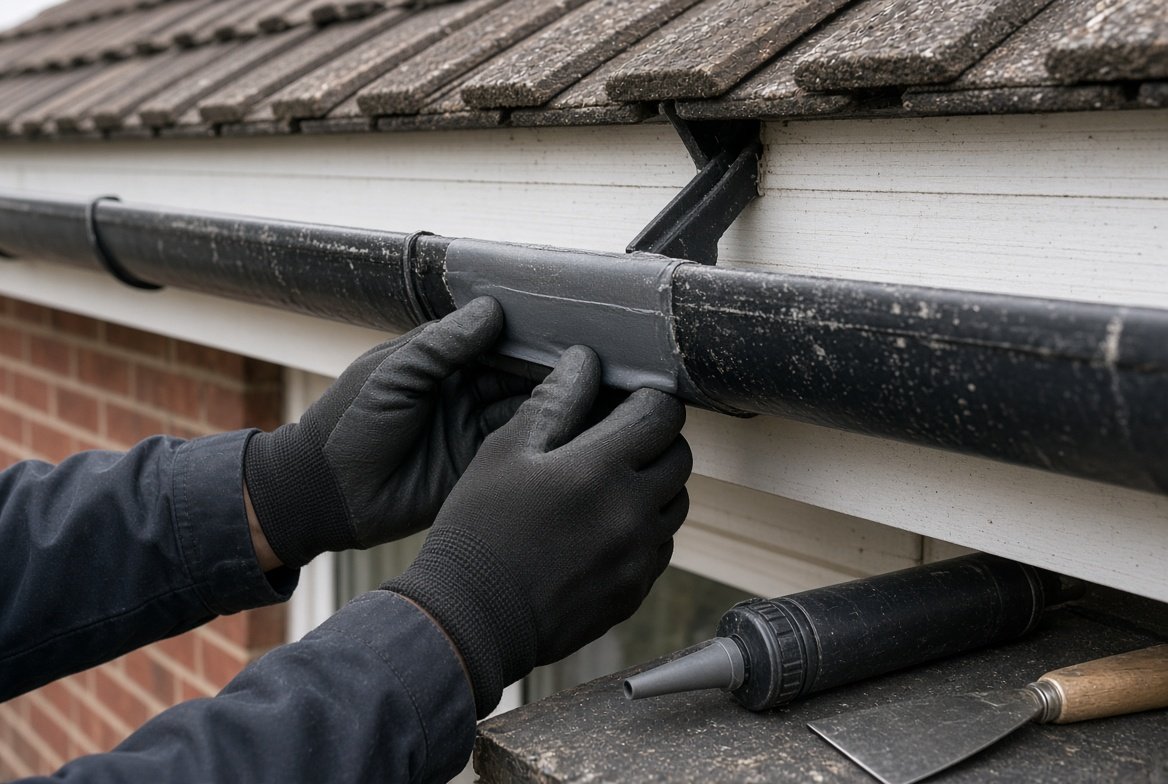
A leaking gutter rarely stays a small problem. Water that drips from a joint or spills over a sagging run soaks the fascia, stains the wall and can end up at the foundations. The good news is that many gutter faults are cheap to fix, and a few hours with a ladder, a tube of sealant and a screwdriver can solve most of them. This guide explains the common gutter problems, how to find the source of a leak, how to repair joints, sagging runs and cracks, which gutter sealant to use and when it is better to replace the gutter instead.
Common Gutter Problems and Fixes
| Problem | Likely cause | Typical fix |
|---|---|---|
| Dripping at a joint | Perished seal or gasket, movement, dirt in the joint | Clean, reseal or replace the joint gasket |
| Sagging gutter | Missing or loose brackets, weight of debris | Add or refit brackets and restore the fall |
| Water spilling over the front | Blockage, wrong fall or undersized gutter | Clean out, adjust the fall or upgrade the size |
| Crack or hole | Frost damage, impact, old brittle plastic or rust | Patch as a short-term fix or replace the section |
| Leak at the downpipe outlet | Poorly seated outlet, blocked downpipe | Clear the downpipe, reseat and seal the outlet |
| Rust on iron or steel gutters | Failed paint, standing water | Remove rust, treat and repaint, or replace if rusted through |
Safety First
Working at height is dangerous. Falls from ladders cause serious injuries every year. Use a stable ladder with a stand-off so it does not rest on the gutter, keep three points of contact and never overreach. If the gutter is above the first floor or access is awkward, hire a professional with a tower or scaffold.
Asbestos warning. Older gutters, downpipes and soffits may be made of asbestos cement, especially on buildings from the mid-20th century. If the gutter is grey, heavy and brittle, do not drill, cut, scrub or sand it. Get it identified by a competent surveyor and read the HSE asbestos guidance.
How to Find the Source of a Gutter Leak
- Look during rain. Note exactly where water drips, overflows or runs down the wall.
- Run a hose test. Clean the gutter first, then run water slowly from the high end and watch each joint and the outlet.
- Check the fall. Standing water in the channel means it is not draining to the outlet.
- Check the brackets and fascia. Loose brackets, rotten fascia boards or bent clips can all cause sagging. Our guide to fascia boards shows what to look for behind the gutter.
- Look at the roof edge. Sometimes the water is coming from the roof, not the gutter. An eaves tray that is missing or misplaced can let water behind the gutter.
Tools and Materials
- A stable ladder with a stand-off, gloves and eye protection.
- Gutter sealant suited to the material, a sealant gun and a cloth.
- Replacement seals, gaskets, brackets or union clips to match your system.
- A scoop, small brush and a hose for cleaning.
- A drill driver, screws and a spirit level.
- Repair tape or a patch kit for temporary fixes.
How to Fix a Leaking Gutter Joint
- Clean the gutter. Scoop out debris and silt, because dirt in the joint stops the seal working. Our guide to gutter cleaning explains a safe method.
- Dry the joint. Wipe it clean and let it dry fully.
- Check the gasket. On many plastic systems the seal is a rubber gasket inside the joint. If it is perished, replace it. Resealing a bad gasket often fails.
- Reseat the clip. Unclip the joint, refit it squarely and snap it shut.
- Apply gutter sealant. Where the system uses sealant, apply a neat bead to the inside of the joint, press it together and wipe away the excess.
- Let it cure. Keep the joint dry for the time shown on the product, then test with a hose.
Choosing a Gutter Sealant
Use a sealant made for gutters and compatible with the material. Silicone and hybrid polymer products are commonly used on plastic and aluminium gutters, while cast iron and steel often use a bitumen-based or mastic sealant. Check the label for compatibility, temperature limits and curing time, and apply it only to a clean, dry surface. Our guide to roof coatings and sealants explains the different types in more detail. Sealant is a repair for small gaps and aged joints, not a fix for a cracked, warped or badly misaligned gutter.
Want a number specific to your roof?
Get matched with local roofers for a free, no obligation quote.
How to Fix a Sagging Gutter
- Clear the gutter. The weight of wet debris makes sagging worse.
- Check the brackets. Tighten any loose screws and replace bent or broken brackets. Brackets are commonly spaced about one metre apart on plastic systems, though the manufacturer’s guidance matters.
- Check the fixings. If the screws are loose in rotten timber, the fascia may need repairing first.
- Restore the fall. The gutter should slope slightly towards the outlet so water drains. Adjust the brackets and test with water.
- Add extra brackets. Add one where the gutter dips, especially near corners and joints.
How to Patch a Crack or Hole
For a small crack or hole in a plastic or metal gutter, clean and dry the area, then apply a repair tape or patch designed for gutters and press it firmly. This is usually a short-term fix. On rusted metal, wire brush the area, treat the rust, apply a primer and coat, and consider a patch, but if the metal is rusted through in several places, replacement is usually better. For cast iron, repainting the inside with a suitable bitumen or rust-inhibiting paint can extend its life.
Cast Iron and Older Gutters
Cast iron gutters are bolted at the joints and sealed with putty or sealant. Leaks are often fixed by taking the joint apart, cleaning it, applying fresh sealant and refitting the bolts. Heavy sections need two people and strong brackets. If you are unsure of the material, see our guide to types of guttering.
When to Replace Instead of Repair
- Several joints are leaking or sealant keeps failing.
- Plastic gutters are cracked, brittle or badly faded.
- Metal gutters are rusted through.
- The gutter has lost its fall and will not hold position.
- The fascia behind is rotten and needs renewing.
- The gutter is too small for the roof and overflows in normal rain.
Valley and bonding gutters are different, because they are built into the roof and are not simply fixed to the fascia. See our guides to roof valleys and guttering for how they work.
Gutter Repair Cost
Small DIY repairs cost little beyond sealant, brackets and your time. If you hire a professional, a simple call-out repair is usually modest compared with replacement, while replacing a run costs more. As a general guide, fitted uPVC guttering often costs roughly £15 to £50 per metre, with metal systems costing more, depending on access and whether scaffolding is needed, and quotes vary widely by region. Ask for an itemised quote and check whether it includes brackets, downpipes and waste removal.
How to Prevent Gutter Problems
- Clean gutters at least twice a year, in spring and autumn.
- Check brackets and joints after storms.
- Trim overhanging branches.
- Look for early signs, such as stains on the wall or green streaks under joints.
- Repaint metal gutters before rust takes hold.
Frequently Asked Questions
How do I stop a gutter leaking at the joint?
Clean and dry the joint, replace the gasket if it has perished, refit the clip and apply a suitable gutter sealant if the system uses one.
What sealant should I use on gutters?
Use one made for gutters and compatible with the material, such as silicone or hybrid polymer for plastic and aluminium, or bitumen-based for some cast iron and steel gutters. Check the label.
Why is my gutter sagging?
Usually loose or missing brackets, rotten fascia or the weight of debris. Clear it, refit or add brackets and restore the fall.
Can I repair a cracked plastic gutter?
A patch or repair tape can work as a short-term fix. A cracked or brittle section is usually better replaced.
Is it worth repairing old gutters?
If the problem is a single joint or loose bracket, yes. If several joints leak or the gutter is brittle or rusted through, replacement is usually better value.
Can I repair gutters myself?
Simple repairs from a stable ladder at low height are manageable for many people. Higher gutters, awkward access or suspected asbestos are jobs for a professional.
Final Thoughts
Most gutter leaks start small and are easy to fix if you act early. Find the source with a hose test, repair the joint or brackets, and use the right sealant for your material. If the gutter is cracked, brittle or rusted through, replace it rather than patching it again. Work safely, and check old gutters for asbestos before touching them.
Get a professional assessment
If you are unsure how much life your current roof has left, a local roofer can give you an honest assessment as part of a free inspection. Browse vetted roofers through our roofer directory, or get a quick replacement estimate using our free cost calculator.