
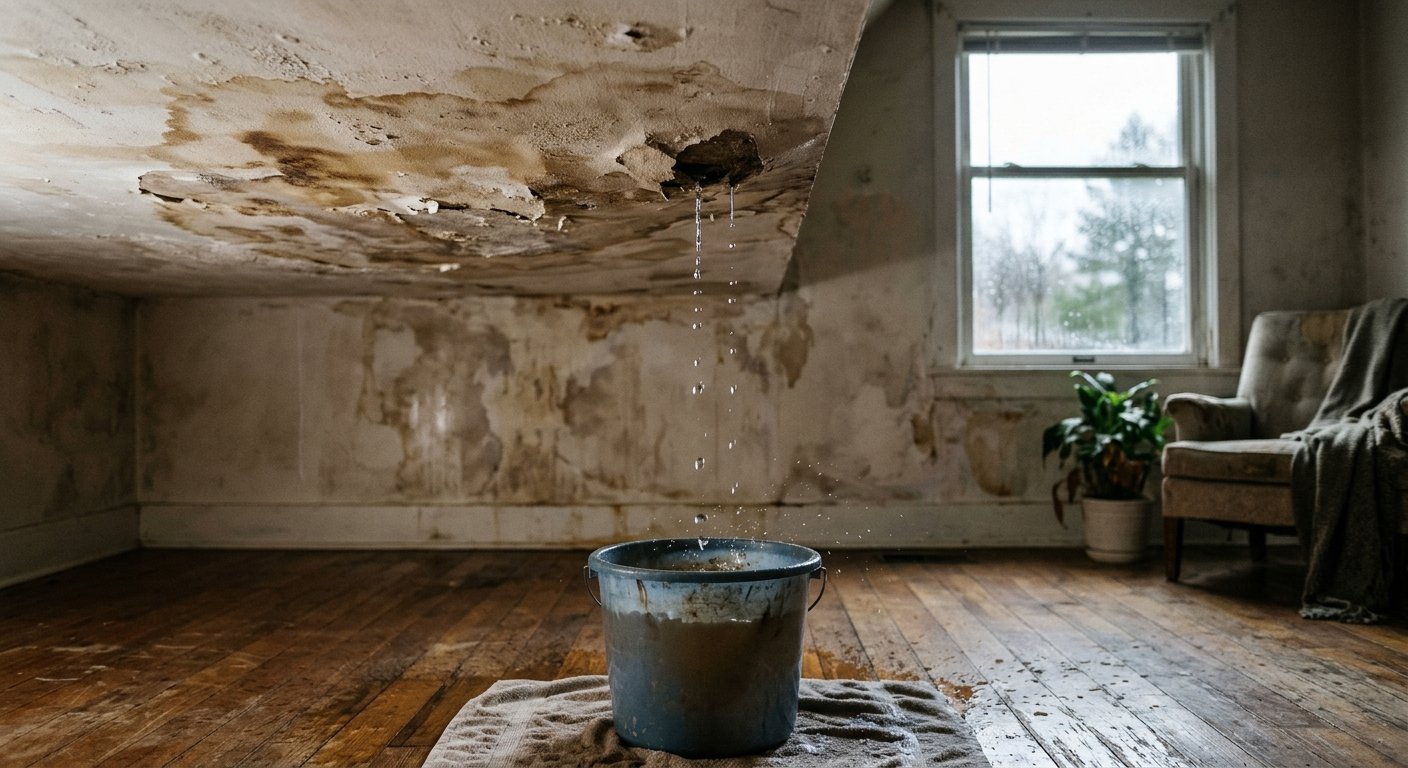
A wet ceiling and a bucket under a drip is stressful enough without wondering who pays for the repair. The honest answer is that buildings insurance often covers a leaking roof when something sudden and unexpected caused the damage, but it usually does not cover a roof that simply wore out or was not maintained. Policies differ, and the wording matters. This guide explains what home insurance typically covers for roof leaks, what is usually excluded, how storm damage is treated, how to make a claim and what to do if a claim is refused. It is general information, not insurance or legal advice, so always check your own policy documents.
Buildings Insurance and Contents Insurance: Which One Covers a Roof Leak?
- Buildings insurance covers the structure of the home, including the roof, walls, windows and fixed fittings. A roof leak caused by an insured event is normally a buildings insurance claim.
- Contents insurance covers your belongings, such as furniture, carpets you own and electronics. If a leak damages them, the contents section can respond, if the cause is an insured one.
Many people hold both in a single combined policy, but some only have one. If you rent, the landlord normally insures the building and you insure your own belongings. If you live in a flat, the building insurance is often arranged by the freeholder or management company, so check who holds the policy before you call anyone.
When Insurance Usually Covers Roof Damage
Buildings policies are designed to cover sudden, unexpected events, often called insured perils. Roof damage and the leaks that follow are commonly covered when they are caused by:
- Storm damage, such as high winds lifting tiles or heavy rain overwhelming the roof.
- Falling trees or branches.
- Fire, lightning or explosion.
- Impact, for example from a falling aerial or an object thrown onto the roof.
- Escape of water, such as a burst pipe or tank in the loft, which is a different cause from rain coming in, but often relevant to ceilings and loft damage.
- Malicious damage or vandalism.
What Is Usually Not Covered
| Situation | Usually covered? | Why |
|---|---|---|
| Tiles blown off in a severe storm | Often yes | Sudden, weather-related event |
| Tree falls onto the roof | Often yes | Unforeseen impact |
| Old felt or membrane has perished and leaks | Usually no | Wear and tear |
| Slipped tiles and failed flashing over time | Usually no | Gradual deterioration |
| Blocked gutters causing damp over months | Usually no | Lack of maintenance |
| A leak that has been there for a long time | Often no | Not sudden, and may suggest neglect |
| Poor workmanship or a faulty repair | Usually no | Excluded on many policies |
| Flat roof leak | Depends | Some policies limit or exclude flat roofs |
The wear and tear exclusion is the most common reason roof claims are refused. It covers things like perished felt, curling or cracked coverings, corroded flashing and rotten timber that failed gradually. If a roof that was already in poor condition gives way during a storm, the insurer may argue the cause was wear and tear, not the storm.
Want a number specific to your roof?
Get matched with local roofers for a free, no obligation quote.
How Insurers Treat Storm Damage
Storm damage is one of the main reasons people claim on roofs, but definitions vary. Some policies define a storm by a wind speed threshold, and figures in the region of 48 to 55 mph are often quoted by comparison sites, though your wording may differ. Others use a looser test, such as whether weather conditions were unusually severe for the area. Insurers will typically look for signs consistent with a storm, such as several missing tiles, debris in the area and damage to neighbouring properties. They may also ask for evidence that the roof was in reasonable condition before the storm. Our guide to gable end wall insurance claims explains why insurers are asking more questions about roof age and inspection history at renewal.
Other Things That Can Affect a Claim
- Roof age clauses. Some policies treat damage to a roof over a certain age, often around 10 to 15 years, with more caution, so read any age conditions in your wording.
- Flat roofs. Some insurers limit cover or apply a higher excess, so check how your policy treats a flat roof or extension.
- Excess. You normally pay the first part of any claim, so small repairs may cost less than the excess.
- Unoccupied property. Cover can be restricted if the home has been empty for a period.
- Duty to take care. Policies usually require you to maintain the property and to take reasonable steps to prevent further damage once you know about a problem.
What to Do When Your Roof Leaks
- Make things safe. Move belongings out of the way, turn off the electricity if water is near lights or sockets and contain drips with buckets and sheeting. Do not climb onto a wet roof yourself.
- Take photos and video. Record the damage inside and outside, with dates, before you tidy up or repair anything.
- Limit further damage. A roofer can fit a temporary cover or tarpaulin, and the cost is often reimbursed if the claim is accepted, so keep the receipt.
- Contact your insurer promptly. Check your policy for the claims helpline and any notification deadline, and ask what they need.
- Get a roofer’s report or quote. It should describe the cause of the leak, the extent of the damage and the repair needed. Our guide to roof inspection explains what a good report includes.
- Keep damaged materials. If safe to do so, keep broken tiles or other evidence until the insurer says otherwise.
- Do not start permanent repairs without agreement, unless the work is urgent to prevent further damage. Your insurer may want to inspect first or use an approved contractor.
- Follow up. A loss adjuster may visit. Keep copies of everything you send and receive.
How to Strengthen Your Position Before You Need to Claim
- Have the roof inspected every few years and keep the report.
- Keep records of repairs, with invoices, dates and photos.
- Fix small problems early. Our roof repair guide shows the common faults to look for.
- Keep gutters, valleys and outlets clear, and look at flashings. Our guide to roof flashing explains why they are a common leak point.
- Answer insurers’ questions honestly, including about roof age and known defects.
- Check your policy wording for roof, storm and flat roof conditions at each renewal.
Leak or Condensation?
Not every damp patch is a roof leak. Condensation, a failed pipe or a blocked gutter can look similar, and the cause affects both the repair and the claim. Our guide to a dripping roof explains how to tell them apart, and our roof leak repair cost guide shows typical repair prices, which helps you judge whether a claim is likely to exceed your excess. If the problem is on a flat roof, see our flat roof repair guide.
What If Your Claim Is Refused?
- Ask for the reason in writing, including the policy clause used.
- Check the clause. Make sure the cause you reported and the cause the insurer is relying on are the same.
- Get your own evidence. An independent roofer’s or surveyor’s report that supports sudden damage can help.
- Complain to the insurer. Use the complaints procedure and give them the chance to review.
- Go to the Financial Ombudsman Service. If you are unhappy with the final response, or the insurer has not replied in the time limit, typically within about eight weeks, you can refer the complaint to the Financial Ombudsman Service, which is free to use.
Claims and Premiums
Making a claim can affect your no-claims discount and your premium at renewal, and it will show on your claims history. For small repairs close to the excess, paying yourself may be cheaper in the long run, but do not hide a genuine insured loss. If you are unsure, ask your insurer or broker for advice before deciding.
Safety
Working at height is dangerous. Do not climb onto a wet or damaged roof to inspect or cover it. Use a professional with proper access equipment.
Electrical safety. If water is coming through a ceiling near lights or sockets, switch off the circuit at the consumer unit, and call a qualified electrician if you are not sure it is safe.
Frequently Asked Questions
Does home insurance cover a leaking roof?
Often, if the leak was caused by a sudden insured event such as a storm or a falling tree. It usually does not cover leaks caused by wear and tear or poor maintenance.
Is storm damage to a roof covered by home insurance?
Usually yes under buildings insurance, but definitions of a storm vary, and insurers will want evidence that the damage was not pre-existing wear and tear.
Does buildings insurance cover a flat roof leak?
It depends on the policy. Some cover it as normal, while others limit cover or apply a higher excess for flat roofs. Check your wording.
Will insurance pay for a whole new roof?
Only if the damage is from an insured event and a repair is not practical. For wear and tear, an insurer will not normally pay for replacement.
Should I get a roofer’s report before claiming?
It helps. A report that explains the cause and extent of damage gives your insurer clear evidence, and tells you whether the cost is likely to exceed your excess.
Who pays if my rented home has a roof leak?
The landlord is normally responsible for the building and its insurance. Tell the landlord promptly, and check your own contents cover for your belongings.
Final Thoughts
Home insurance can help with a leaking roof when the cause is sudden and insured, but it will not usually cover wear, neglect or gradual deterioration. Keep the roof maintained, keep records and photos, act quickly when a leak starts and read your policy wording carefully. If a claim is refused, ask for the reason in writing, gather your own evidence and use the complaints process and the Financial Ombudsman Service. This guide is general information only, so check your own policy or speak to your insurer or broker.
Get a professional assessment
If you are unsure how much life your current roof has left, a local roofer can give you an honest assessment as part of a free inspection. Browse vetted roofers through our roofer directory, or get a quick replacement estimate using our free cost calculator.