
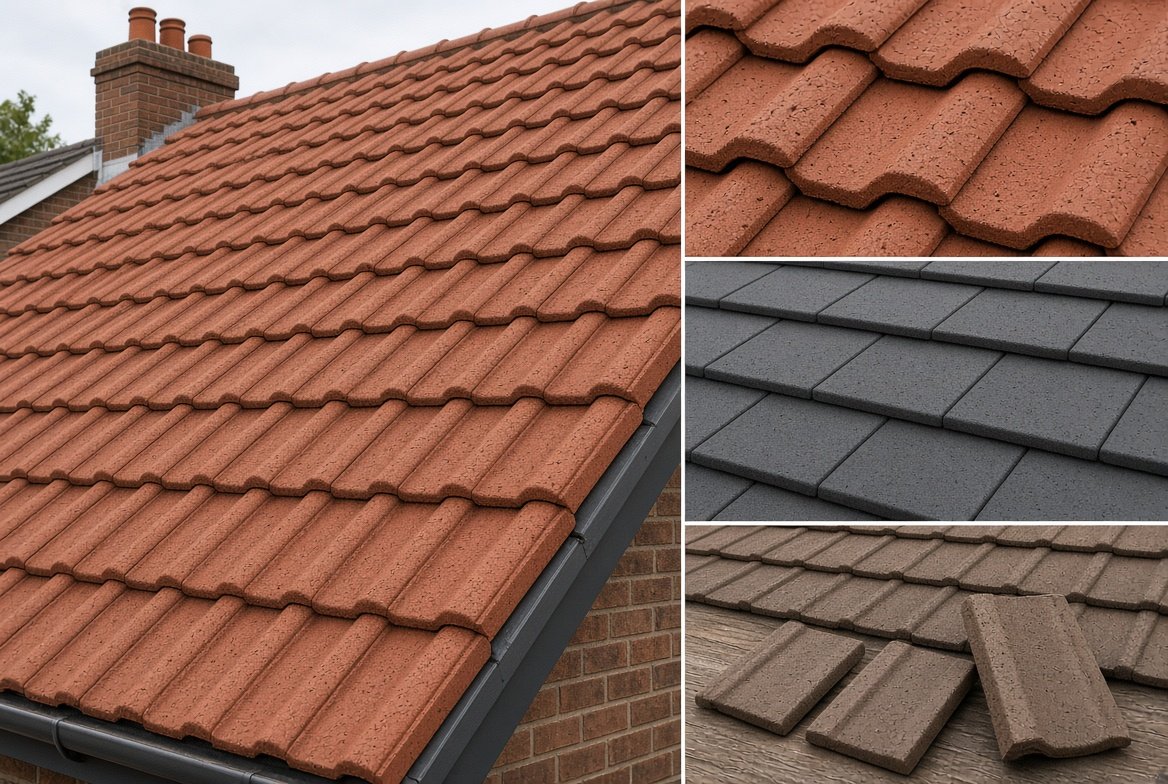
Concrete roof tiles are the most common roof covering in the UK. They are affordable, durable and come in a wide range of shapes and colours, which is why they are used on everything from new-build estates to full re-roofs on older homes. Marley is one of the best-known names in the market, so many people search for Marley roof tiles when what they really want is a concrete tile that matches their house.
This guide explains how concrete tiles are made, the main profiles, how long they last, and how to identify and match tiles you already have. It is independent advice and is not affiliated with any manufacturer. For a wider comparison, see our guide to the types of roof tiles.
What Are Concrete Roof Tiles?
Concrete roof tiles are made from a mix of sand, cement and water, with pigment added for colour. The mix is moulded under pressure, cured and then usually given a surface coating that adds colour and helps shed water and resist moss. They are heavier than clay or slate, but much cheaper to buy and quick to fit.
Most concrete tiles in the UK are interlocking. Each tile has grooves on the edges that lock into the next one, so fewer tiles are needed per square metre and the roof goes on faster than with small plain tiles.
Want a number specific to your roof?
Get matched with local roofers for a free, no obligation quote.
Marley Roof Tiles: What to Know
Marley is a major UK manufacturer of concrete and clay roof tiles, and its products are on a huge number of homes across the country. Popular concrete ranges have included styles such as Ludlow Plus, Mendip, Modern, Edgemere and a concrete plain tile, though names and availability change over time. Other manufacturers also make similar profiles, so a tile that looks like a Marley tile is not always one.
If your roof was built decades ago, the exact tile may be discontinued. In that case, the aim is to find the closest match in profile, size and colour, rather than the same brand name.
Types of Concrete Roof Tile
Double Roman Tiles
Two raised rolls with a flat section between them. This is the classic profile of many 20th-century homes and is still widely produced.
Flat Interlocking Tiles
A smooth, low-profile tile that looks like slate from the ground. These are popular on modern homes and extensions where a clean, flat look is wanted.
Pantile-Style Tiles
A wavy S-shaped profile, common in the east of England and on many traditional buildings. Concrete versions give a similar look to clay pantiles at a lower price.
Concrete Plain Tiles
Small, flat tiles laid in overlapping rows, giving a traditional look. They need more tiles and more labour than interlocking types, and they are usually used where the appearance of plain clay tiles is wanted at a lower cost.
Advantages of Concrete Roof Tiles
- Lower cost. Concrete is usually the cheapest tile covering, both to buy and to fit. You can see typical ranges in our roof tiles price guide.
- Quick to install. Large interlocking tiles cover more roof per tile, which reduces labour time.
- Good durability. A well-fitted concrete tile roof typically lasts 40 to 60 years.
- Works at lower pitches. Many interlocking tiles can be used from around 15 degrees. Always check the manufacturer’s minimum pitch, and use our roof pitch calculator if you are unsure of your roof angle.
- Wide choice. Many profiles, colours and finishes, from plain browns and greys to slate-effect.
- Easy to replace. Individual tiles can be swapped without disturbing the rest of the roof, provided you can match the profile.
Disadvantages of Concrete Roof Tiles
- Weight. Concrete is heavier than most alternatives, so the roof structure must be able to carry it. This is a real concern on older homes that were built with lighter coverings.
- Colour fade. The surface colour can fade over time, while clay holds its colour for far longer. Read our clay roof tiles guide if colour retention matters to you.
- Moss and algae. Concrete is porous, so shaded roofs can grow moss and lichen. Regular cleaning and good drainage help.
- Surface wear. The coating can wear off after decades, leaving a rougher surface that traps more dirt.
- Less traditional. In conservation areas and on period homes, planning rules may require clay or slate.
How Long Do Concrete Roof Tiles Last?
A typical concrete tile roof lasts 40 to 60 years, and sometimes longer in sheltered areas. The tiles themselves are tough. Problems tend to come from the parts around them: old underlay, rotten battens, failed mortar on the ridge and verge, and worn flashings. A roof can often be re-covered by removing and reusing the tiles, provided they are in good condition and the structure underneath is sound.
How to Identify and Match Your Roof Tiles
If you need to replace a few tiles, or extend a roof, a good match matters. Here is what to do:
- Check the underside. Many tiles have a manufacturer’s mark or code on the back. If you can safely get at a spare tile or one in the loft, look there.
- Measure the tile. Note the length, width and the visible exposed area. Also measure the batten gauge, which is the spacing between rows.
- Note the profile. Is it a double Roman, flat, pantile or plain tile? Take clear photos from the front, side and edge.
- Record the colour and age. Older tiles will have weathered, so a new tile can look different at first.
- Ask a merchant or roofer. Roofing suppliers can usually identify a tile from a photo and a few measurements, and they know which current products are closest.
If the exact tile is no longer made, salvaged tiles from a reclamation yard are sometimes the best match. Ask your roofer to check the pitch and batten spacing too, because these affect which tile can be used. Our guide to roof battens explains why spacing matters.
Ridge and Verge Fixing
Concrete tile roofs are normally finished with ridge tiles at the top and a verge detail at the gable ends. These can be bedded in mortar or fixed with a dry system. Dry systems are generally more resistant to movement and weather, and they do not crack in the way old mortar does. Our article on dry ridge and ridge tiles explains how they compare.
Moss and Maintenance
- Remove moss gently by hand or with a soft brush. Do not use a pressure washer, which can damage the tile surface and force water under the tiles.
- Check for cracked, chipped or slipped tiles after storms.
- Look at the ridge and verge mortar every year or two.
- Keep gutters clear so they do not overflow and soak the eaves.
Should You Choose Concrete Tiles?
Concrete tiles are a sensible choice for most UK homes, especially if budget matters, if you are matching an existing roof, or if you need a covering that can go on at a lower pitch. If you want maximum colour life or a traditional look, clay or slate may be better value over the long term, even though they cost more at the start.
Frequently Asked Questions
Are Marley roof tiles concrete or clay?
Marley makes both. Their best-known products on UK homes are concrete tiles, but they also produce clay tiles.
How long do concrete roof tiles last?
Typically 40 to 60 years, depending on the quality of the tiles, the installation and the local weather.
Can I use concrete tiles on a low-pitch roof?
Many interlocking concrete tiles can be used at pitches from around 15 degrees, but each product has its own minimum. Check the manufacturer’s data sheet before you order.
How do I find out what roof tiles I have?
Look for a mark on the underside of a spare tile, measure the length, width and batten spacing, and take clear photos. A roofing merchant or roofer can often identify the tile from these.
Can I mix new and old concrete tiles?
Yes, if the profile and size match, but new tiles will look brighter than weathered ones at first. They usually blend in over a few years. Place new tiles on a less visible slope where possible.
Can concrete tiles be reused when re-roofing?
Often, yes, if they are in good condition. A roofer will check for cracks, wear and spalling, and set aside any that are damaged.
Final Thoughts
Concrete roof tiles are a reliable, affordable choice that suits most homes. If you are replacing a few tiles, spend time matching the profile, size and pitch rather than chasing a brand name. If you are re-roofing, compare quotes on the full specification, including the underlay, battens and ridge system, because these decide how long the roof lasts.
Get a professional assessment
If you are unsure how much life your current roof has left, a local roofer can give you an honest assessment as part of a free inspection. Browse vetted roofers through our roofer directory, or get a quick replacement estimate using our free cost calculator.