
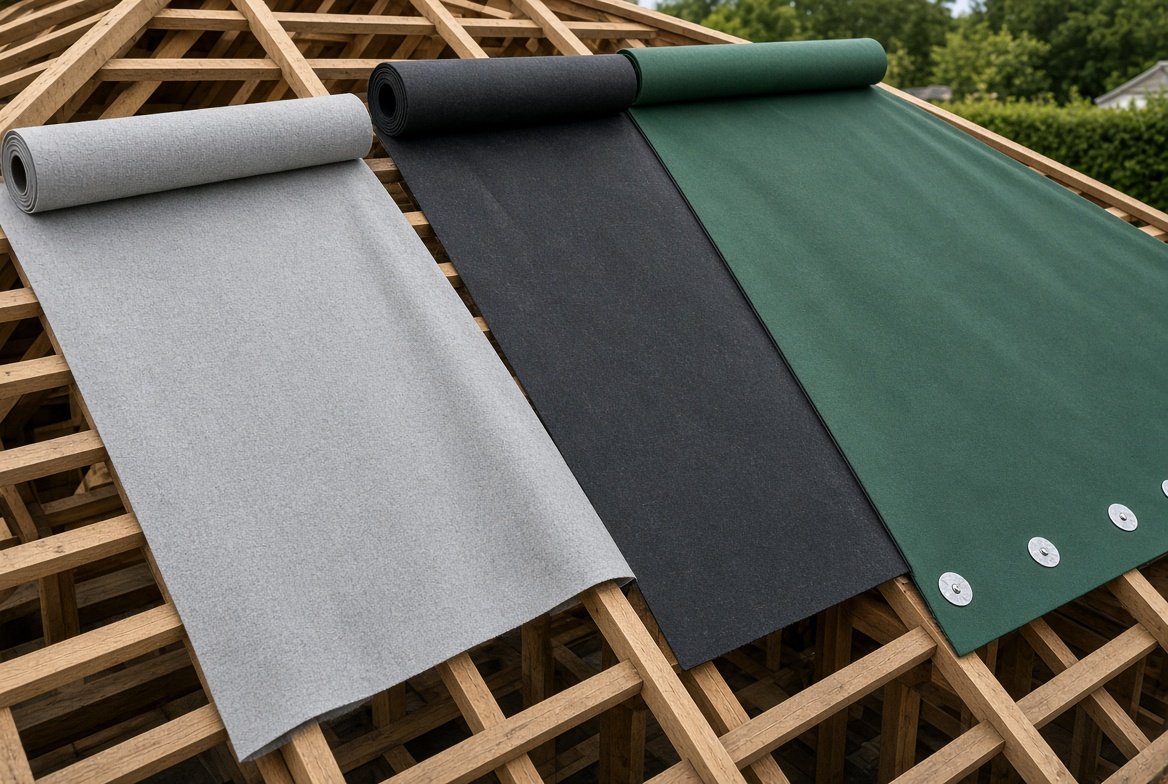
“Roof membrane” is one of those terms that means different things depending on who is using it. A roofer replacing tiles uses it for the breathable sheet under the battens. A flat roof installer uses it for the waterproof covering on top of the deck. A designer uses it for the vapour control layer that sits on the warm side of the insulation. All are membranes, and all do different jobs. This guide explains the main types of roof membrane, where each one goes, how they compare and how to choose between them for a pitched or flat roof.
What Does a Roof Membrane Do?
A roof membrane is a thin sheet or liquid-applied layer that controls water, vapour or air. Depending on the type, it does one or more of these jobs:
- Keeps rain out. Either as the final waterproof layer on a flat roof, or as a second line of defence under tiles and slates.
- Manages moisture vapour. Breathable membranes let vapour escape from the roof space, while vapour control layers stop warm, moist air from reaching cold surfaces.
- Resists wind. Some underlays are tested to resist uplift and billowing, as covered by roofing standards.
Main Types of Roof Membrane
| Type | Where it is used | Main job | Notes |
|---|---|---|---|
| Breathable (low resistance) underlay | Under tiles and slates on pitched roofs | Second line of defence that lets vapour escape | Now the standard choice for new roofs and re-roofs |
| Bitumen felt underlay (high resistance) | Under tiles and slates on older or traditional roofs | Second line of defence, vapour closed | Needs good roof ventilation |
| Vapour control layer (VCL) | On the warm side of insulation | Stops moist indoor air reaching cold parts of the roof | Joints must be taped and sealed |
| Single ply (PVC or TPO) | Top covering on flat and low-pitch roofs | Waterproofing | Welded seams, often on larger roofs |
| EPDM rubber | Top covering on small flat roofs | Waterproofing | Flexible, few joins |
| Bituminous membrane (felt) | Top covering on flat roofs and outbuildings | Waterproofing | Torch-on, self-adhesive or nailed |
| Liquid-applied membrane | Awkward shapes, details and recoating | Seamless waterproofing | Depends heavily on preparation |
Breathable Roof Membranes
Breathable membranes are the sheets under the battens on most modern pitched roofs. They are waterproof enough to stop wind-driven rain and snow, but vapour permeable, so moisture from inside the house can escape rather than condensing on cold timbers. They are laid over the rafters, usually with a controlled sag or on a support, and overlapped at each row so water runs down the roof. Our guide to roof felt and underlay explains the difference between breathable membrane and bitumen felt, including the standards that cover them. A breathable membrane does not remove the need for ventilation, and most pitched roofs still need eaves and ridge or high-level ventilation, as covered in our roof ventilation guide.
Some installations need counter-battens over the membrane to support it and let water drain, which our guide to roof battens explains. Check the manufacturer’s data sheet and certification for your product, because performance and fixing rules vary between brands.
Want a number specific to your roof?
Get matched with local roofers for a free, no obligation quote.
Vapour Control Layers
A vapour control layer is the opposite of a breathable membrane: its job is to stop moisture vapour passing through. It sits on the warm side of the insulation, so warm, damp air from the house cannot reach the cold side and condense. VCLs are common in warm flat roofs, where they sit under the insulation, and in insulated pitched roofs and vaulted ceilings. The membrane only works if the joints are sealed with tape and the edges are properly detailed, and punctures from cables or fixings need to be sealed. Our guide to warm roof construction shows where the VCL sits in a typical build-up.
Flat Roof Waterproofing Membranes
On a flat roof, the membrane is the waterproof layer. The main options are:
- Single ply: PVC or TPO sheets that are welded at the seams, popular on larger roofs. See our guide to single ply membrane roofing.
- EPDM rubber: a flexible sheet that can cover a small roof in one piece. See our EPDM rubber roofing guide.
- Bituminous felt: layers of bitumen sheet, often torch-on. See our guide to torch on felt roofs.
- Liquid-applied: brushed or sprayed membranes that cure into a seamless layer.
As a general guide, felt lasts around 15 to 20 years, GRP 25 to 30 years or more, single ply 25 to 35 years and EPDM 30 to 50 years, if installed well.
How to Choose a Roof Membrane
- Start with the roof type. Pitched roofs with tiles or slates need an underlay, while flat roofs need a waterproof top membrane.
- Check the insulation plan. A warm roof or insulated rafters usually needs a vapour control layer.
- Think about ventilation. Choose the membrane and the ventilation strategy together, because they work as a system.
- Consider the roof shape. Awkward details and many penetrations suit EPDM or liquid systems, while large plain roofs suit single ply.
- Check certification and warranties. Choose products with third-party approval where possible, and ask who provides the guarantee.
- Set a realistic budget. The cheapest membrane often has the shortest life.
Common Roof Membrane Problems
- Tears and punctures from poor handling or foot traffic.
- Sagging between rafters, which can let water pool and leak.
- Poor laps and detailing around chimneys, roof windows and pipes, where most leaks begin.
- Unsealed VCL joints, which let moist air through and cause condensation.
- Wrong side up, because some membranes are directional.
- Long UV exposure before the covering goes on.
- Trapped moisture under flat roof membranes laid on a wet deck.
How Long Do Roof Membranes Last?
Underlay is protected by the covering above it and is rarely replaced on its own, so in practice it is renewed as part of a re-roof. Properly installed breathable membrane can last several decades. Flat roof membranes have shorter lives, and the figures above are general guides that depend on installation quality, drainage and maintenance.
Safety, Asbestos and Regulations
Working at height is dangerous. Membranes are slippery, especially when wet, and exposed edges are a fall risk. Use proper access and edge protection.
Asbestos warning. Older roofs and outbuildings may contain asbestos cement sheets, soffits or boards. Do not disturb them, and get them identified by a competent surveyor. The HSE asbestos guidance explains the rules.
Building regulations apply to the insulation and ventilation in most re-roofs and new roofs, so check with building control. Scotland, Wales and Northern Ireland have their own rules.
Frequently Asked Questions
What is a roof membrane?
A sheet or liquid layer that controls water, vapour or air in a roof. Depending on the type, it may be an underlay, a vapour control layer or the waterproof covering of a flat roof.
What is a breathable roof membrane?
A vapour-permeable underlay that blocks rain and snow but lets moisture vapour escape from the roof space, which reduces condensation risk.
Do I need a vapour control layer?
Often yes, in warm flat roofs and insulated pitched roofs, to stop warm moist air reaching cold surfaces. The right design depends on the build-up.
What is the best membrane for a flat roof?
It depends on size, shape and budget. EPDM suits small roofs, single ply suits larger ones and felt is the lower-cost traditional choice.
How long does a roof membrane last?
From about 15 to 20 years for felt to 30 to 50 years for EPDM on flat roofs, and several decades for breathable underlay under a roof covering, if installed well.
Can I fit a roof membrane myself?
On a small, low roof with a suitable product, yes. Larger roofs, high roofs and anything involving heat or complex details are better left to a professional.
Final Thoughts
The right roof membrane is the one that suits the roof type, the insulation design and the ventilation plan. Choose a breathable underlay for pitched tiled roofs, add a properly sealed vapour control layer where the design needs one and pick a flat roof membrane that matches the size and shape of the roof. Check certification and guarantees, and treat old cement sheets as asbestos until proven otherwise.
Get a professional assessment
If you are unsure how much life your current roof has left, a local roofer can give you an honest assessment as part of a free inspection. Browse vetted roofers through our roofer directory, or get a quick replacement estimate using our free cost calculator.