
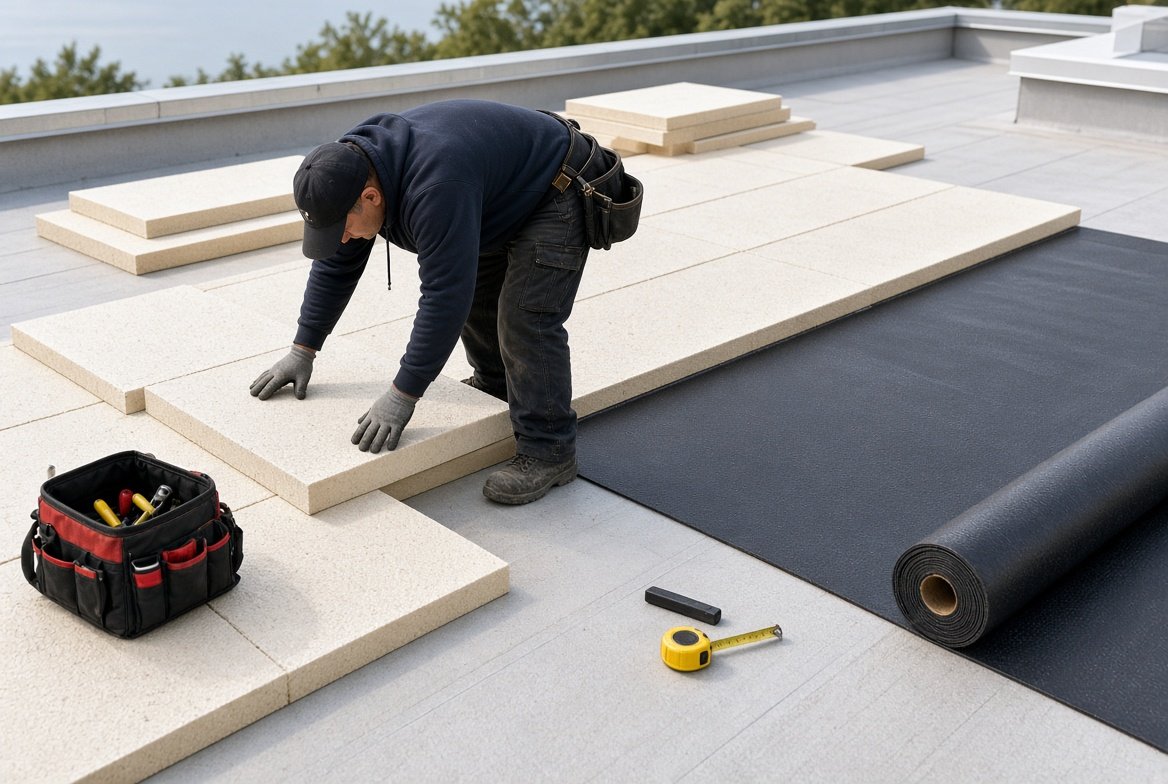
Warm roof construction is the standard way to insulate a flat roof in the UK. The insulation sits on top of the roof deck, directly under the waterproof covering, which keeps the structure warm and dry. It is the method most roofers recommend today for new flat roofs and full replacements.
This guide explains how a warm roof is built, how it differs from a cold roof, which insulation boards are used and what to check before you hire anyone. For the wider picture on materials and costs, see our flat roof guide.
What Is a Warm Roof?
A warm roof is a flat roof where the insulation is fitted above the structural deck rather than between the joists. The roof structure, which is normally timber, stays on the warm side of the insulation, close to the temperature of the room below.
That matters because of condensation. Warm, damp air from inside the house can rise and reach cold surfaces in the roof structure, where the moisture turns to water. Over time this can rot timber, even if the roof never leaks from outside. In a warm roof, the timber stays warm, so there is much less risk of this happening.
Want a number specific to your roof?
Get matched with local roofers for a free, no obligation quote.
Warm Roof Build-Up: The Layers
From the top down, a typical warm roof is made up of these layers:
- Waterproof covering: for example felt, EPDM, GRP or a single-ply membrane.
- Insulation boards: rigid boards, fixed or bonded to the layer below.
- Vapour control layer (VCL): a membrane that stops warm, moist air from reaching the insulation and deck.
- Roof deck: usually plywood or OSB boards, laid with a slight fall.
- Joists: the structural timbers that carry the deck.
The vapour control layer is easy to overlook, but it matters. If it has gaps or tears, moisture can get into the build-up and cause trouble later. Ask your roofer how the VCL will be sealed at the edges and around any penetrations.
Warm Roof vs Cold Roof
Cold Roof
In a cold roof, the insulation goes between the joists, underneath the deck. The deck and joists are on the cold side of the insulation, so condensation is a real risk. To manage this, a cold roof needs a clear air gap above the insulation and vents at opposite edges so air can pass through. Poor ventilation, or insulation that blocks the gap, is one of the most common causes of hidden rot in older flat roofs. Our roof ventilation guide explains why airflow matters so much.
Warm Roof
In a warm roof, the insulation sits above the deck, so no ventilation gap is needed. This makes the build-up simpler to get right, and there is less that can go wrong inside the roof structure.
Which Should You Choose?
- Warm roof: the usual choice for new builds, extensions and complete re-roofs. It offers lower condensation risk and does not take any height from the room below.
- Cold roof: sometimes the only practical option on an existing roof where the covering and deck are sound, because insulation can be added from inside. It needs careful ventilation design.
- Hybrid roof: a mix of both, with some insulation above and some below the deck. This is less common, and the balance has to be calculated correctly.
If your cold roof is leaking or the deck is rotten, converting it to a warm roof during the re-roof is often the cleanest fix.
Insulation Boards Used in Warm Roofs
- PIR (polyisocyanurate): the most widely used board. It insulates well for its thickness, which keeps the roof build-up slim.
- Phenolic foam: very high performance and a thin profile, though usually more expensive.
- EPS (expanded polystyrene): a cheaper option, but it needs more thickness to give the same insulation value.
- Mineral wool (such as rockwool): used where fire performance or sound insulation is a priority. It is heavier and needs a firm deck.
Check that the boards you choose are compatible with your waterproof covering. Some products need a particular facing, adhesive or primer, and using the wrong combination can void the guarantee.
Tapered Insulation
Flat roofs need a fall so that water drains off. Tapered insulation boards are cut so they get thicker or thinner across the roof, creating the slope without changing the structure. They are useful when the deck itself is level or the fall needs improving. For general advice on slope and angle, try our roof pitch calculator.
How Much Insulation Do You Need?
The thickness depends on the board, the other layers in the build-up and the target U-value, which is the measure of how much heat passes through the roof. Lower is better. For many projects, you will end up with somewhere in the region of 100 to 150 mm of PIR, but this varies from product to product, so rely on the manufacturer’s calculations rather than a rule of thumb.
Building Regulations for Flat Roof Insulation
In England, Approved Document L sets the energy efficiency standards for new roofs and for roofs that are largely replaced. The U-value targets differ between new builds and renovations, and the rules in Scotland, Wales and Northern Ireland are not the same, so check the current requirement for your project. The government publishes Approved Document L, and your local building control office or roofer can tell you what applies to your property. Ask your roofer to confirm that the proposed insulation will meet it.
Waterproof Coverings for a Warm Roof
The covering goes straight on top of the insulation. The usual choices are:
- Torch-on felt: a bitumen membrane, normally laid in two layers. See our guide to torch on felt roofs.
- EPDM rubber: a single-sheet membrane with few seams.
- GRP fibreglass: a seamless, rigid finish that needs a stable deck.
- Single-ply membranes: lightweight sheets used on larger roofs.
Converting an Existing Flat Roof to a Warm Roof
Converting a flat roof to a warm roof normally involves stripping the old covering, checking the deck, adding a vapour control layer, fixing insulation boards and laying a new waterproof covering. If the deck is damp or rotten, it must be repaired or replaced first. Adding a warm roof usually raises the roof edge slightly, so the upstands, flashings and fascia details need to be adjusted. If you are unsure how a roofer should handle those, our guide to roof flashing shows what to look for.
What to Ask Your Roofer
- Is the roof being built as a warm roof, and what is the full build-up from deck to covering?
- What type and thickness of insulation will be used, and what U-value does it achieve?
- How will the vapour control layer be sealed and protected?
- How will the fall be achieved, and will tapered boards be needed?
- Does the guarantee cover the whole system, or only the waterproof covering?
Compare at least three written quotes, and make sure each one lists the specification, not just a single price. Our guide to reading a roofing quote shows what a clear quote should include.
Frequently Asked Questions
What is a warm roof?
A warm roof is a flat roof with the insulation placed above the roof deck, under the waterproof covering. This keeps the structure warm and reduces the risk of condensation.
What is the difference between a warm roof and a cold roof?
In a warm roof, the insulation is above the deck. In a cold roof, it sits between the joists, below the deck, and the roof needs ventilation to manage moisture.
Is a warm roof better than a cold roof?
For most new flat roofs and full replacements, yes. It has a lower condensation risk and needs no ventilation gap. A cold roof can still be suitable when the existing covering is in good condition and the ventilation is correctly designed.
What insulation is best for a flat roof?
PIR boards are the most commonly used because they give good performance in a thin build-up. Phenolic is thinner still, and mineral wool is used where fire or sound performance is a priority.
Do I need a vapour control layer?
Yes, in most warm roof designs. It stops moist air from inside the building from reaching the insulation and the deck, where it could condense.
Final Thoughts
Warm roof construction costs more at the start than a basic cold roof, but it is simpler to get right and protects the timber from the moisture that damages so many older flat roofs. Ask for the full build-up in writing, check the insulation meets current regulations, and make sure the details at the edges are done properly.
Get a professional assessment
If you are unsure how much life your current roof has left, a local roofer can give you an honest assessment as part of a free inspection. Browse vetted roofers through our roofer directory, or get a quick replacement estimate using our free cost calculator.