
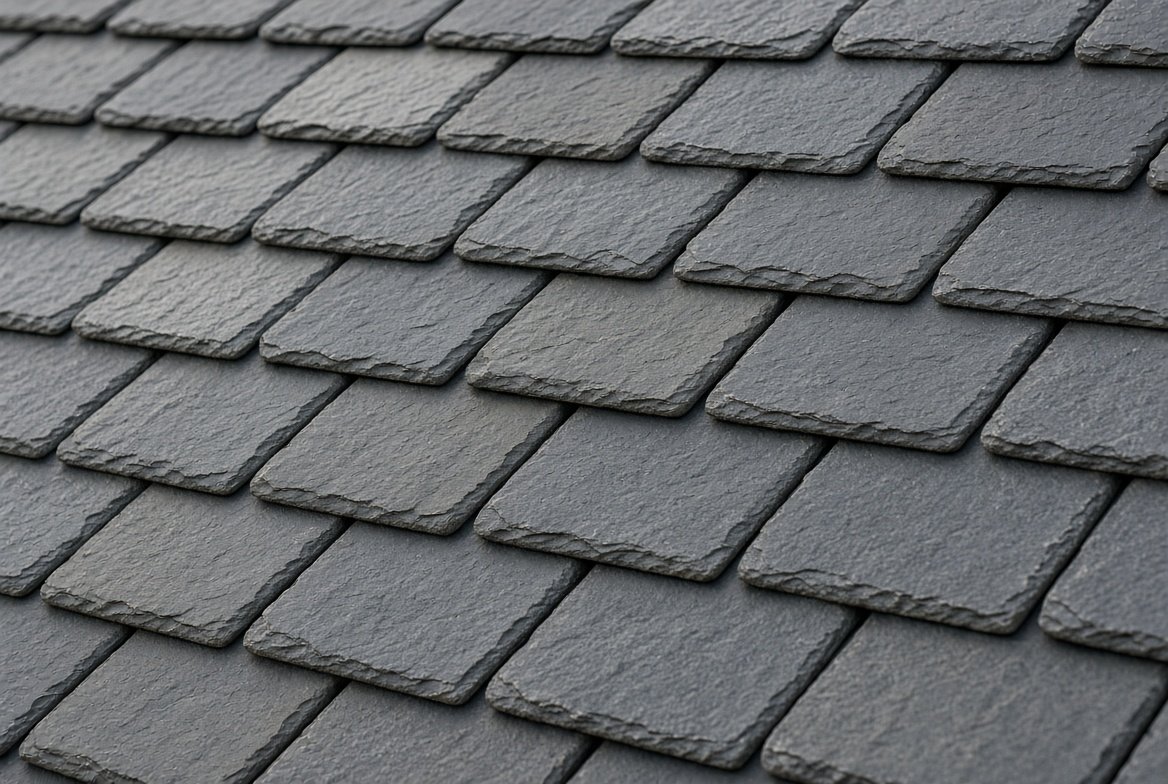
Slate is the most expensive common roofing material in the UK, and also potentially the last roof a house ever needs. Whether that trade-off makes sense depends heavily on which type of slate you are actually comparing, since “slate roof” covers a much wider price range than most people expect.
Not all slate is the same
The word slate gets used loosely, but there are genuinely different products sold under it, each with a very different price and lifespan.
- Welsh slate. Widely regarded as the premium option, quarried in North Wales for centuries and known for its strong, fine-grained, blue-grey character
- Spanish slate. A more affordable natural slate, still genuine quarried stone, and a common choice where full Welsh slate pricing is not justified
- Synthetic or composite slate. Made from recycled polymer or rubber blends, designed to mimic the look of natural slate at a fraction of the weight and cost
- Fibre cement slate. The most affordable option, made from sand, cellulose fibres, and cement, giving a slate-like appearance at a lower price point
Cost per square metre
| Slate type | Typical cost per m² (materials and labour) |
|---|---|
| Welsh natural slate | £140 to £300 |
| Spanish or other natural slate | £70 to £150 |
| Synthetic or composite slate | £50 to £90 |
| Fibre cement slate | £25 to £90 |
For a full roof replacement on a typical UK semi-detached house, total cost across a full job, including materials, labour, underlay, and battens, commonly falls between £7,000 and £10,000, with Welsh slate sitting toward the top of that range and more affordable natural or synthetic slate bringing it down. For general roofing cost context by size and material, see our gable roof cost guide.
Why slate costs more than concrete or clay
Labour typically makes up 50 to 60 percent of a slate roofing job, notably higher than for standard concrete tiles. Slate installation is a genuinely specialised trade, not every roofer is trained or experienced enough to fit it correctly, and a poor slate installation will fail within a few years regardless of how good the material itself is. Slate roofs can also be heavier than lighter alternatives like synthetic slate, sometimes requiring a structural check before installation, particularly on older properties. Our roof tile material guide covers weight and structural considerations for other common materials too.
Want a number specific to your roof?
Get matched with local roofers for a free, no obligation quote.
Lifespan by slate type
- Welsh natural slate. Commonly 75 to 150 years, with some roofs still performing well after over a century
- Spanish or other natural slate. Realistically 75 to 100 years from a good quality product
- Synthetic composite slate. Roughly 30 to 50 years
- Fibre cement slate. Roughly 30 to 40 years
Conservation areas and listed buildings
If your property sits in a conservation area or is subject to an Article 4 direction, you may be required to use a specific slate type, often Welsh slate specifically, even if the original roof used a different, more affordable origin. This can add a significant material premium compared to using a more general natural slate, so it is worth checking local planning restrictions before budgeting for a slate re-roof.
Is natural slate worth the extra cost
Over the full life of a roof, natural slate frequently works out as the more cost effective material despite the higher upfront price, since it can genuinely outlast two or three replacement cycles of a cheaper covering. For anyone planning to stay in a property long term, or for a period or listed home where slate suits the character of the building, the maths tends to favour natural slate. For a shorter ownership horizon or tighter budget, synthetic or fibre cement slate offers a reasonable middle ground that still gives the visual appearance without the full premium price.
Frequently asked questions
How much does a slate roof cost for an average UK house?
A full re-roof on a typical semi-detached house generally costs between £7,000 and £10,000, depending on slate type, roof size, and access requirements.
How long does a slate roof actually last?
Welsh natural slate can last 75 to 150 years, while more affordable natural and synthetic options typically last 30 to 100 years depending on the specific material.
Is slate heavier than concrete tiles?
This varies, but natural slate is often lighter per unit area than concrete tile, though the structural suitability of any heavier material should still be checked by a professional before installation, especially on older roofs.
Why do some slate quotes vary so much?
Because “slate roof” covers several genuinely different products at very different price points, from budget fibre cement to premium Welsh slate. Always confirm exactly which slate type a quote is based on before comparing prices.
This guide is independent editorial content. It is not sponsored.
Get a professional assessment
If you are unsure how much life your current roof has left, a local roofer can give you an honest assessment as part of a free inspection. Browse vetted roofers through our roofer directory, or get a quick replacement estimate using our free cost calculator.