
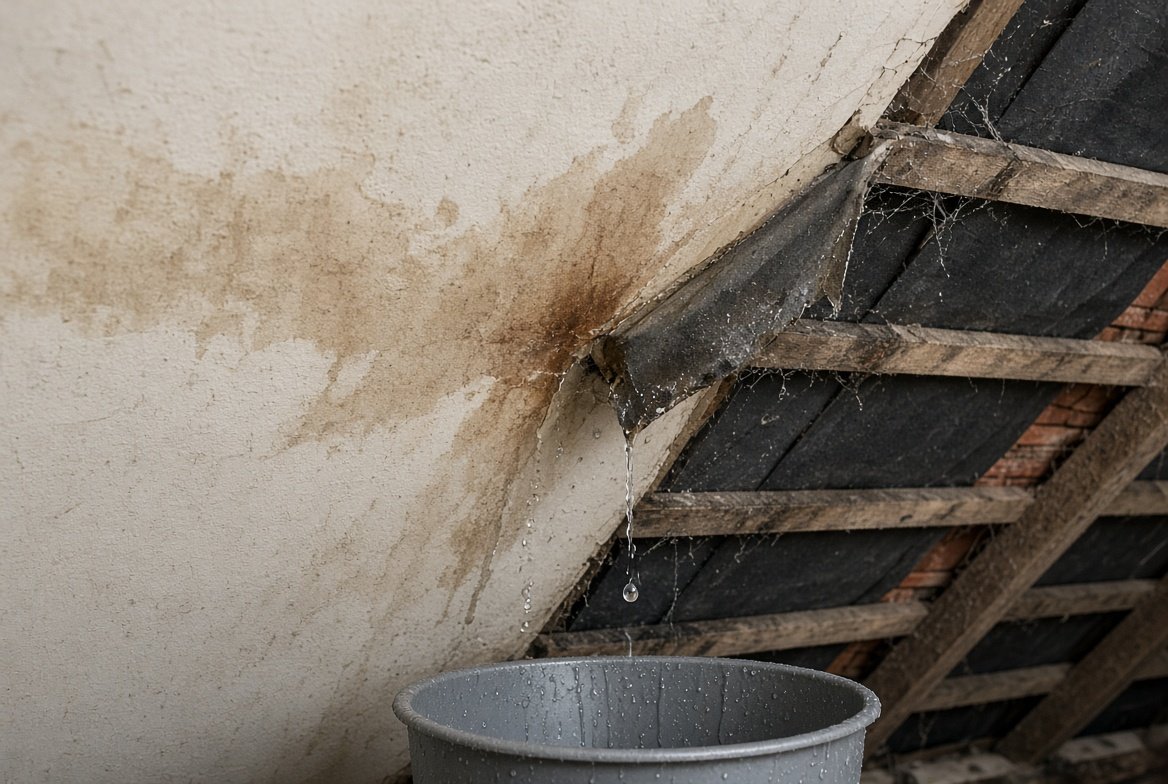
A dripping roof is more than an annoyance. Water coming through a ceiling, a steady drip in the loft or a drip outside the house are all signs that something is wrong, but they do not all have the same cause. Before you call anyone out, it helps to understand what the drip really is, because the fix for a leaking tile is very different from the fix for condensation.
This guide explains the main reasons a roof drips, how to tell them apart, what to do straight away and when to call a roofer.
Why Is My Roof Dripping?
There are five main causes. Work through them in order, because the most common ones come first.
1. A Leak in the Roof Covering
Slipped, cracked or missing tiles, a failed ridge or a damaged valley let rain through to the underlay and into the loft. The drip usually appears during or soon after rain, and often in the same spot each time. For common repairs and signs, see our roof repair guide.
Want a number specific to your roof?
Get matched with local roofers for a free, no obligation quote.
2. Failed Flashing
Flashings seal the joints around chimneys, walls and rooflights. If the lead has lifted, split or the pointing has failed, water runs in alongside the chimney or wall. Our guide to lead flashing explains how it works and what goes wrong.
3. A Faulty Valley or Gutter
Valleys carry a lot of water, so a crack or a blockage can send water in behind the tiles. Blocked or leaking gutters can also soak the eaves and drip inside the wall. See roof valleys and guttering for what to check.
4. Condensation in the Roof Space
If the drip happens when it is cold but not raining, or if the loft felt and timbers are wet or covered in black mould, condensation is likely. Warm, damp air from the house rises into the loft and turns to water on cold surfaces. It can look and feel like a leak, but the roof covering is usually fine. The fix is better ventilation, not a repair to the tiles. Our guide to roof ventilation explains how much airflow a roof needs.
5. Plumbing or Tank Leaks
A dripping pipe, a faulty overflow or a leaking water tank in the loft can drip through the ceiling at any time, whatever the weather. If water shows up on dry days, check the pipes and tanks before you blame the roof.
Leak or Condensation? How to Tell
| Clue | Roof leak | Condensation |
|---|---|---|
| When it happens | During or after rain | Cold, damp or still weather, even without rain |
| Where | One spot, often near a chimney, valley or wall | Widespread, across the underside of the roof |
| Water on timbers | Stains or a trail leading to the source | Droplets, damp felt and black mould |
| Smell | Often musty near the leak | Musty across the whole loft |
| Fix | Repair the covering or flashing | Improve ventilation and insulation |
What to Do Right Now
- Protect your home. Move furniture, put a bucket under the drip and lay towels around it.
- Relieve a bulging ceiling. If water is collecting in the plasterboard, carefully pierce a small hole so it drains into a bucket. Stand clear of the area below.
- Turn off the power. If water is near lights, sockets or the consumer unit, switch off the electricity for that circuit.
- Take photos. Record the damage, the date and the weather for your insurer.
- Look in the loft. If it is safe to do so, use a torch to follow the water trail up to the source. Check for wet timbers, daylight or damp insulation.
- Do not climb onto the roof. It is dangerous, particularly when wet. Leave outdoor inspection to a roofer.
How a Roofer Finds the Source
Water can travel a long way along a rafter before it drips, so the stain in the ceiling is rarely directly under the hole. A roofer will usually:
- Inspect the roof covering, ridge, valleys and flashings from a ladder or tower.
- Check the loft for stains, wet timbers and the condition of the underlay.
- Look at the gutters, fascias and eaves for overflow or rot.
- Check chimneys, rooflights and any roof penetrations.
- Sometimes use a hose test or a moisture meter to confirm the source.
How Much Does It Cost to Fix a Dripping Roof?
It depends on the cause. A few slipped tiles or a cracked ridge are usually modest jobs, while a failed valley or a damaged flat roof costs more. Access and scaffolding often add to the bill. To get a feel for typical prices, see our roof leak repair cost guide.
Dripping Roof Edge Outside the House
If the drip is outside, along the eaves, it is usually a gutter problem. Common causes are blocked gutters, sagging or misaligned runs, loose joints, or a roof edge without a drip trim, which lets water run behind the fascia. In winter, ice and melting snow can also cause temporary dripping from the eaves. Over time, water behind the fascia can rot the timbers, so it is worth fixing early.
Does Home Insurance Cover a Dripping Roof?
Buildings insurance often covers sudden damage from storms or other insured events, but not leaks caused by wear and tear or poor maintenance. Take photos, keep receipts for emergency repairs and contact your insurer before arranging permanent work, unless you need an emergency fix to stop water coming in.
How to Prevent a Dripping Roof
- Check the roof from the ground twice a year and after storms.
- Replace slipped or broken tiles quickly.
- Keep gutters and valleys clear.
- Have flashings and ridge mortar checked every few years.
- Keep loft vents clear and do not push insulation against the eaves.
- Have older roofs inspected by a professional.
Frequently Asked Questions
Why is my roof dripping when it is not raining?
Condensation in the loft, a plumbing leak or melting snow are the most likely reasons. Check pipes and tanks first, then ventilation.
Why is my roof dripping inside the house?
Common causes are a leak through tiles, flashing or valleys, condensation in the roof space or a leak from a pipe or tank. A roofer can find the source.
How do I find where my roof is leaking?
From the loft, look for wet timbers, stains and daylight, and follow the trail upwards. The visible stain in the ceiling is often some distance from the real source.
Can condensation cause a dripping roof?
Yes. In cold weather, warm damp air from the house can condense on the underside of the roof and drip. It often happens in lofts with poor ventilation.
Should I call a roofer for a dripping roof?
Yes, especially if the drip is during rain, near a chimney or valley or has caused stains. A roofer can find the cause and advise whether a repair is enough.
How quickly should a dripping roof be fixed?
As soon as possible. Water damages insulation, plaster and timbers quickly, and the repair cost rises the longer you wait.
Final Thoughts
A dripping roof can come from the covering, the flashings, the gutters, condensation or the plumbing, and each needs a different fix. Protect your home first, collect photos and then get a roofer to find the real source. The sooner it is dealt with, the smaller the repair is likely to be.
Get a professional assessment
If you are unsure how much life your current roof has left, a local roofer can give you an honest assessment as part of a free inspection. Browse vetted roofers through our roofer directory, or get a quick replacement estimate using our free cost calculator.