
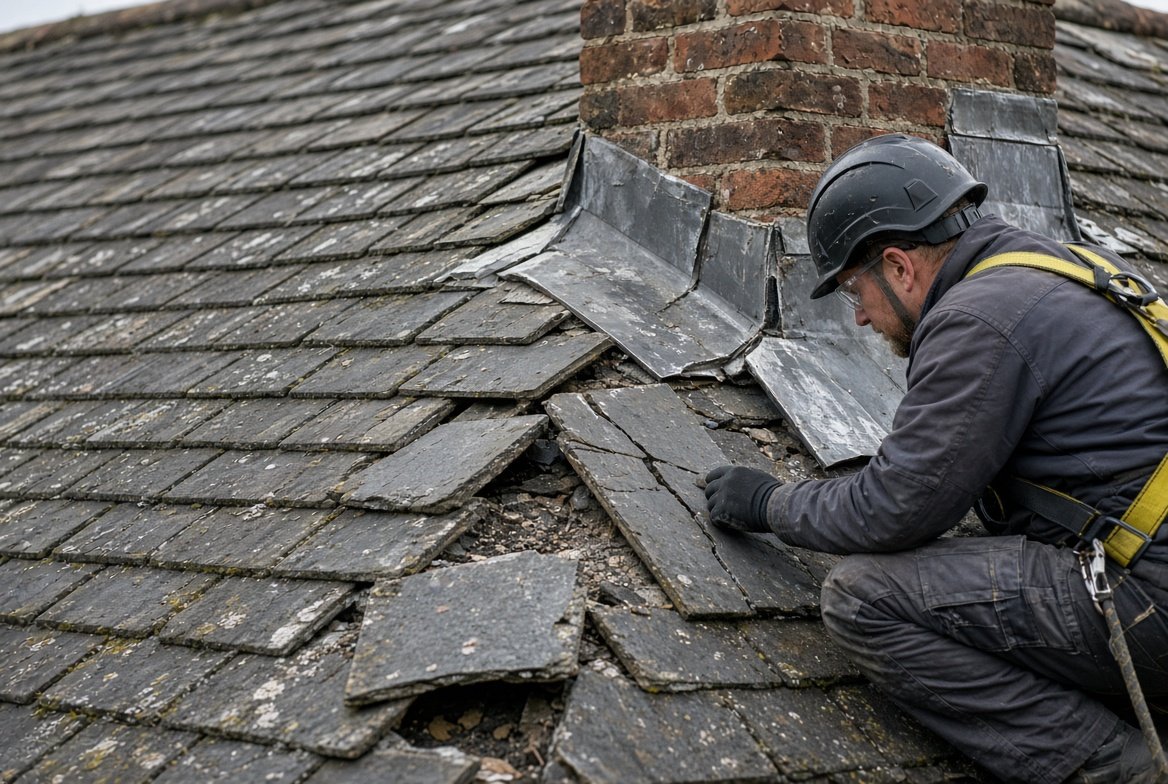
Most roof repairs start with something small: a slipped tile, a cracked ridge, a damp patch on the ceiling. Dealt with early, these are usually modest jobs. Left alone, they let water into the timbers and insulation, and the repair bill grows quickly. Knowing the common problems and when to call a roofer helps you act at the right time.
This guide covers the most common roof repairs, the signs to look for, what you can do in an emergency, how to decide between repair and replacement, and how to choose a reliable roofer.
Common Roof Problems and Repairs
Slipped, Cracked or Missing Tiles
The most common repair. Wind, age, frost and foot traffic can all dislodge or crack tiles. A roofer can replace them and check that the battens and underlay beneath are sound. Our guide on how to replace roof tiles explains the process.
Damaged Ridge and Hip Tiles
The mortar under ridge tiles cracks with age and movement. Roofers can rebed the tiles or replace them with a dry ridge system. See our article on dry ridge and ridge tiles for the options.
Want a number specific to your roof?
Get matched with local roofers for a free, no obligation quote.
Flashing Failures
Flashings seal the joints around chimneys, walls and rooflights. If the lead lifts, splits or the pointing fails, water gets in. Our guide to lead flashing explains how it works and what a good repair looks like.
Valley Problems
Valleys carry large amounts of water, so a small fault can cause a big leak. Common issues include cracked liners and blocked channels. See roof valleys and guttering for more.
Flat Roof Failures
Splits, blisters, ponding water and failed edges are the usual causes. A patch can work on a newer roof, but an old covering may need replacing. Our guide to flat roof materials explains how long each type normally lasts.
Chimney Problems
Cracked pointing, loose flaunching and damaged flashings let water into the stack and the roof below.
Gutters, Fascias and Soffits
Blocked or leaking gutters send water behind the fascia, and the timber rots. Rotten eaves boards are a repair job in their own right.
Signs You Need a Roof Repair
- Brown or yellow stains on ceilings or walls.
- Drips, or the sound of dripping, during rain.
- Daylight visible in the loft.
- Damp or musty smells upstairs.
- Slipped, cracked or missing tiles, seen from the ground or with binoculars.
- Moss, or tile pieces in the gutters.
- Sagging areas on a flat roof, or standing water.
- Peeling paint or bubbling plaster near external walls.
Water often travels along timbers before it shows inside, so a stain may be some distance from the real source. A roofer can trace it properly.
Emergency Steps If Your Roof Is Leaking
- Protect your belongings. Move furniture and place a bucket under the drip.
- Relieve the water. If a ceiling is bulging with water, carefully pierce a small hole to let it drain into a bucket. Stand clear while you do this.
- Switch off electrics. If water is near lights or sockets, turn off the power for that circuit.
- Take photos. Record the damage for your insurer.
- Call a roofer. Ask for an emergency temporary repair if the leak is serious.
- Do not climb onto the roof. It is dangerous, especially when it is wet.
Repair or Replace?
A repair is usually right when the problem is limited to one area and the rest of the roof is in good condition. Replacement may be better value when:
- The roof is near the end of its expected life.
- Repairs are needed again and again.
- Timbers under the covering are rotten.
- Large areas of tile or felt are failing.
Ask any roofer who recommends a full replacement to show you photos and explain why. For typical repair prices, see our roof leak repair cost guide.
How to Choose a Roofer
- Get at least three written quotes. Compare what is included, not just the total.
- Check insurance. The roofer should have public liability insurance.
- Look for trade body membership. The National Federation of Roofing Contractors is one example. TrustMark is another scheme that covers vetted tradespeople.
- Ask for references and photos of past work.
- Get guarantees in writing. Check what they cover and for how long.
- Avoid cold callers. Be wary of anyone who knocks on your door and says your roof needs urgent work.
- Do not pay everything upfront. A modest deposit is normal, but full payment before work starts is a red flag.
What a Good Roof Repair Quote Includes
- A clear description of what is wrong and how it will be fixed.
- Materials, including the type of tile, lead or sealant.
- Access costs, such as scaffolding or a tower.
- Waste removal.
- VAT, if applicable.
- Start date, time estimate and payment terms.
- Guarantee details.
How to Reduce the Chance of Future Repairs
- Check the roof from the ground twice a year and after storms.
- Keep gutters clear.
- Remove overhanging branches.
- Replace slipped tiles and cracked ridge mortar promptly.
- Do not walk on the roof or let others do so.
- Have the roof inspected by a professional every few years, especially if it is old.
Frequently Asked Questions
What is the most common roof repair?
Replacing slipped, cracked or missing tiles is the most common repair, followed by repairing ridge tiles and flashings.
How do I know if my roof needs repair?
Look for ceiling stains, dripping, daylight in the loft, slipped or broken tiles and damp smells. A roofer can confirm the cause.
Can I repair my roof myself?
Small jobs from a ladder may be possible, but working at height is dangerous. For anything above ground level, a qualified roofer is safer.
How long does a roof repair take?
Small repairs often take a few hours. Larger jobs, such as relaying a valley or rebuilding a chimney flashing, can take a day or more.
Is roof repair covered by home insurance?
Often only for sudden damage from storms or other insured events. Wear and tear usually is not covered. Check your policy and contact your insurer first.
How often should a roof be inspected?
Check it from the ground at least twice a year and after severe weather, and have a professional inspect it every few years.
Final Thoughts
Roof repairs are usually cheaper and simpler when they are done early. Learn the warning signs, protect your home in an emergency and take time to choose a roofer you trust. Written quotes, insurance and guarantees protect you far better than a low price alone.
Get a professional assessment
If you are unsure how much life your current roof has left, a local roofer can give you an honest assessment as part of a free inspection. Browse vetted roofers through our roofer directory, or get a quick replacement estimate using our free cost calculator.