
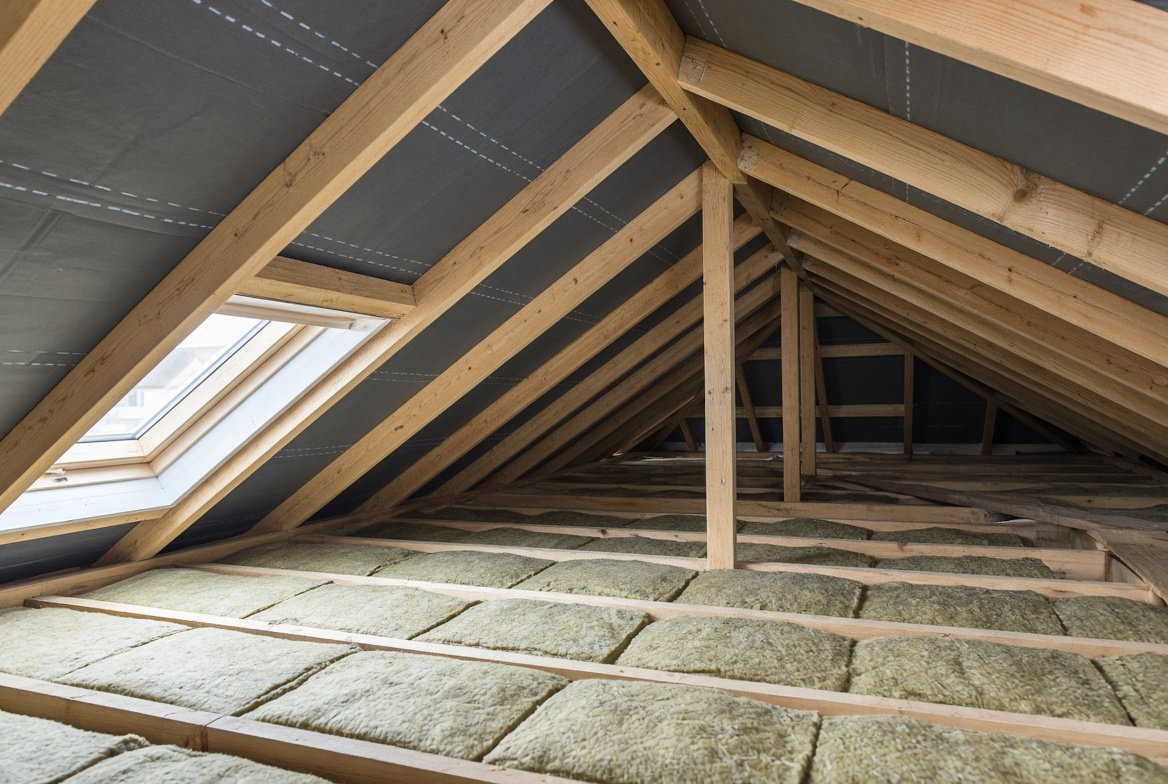
A cold roof is a flat roof where the insulation is placed between the joists, underneath the roof deck. The deck and the joists sit on the cold side of the insulation, so the roof relies on a ventilated gap above the insulation to carry away moisture. It is the traditional way of building a flat roof in the UK, and millions of flat roofs on garages, extensions and older houses are built this way.
This guide explains how a cold roof is built, how it differs from a warm roof, where it still makes sense and why it can go wrong. If you are comparing the two methods, our guide to warm roof construction covers the other approach.
What Is a Cold Roof?
In a cold roof, the structure from the deck down is kept cold in winter because the insulation sits below it. Warm, damp air from the room can reach the cold timber above the insulation and turn to water. To stop this, the roof needs two things: a vapour control layer under the insulation, and a ventilated air gap above it so that any moisture that gets through is carried away.
The terms cold roof and cold deck roof mean the same thing. They are the opposite of a warm roof, which is also called a warm deck roof, where the insulation sits above the deck.
Want a number specific to your roof?
Get matched with local roofers for a free, no obligation quote.
Cold Roof Build-Up: The Layers
From the top down, a typical cold flat roof is made up of these layers:
- Waterproof covering: felt, EPDM, GRP or a similar membrane.
- Roof deck: usually plywood or OSB boards fixed to the joists.
- Ventilated air gap: a clear space between the deck and the insulation, commonly around 50 mm deep.
- Insulation: rigid boards or mineral wool fitted between the joists.
- Vapour control layer: a membrane under the insulation that stops moist room air from rising.
- Plasterboard ceiling: the finish of the room below.
- Joists: the structural timbers.
The air gap is the part that is easiest to get wrong. If insulation is pushed up against the deck, or the vents are blocked, the roof stops working as designed.
How Cold Roof Ventilation Works
Air has to flow through the gap above the insulation, entering at one edge of the roof and leaving at the other. This usually means ventilation openings along two opposite edges of the roof, often protected by insect mesh or vent strips. As a general guide, flat and low-pitch cold roofs (15 degrees or below) are normally given a continuous opening of around 25 mm along each of two opposite edges, which is the larger figure used for shallow roofs, while pitched cold roofs above 15 degrees use 10 mm at the eaves. The right figure depends on the roof size and shape, so check current guidance with your roofer or building control.
The ventilation also needs a clear path through the roof. Internal walls, upstands, rooflights or other obstructions can block the airflow, creating dead zones where moist air sits. That is one of the main reasons that cold roofs are harder to design on complicated shapes. For the broader picture of why roofs need airflow, read our guide to roof ventilation.
Cold Roof vs Warm Roof
| Feature | Cold roof | Warm roof |
|---|---|---|
| Insulation position | Between the joists, below the deck | Above the deck |
| Ventilation gap | Required | Not needed |
| Condensation risk | Higher if not detailed well | Lower |
| Structure temperature | Cold | Warm |
| Height of roof build-up | Fits inside the joist depth | Adds thickness above the deck |
| Best for | Existing roofs where the covering is staying | New builds and full replacements |
Many roofers now recommend a warm roof for new flat roofs because the build-up is simpler and carries less risk. A cold roof still has a place, particularly when the deck and covering are sound and you only want to improve the insulation from inside.
Advantages of a Cold Roof
- Can be done from inside. Insulation can be added without removing the roof covering.
- Does not raise the roof edge. The build-up stays within the joist depth, which helps where upstands and levels are fixed.
- Traditional and familiar. Many roofers know how to build one.
- Lower material cost for the insulation layer. Mineral wool or boards between joists can be cheaper than thick boards above the deck.
Disadvantages of a Cold Roof
- Condensation risk. If ventilation is poor or the vapour control layer has gaps, the timber can get damp and rot.
- Limited insulation depth. The joist depth, minus the air gap, limits how much insulation fits, which can make it hard to meet current regulations.
- Complex on awkward shapes. It is difficult to ventilate roofs with internal walls, rooflights or abutments.
- Hidden problems. Rot may develop above the insulation, out of sight, for years.
- Dependent on maintenance. Vents must stay clear, and insulation must not be moved.
Common Cold Roof Problems
- Condensation and mould on the underside of the deck. Often caused by blocked vents or gaps in the vapour control layer.
- Damp insulation. Wet mineral wool loses much of its performance and can hold moisture against the timber.
- Rotten joists or deck boards. The end result of long-term moisture.
- Blocked eaves vents. Paint, leaves, insulation or insects can close off the airflow. Our guide to over fascia vents explains one way to keep air moving at the edge.
- Staining on the ceiling. This is often mistaken for a leak when the real cause is condensation.
Should You Convert a Cold Roof to a Warm Roof?
If your cold roof is leaking, rotten or you are replacing the covering anyway, converting to a warm roof is often the cleaner long-term solution. The roofer strips the covering, adds a vapour control layer and insulation above the deck and fits a new waterproof membrane. The old insulation between the joists can usually be kept or removed, depending on the design. Ask the roofer how the new build-up will be ventilated or sealed and what U-value it will achieve.
Waterproof Coverings for a Cold Roof
Any standard flat roof covering can be used. Our guide to flat roof materials compares felt, EPDM, GRP and single ply membrane. Whichever you choose, make sure the deck is dry and sound before the covering goes on, and that the fall is correct.
Eaves, Edges and Drainage
The vents must sit at the edges without blocking the path of the water. Water must also drain freely, so the fall, outlets and gutters need to work together. If you are not sure how your roof is built, our flat roof guide explains the basics of flat roof drainage and maintenance.
What to Ask Your Roofer
- Is this a cold roof or a warm roof, and how do you know?
- Where do the vents go, and is there a clear air path across the whole roof?
- How is the vapour control layer fitted and sealed?
- What thickness of insulation can fit and what U-value does it achieve?
- Would converting to a warm roof be better for this project?
Frequently Asked Questions
What is a cold roof?
A cold roof is a flat roof with the insulation between the joists, below the deck, and a ventilated air gap above it to remove moisture.
What is the difference between a cold roof and a warm roof?
In a cold roof, the insulation is below the deck and the roof needs ventilation. In a warm roof, the insulation is above the deck, which keeps the structure warm and avoids the need for a ventilation gap.
Is a warm deck roof the same as a warm roof?
Yes. Warm deck roof is another name for a warm roof, where the insulation sits above the roof deck.
Does a cold roof need ventilation?
Yes. A clear air gap above the insulation and vents at opposite edges are essential, otherwise moisture can build up and cause rot.
Why is my cold roof damp?
Common causes are blocked vents, gaps in the vapour control layer, insulation pushed against the deck or a roof covering that is leaking. A roofer can find out which.
Can I insulate a flat roof from the inside?
Yes, in a cold roof build-up, but it must be done with a proper vapour control layer and an air gap. Poorly done internal insulation is a common cause of condensation damage.
Final Thoughts
A cold roof can work well, but only when it is ventilated properly and the vapour control layer is sealed. For most new flat roofs and full replacements, a warm roof is simpler and safer. If you already have a cold roof, keep the vents clear, watch for condensation and ask a roofer to look at it before small problems become expensive ones.
Get a professional assessment
If you are unsure how much life your current roof has left, a local roofer can give you an honest assessment as part of a free inspection. Browse vetted roofers through our roofer directory, or get a quick replacement estimate using our free cost calculator.