
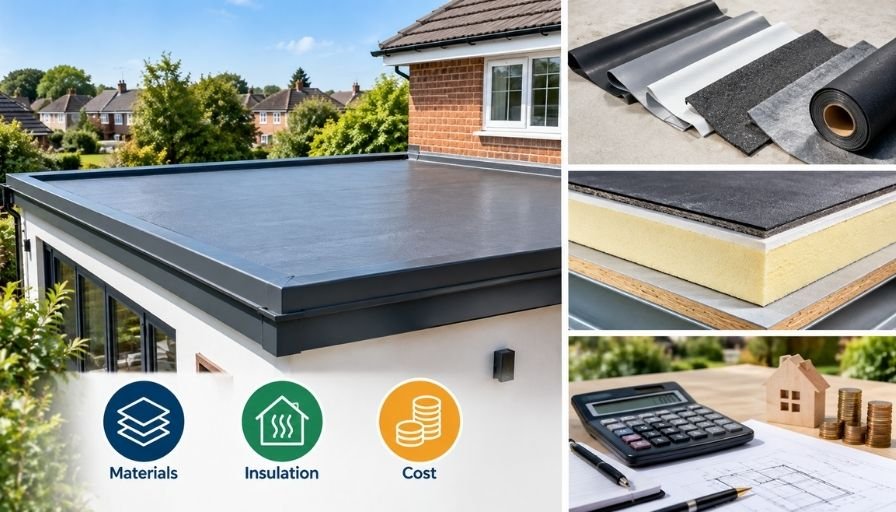
Flat roofs are common on extensions, garages, and modern UK homes, and they come with their own set of materials, insulation choices, and maintenance needs that differ quite a bit from a sloped gable or hip roof. This guide covers what you actually need to know before choosing or repairing one.
What counts as a flat roof
A flat roof is not perfectly level. It usually has a slight pitch, often between 1 and 5 degrees, so rainwater can drain away rather than pool on the surface. This small slope is one of the most important design details, since a flat roof laid completely level is one of the most common causes of standing water and leaks.
Flat roof materials compared
| Material | Typical lifespan | Notes |
|---|---|---|
| Felt or bitumen | 10 to 20 years | Cheapest option, but shortest lifespan and prone to cracking over time |
| GRP fibreglass | 25 to 30 years | Seamless finish, strong, popular for new installations |
| EPDM rubber | 30 to 50 years | Highly durable and flexible, handles UK temperature swings well |
| Single ply membrane | 25 to 35 years | Common on larger commercial-style flat roofs, lightweight |
EPDM rubber and GRP fibreglass have largely replaced traditional felt on new UK installations, since both offer a longer lifespan and fewer seams where water can get in. Felt is still widely used though, and our guide to torch on felt roofs explains how it is installed and how long it lasts. For pricing context on pitched roofing in general, see our gable roof cost guide.
Warm roof versus cold roof construction
This is one of the most important decisions in flat roof construction, and it affects both performance and cost.
Want a number specific to your roof?
Get matched with local roofers for a free, no obligation quote.
- Warm roof. Insulation sits above the structural deck, directly under the waterproof covering. This is now the standard approach for most new flat roofs, since it keeps the structural timber warm and dry, reducing the risk of condensation forming inside the roof build-up.
- Cold roof. Insulation sits between the joists, below the deck. This older method is more prone to condensation problems unless ventilation is carefully designed, and it is used less often in new builds today.
Flat roof insulation
Good insulation on a flat roof does two jobs at once. It keeps heat in during winter, and it protects the structural timber from condensation damage. Rigid insulation boards are the most common choice for warm roof construction, and current UK building regulations set minimum insulation standards for new flat roofs and significant replacements, so this is worth checking with your installer before work begins. For the full layer-by-layer build-up and board types, see our guide to warm roof construction.
Ventilation
Flat roofs need a way for any moisture that does build up to escape, whether through ventilated air gaps in cold roof designs or vapour control layers in warm roof designs. Poor ventilation is one of the most common causes of hidden timber rot in older flat roofs, since problems can develop for years without any visible sign from inside the property.
Common flat roof problems
- Ponding water. Water that sits on the surface for more than 48 hours after rain, usually caused by insufficient fall or a sagging deck
- Blistering. Bubbles forming under felt or membrane coverings, often from trapped moisture or poor installation
- Cracking. More common on older felt roofs as the material ages and becomes brittle
- Perished flashing. Edges and upstands where the flat roof meets a wall are common leak points if flashing has degraded
How much does a flat roof cost
As a general guide, felt roofing typically costs the least per square metre, GRP fibreglass sits in the middle, and EPDM rubber tends to cost more upfront but less over its lifetime given its durability. Exact pricing depends on roof size, access, and whether insulation is being upgraded at the same time. A local roofer can give you an accurate quote based on your specific roof.
Flat roof versus pitched roof
Flat roofs are often chosen for extensions and garages because they are quicker and cheaper to build, and they suit modern architectural styles. Pitched roofs, including gable designs, generally last longer and shed water more effectively by design, which is part of why they remain the standard choice for full house roofs across the UK. If you are weighing up roof shape for a new extension, our gable versus hip roof guide covers pitched roof comparisons in more detail.
Frequently asked questions
How long does a flat roof last?
It depends heavily on material. Felt typically lasts 10 to 20 years, while EPDM rubber can last 30 to 50 years with proper installation and maintenance.
Why does my flat roof keep leaking?
Common causes include ponding water from insufficient fall, perished flashing at the edges, ageing or cracked felt, and poor original installation. A professional inspection can usually identify the exact cause.
Is EPDM rubber better than felt for a flat roof?
Generally yes for longevity. EPDM costs more initially but lasts significantly longer and has fewer seams, which means fewer potential leak points over the roof’s lifetime.
Do flat roofs need planning permission?
A like for like flat roof replacement usually does not need planning permission, but adding a flat roof extension or changing the roof’s height often does. Check with your local council before starting significant work.
This guide is independent editorial content. It is not sponsored.
Get a professional assessment
If you are unsure how much life your current roof has left, a local roofer can give you an honest assessment as part of a free inspection. Browse vetted roofers through our roofer directory, or get a quick replacement estimate using our free cost calculator.