
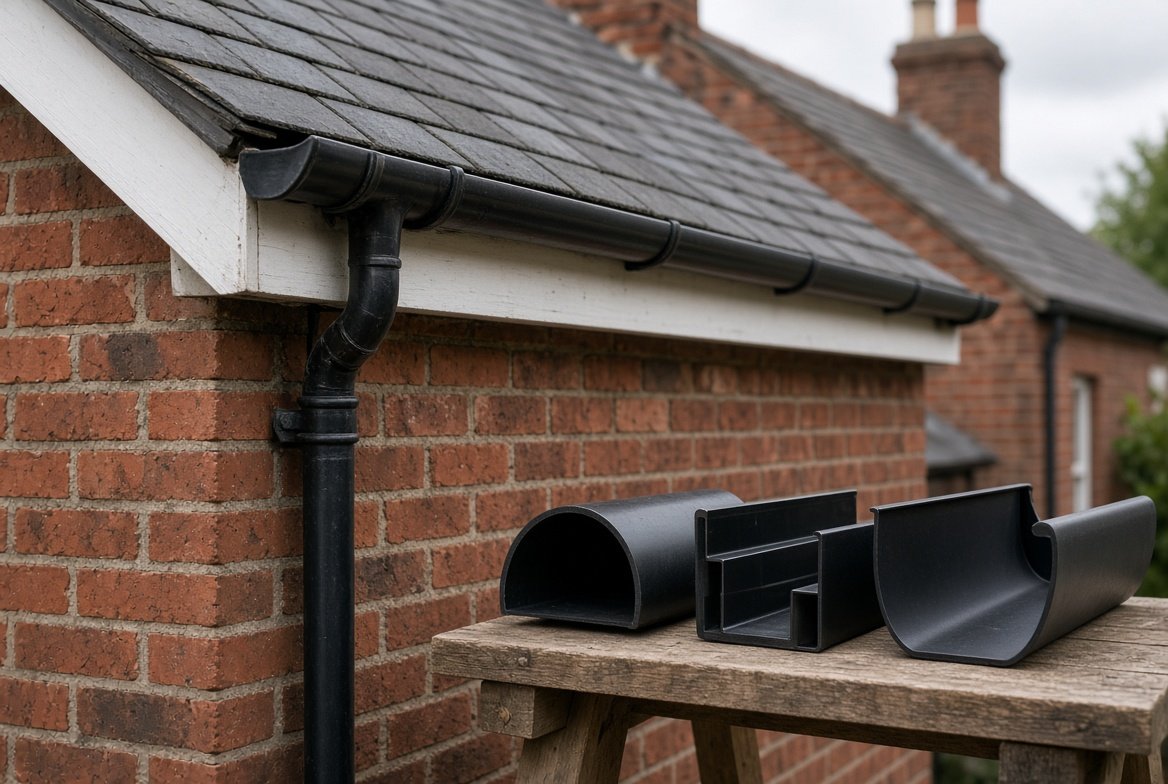
Guttering looks simple from the pavement, but the profile and material you choose change how well it copes with heavy rain, how it sits against the fascia and how much upkeep it needs. This guide compares the main types of guttering used on UK homes, including half round, ogee, square and deep flow, along with the materials they are made from, so you can pick a style that suits both the building and the roof above it.
Why the Type of Guttering Matters
Gutters collect rainwater from the roof edge and carry it to the downpipes and drains. If the profile is too small for the roof, water can spill over the front in a downpour and soak the wall below. If the material does not suit the building, it can look out of place or wear out early. The right choice depends on roof size, how exposed the house is, the style of the property and your budget. Our guide to how roof valleys and guttering work explains the wider drainage picture.
Gutter Profiles Compared
The profile is the shape of the channel. Capacity depends on the exact width and depth of each product, so treat the table below as a general guide and compare the manufacturer’s flow data for your roof.
| Profile | Look | Capacity (general guide) | Typical use |
|---|---|---|---|
| Half round | Simple curved channel | Standard | Most houses, garages and outbuildings |
| Ogee | S-shaped front, like a moulding | Similar to half round, varies by size | Period and traditional homes |
| Square | Flat base, straight sides | Generally good | Modern homes and extensions |
| Deep flow | Deeper, wider channel | Highest of the common domestic profiles | Large roofs, long runs, exposed sites |
Half Round Guttering
Half round is the classic gutter shape and one of the most widely used in the UK. The curved channel is easy to make, easy to find in most colours and materials, and simple to repair. Typical domestic sizes are around 100 to 115 mm wide, though larger sizes exist. It suits most roofs, and it is the usual choice for garages, sheds and extensions.
Want a number specific to your roof?
Get matched with local roofers for a free, no obligation quote.
Ogee Guttering
Ogee guttering has a front profile with a gentle S-curve, similar to a decorative moulding. It is popular on Victorian, Edwardian and other traditional homes because it looks like the gutters originally fitted to them, and it is also made in modern uPVC and aluminium. The shape tends to sit snugly against the fascia, which many owners find neater. Because the profile is deeper than a plain half round, capacity varies by product, so check the data sheet.
Square Guttering
Square, or box, guttering has a flat base and straight sides. It gives a crisp, modern line and often holds more water than a half round gutter of the same width. It is a common choice on contemporary houses, flat roof edges and new extensions. Corners and joints are more numerous than on half round runs, so good fitting matters.
Deep Flow and High Capacity Guttering
Deep flow guttering has a larger, deeper channel designed to carry more water. It is worth considering where the roof is large, the gutter run is long, or the property sits in an exposed area with heavy rainfall. It is also useful where a roof valley or a large roof slope delivers a lot of water to one point. Downpipes and outlets need to be sized to match the extra flow, otherwise the gutter can still overflow.
Gutter Materials
uPVC
uPVC is the most common guttering material on UK homes. It is light, affordable, does not rust and comes in black, white, brown, grey and cast iron effect finishes. Over many years it can fade or become brittle in strong sunlight, and sections can sag if the brackets are too far apart. It is the easiest material for DIY replacement.
Cast Iron
Cast iron is the traditional material on older and listed buildings. It is heavy and strong, and when painted and maintained it can last for a very long time. It can rust if the paint fails, joints need sealing, and the weight means fixings must be sound. Repairs are often possible, which is one reason it is still specified on period properties.
Cast Aluminium
Cast aluminium gives the look of cast iron at a lower weight and without the rust. It is a popular alternative for period homes where owners want a traditional appearance with less maintenance. It costs more than uPVC.
Seamless Aluminium
Seamless gutters are formed on site from a roll of aluminium, so a long run can be made in one piece with very few joints. Fewer joints means fewer places to leak. It needs a specialist installer and costs more than standard systems, but many owners value the clean look and the powder coated colour range.
Galvanised Steel, Zinc and Copper
Galvanised steel is strong and used on some commercial and agricultural buildings. Zinc and copper are premium materials that age to an attractive patina and can last for decades. They are usually installed by specialists. Avoid mixing metals where water from copper runs over aluminium or galvanised steel, because it can cause corrosion over time.
Older Guttering and Asbestos
Asbestos warning. Gutters and downpipes made from asbestos cement were used in many buildings before asbestos was banned in the UK in 1999. If your gutters are old, grey, heavy and brittle, do not drill, cut, scrub, scrape or pressure wash them, and do not break them up for disposal. Have the material identified by a competent surveyor before any work, and read the HSE asbestos guidance. The same warning applies to old soffits, cement sheets and similar materials near the roof edge.
Gutter Size, Downpipes and Brackets
The gutter has to be matched to the downpipe and to the roof. Round downpipes of around 68 mm and square downpipes of around 65 mm are common on houses, but sizes vary by system, so always buy fittings designed for the same range. Brackets should be spaced as the manufacturer instructs, typically no more than about one metre apart for plastic systems, and the gutter should have a slight fall towards the outlet so water drains instead of standing. At the roof edge, an eaves tray helps guide water from the underlay into the gutter instead of behind it. If you are not sure how the edge of your roof is built, our guide on what eaves are explains the parts involved.
Other Gutter Arrangements
Not every roof drains into a gutter fixed to the fascia. Where two roofs meet, water may run into a lined channel built into the roof, as explained in our guide to the bonding gutter and valley gutter. Flat roofs often drain through outlets, covered in our article on the roof gully. On terraced and some semi-detached homes, guttering can run across a party wall or be shared, so see our notes on terraced house roofs before you plan any work.
How to Choose the Right Type of Guttering
- Match the building. Ogee or cast iron effect suits period homes, while square suits modern designs.
- Consider roof size and exposure. Larger roofs and exposed sites may need deep flow or larger downpipes.
- Think about maintenance. uPVC and aluminium need little more than regular cleaning, while cast iron needs repainting. Our gutter cleaning guide explains how and how often to do it.
- Set a realistic budget. uPVC is usually the lowest cost, with cast iron, seamless aluminium, zinc and copper costing more.
- Keep the system consistent. Use matching gutters, brackets, joints and downpipes from one range.
Working at height is dangerous. Replacing gutters means using ladders or scaffolding, and falls from ladders are a leading cause of injury in home maintenance. If the gutters are above ground floor level, hire a qualified roofer or use a proper scaffold tower rather than leaning a ladder on the gutter itself.
Planning Rules and Listed Buildings
Replacing guttering like for like is normally straightforward in England. If your home is listed, or in a conservation area with specific rules, the materials and profile may be controlled, so check with your local planning authority before you change them. Scotland, Wales and Northern Ireland have their own planning and building control systems, so check locally if you live there.
Frequently Asked Questions
What is the most common type of guttering in the UK?
Half round uPVC is one of the most common choices on UK homes, because it is light, affordable and easy to fit.
What is the difference between ogee and half round guttering?
Half round has a simple curved channel, while ogee has an S-shaped front that looks like a moulding. Ogee is often chosen for period homes, and half round for general use.
What is deep flow guttering used for?
Deep flow guttering carries more water than standard profiles, so it suits large roofs, long runs and areas with heavy rainfall. The downpipes need to be sized to match.
Which guttering material lasts longest?
Cast iron, aluminium, zinc and copper can all last for many decades with the right care. uPVC also lasts for decades but may fade or become brittle with age.
Can I mix different guttering profiles or ranges?
It is best not to. Joints, brackets and downpipes are made to fit the same system, and mixing them often causes leaks. Ask a supplier about adaptors if you must join to an existing run.
Do I need planning permission to replace guttering?
Like for like replacement normally does not, but listed buildings and some conservation areas have rules on materials. Check with your local planning authority first.
Final Thoughts
The best guttering is the type that suits your roof, your house and your budget. Half round is a reliable all-rounder, ogee suits traditional homes, square gives a modern look, and deep flow is there for large roofs and heavy rain. Choose a material you are happy to maintain, keep the whole system matched, and check old gutters for asbestos before touching them.
Get a professional assessment
If you are unsure how much life your current roof has left, a local roofer can give you an honest assessment as part of a free inspection. Browse vetted roofers through our roofer directory, or get a quick replacement estimate using our free cost calculator.