
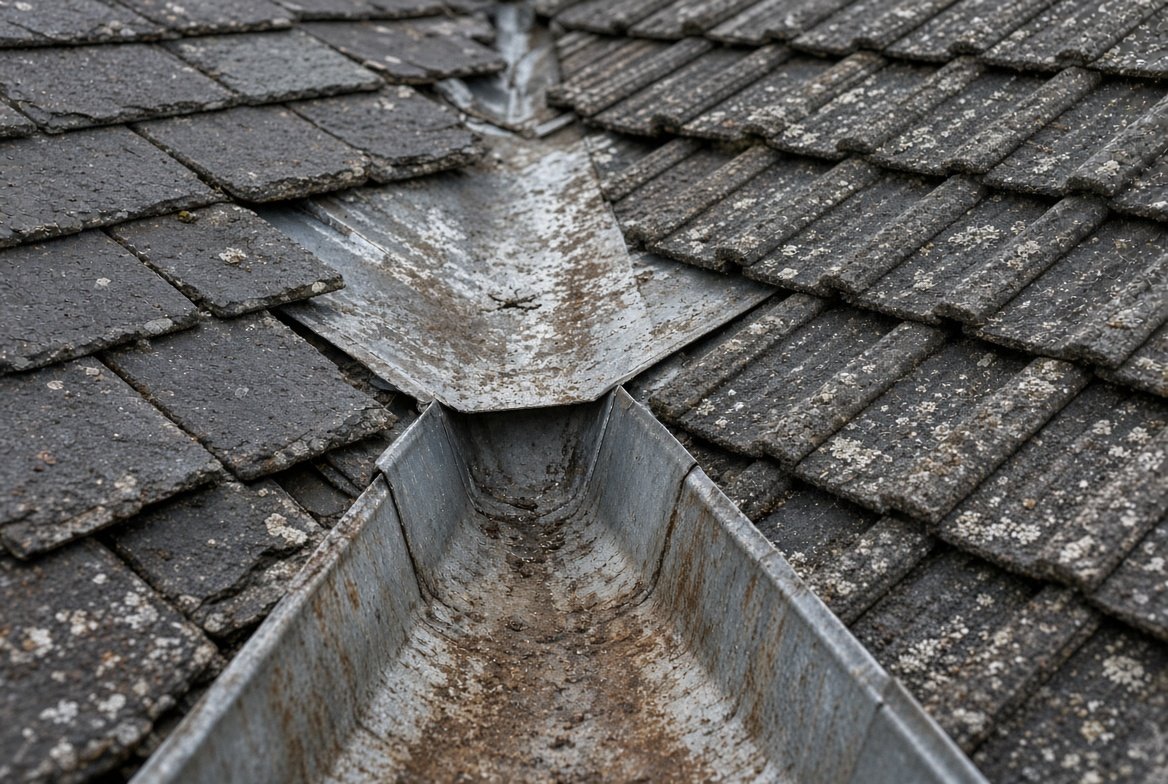
A bonding gutter is a lined channel built into the roof, usually where a roof slope meets a wall or where two roofs meet, so rainwater can flow along it and out to a downpipe. You will also hear them called valley gutters or secret gutters, because they are often hidden behind the tiles or a parapet. They are common on terraced houses, extensions and older buildings, and they are one of the most frequent hidden causes of leaks.
The terms are used a little differently by different trades, but the idea is the same: a lined channel that collects water where a normal edge gutter cannot be fitted. This guide explains how they work, what they are made from, the problems to look for and how repairs are done. For gutters in general, see our guide to roof valleys and guttering.
What Is a Bonding Gutter?
A bonding gutter is a gutter set into the roof structure instead of hanging from the eaves. It might sit:
- Where a pitched roof meets a taller wall, such as the side of a neighbouring house or an extension.
- Between two roof slopes that slope towards each other, such as on a butterfly roof or between terraced houses.
- Behind a parapet wall, where the water has nowhere to run over the edge.
The channel is lined with a waterproof material, and the tiles or slates on either side are cut to follow its edge. At the low end, the channel meets a hopper, an outlet or a downpipe that takes the water away.
Want a number specific to your roof?
Get matched with local roofers for a free, no obligation quote.
Bonding Gutter vs Valley Gutter
The two terms overlap. In general:
- Valley gutter: a channel at the internal angle where two roof slopes meet. Water from both slopes runs into it.
- Bonding gutter: a lined gutter along the junction of a roof and a wall, or between two roofs. The name is often used for these built-in channels.
Some roofers use the two names for the same thing, so ask what is meant when you read a quote or a report.
What Are Bonding Gutters Lined With?
- Lead: the traditional lining, long-lasting and easy to shape. Our guide to lead flashing explains the lead codes used for gutters and valleys.
- GRP (fibreglass): a seamless or pre-formed lining that is cheaper than lead. See our guide to GRP valleys for how it compares.
- EPDM or single ply membrane: flexible sheets that suit long or complex channels. Our guide to flat roof materials covers the main options.
- Mastic asphalt: an older seamless lining on some period buildings.
- Zinc or other metals: used on some modern and traditional roofs.
Why Bonding Gutters Fail
- Blocked outlets. Leaves, moss and debris stop the water draining, and it backs up under the tiles.
- Too small for the roof. A narrow or shallow channel cannot cope with heavy rain.
- Poor falls. Water sits in the channel and wears out the lining.
- Cracked or split lining. Age, movement or foot traffic can open the joints.
- Failed upstands at the wall. Water gets behind the lining where it turns up the wall.
- Frost and ice. Frozen water can lift edges and split joints.
- Mortar and flashing failures. Gaps at the wall let rain in beside the gutter.
Signs of a Bonding Gutter Problem
- Damp patches or stains on the ceiling or the wall next to the gutter line.
- Water running down the inside of a party wall.
- Overflowing water at the end of the gutter during rain.
- Moss, weeds or standing water in the channel.
- Slipped tiles, cracked lining or loose lead along the gutter.
- Rot in the timbers in the loft below the channel.
Because the channel is partly hidden, a leak may only show up long after the damage begins. If you see stains near a roof junction, have the gutter inspected. Our guide to the terraced house roofs explains why these gutters are so common on terraces.
How Bonding Gutters Are Repaired
The right repair depends on what has failed.
- Cleaning: clearing debris and unblocking the outlet. This is often all that is needed.
- Patching: small cracks in the lining can sometimes be patched with matching material.
- Re-sealing and re-pointing: fixing failed pointing and flashings along the wall.
- Re-lining: when the lining is worn or split, it is stripped and replaced with new lead, GRP or membrane.
- Changing the outlet: fitting a larger outlet or a leaf guard to improve drainage.
- Re-forming the falls: correcting the slope so water drains freely.
Re-lining usually means lifting the tiles along the gutter and putting them back afterwards. For typical repair prices, see our roof leak repair cost guide.
How to Maintain a Bonding Gutter
- Check the outlet and channel twice a year, especially in autumn after the leaves fall.
- Clear debris and moss by hand, without scratching the lining. Our gutter cleaning guide covers safe methods and how often to do it.
- Look for ponding, cracks and loose edges.
- Do not walk in the channel, which can crack GRP or damage lead.
- Have the lining and flashings checked by a roofer every few years, or after storms.
- Consider leaf guards on outlets in areas with trees.
Design Points for New Bonding Gutters
- Size the channel for the roof. A larger roof area needs a wider and deeper gutter.
- Give a continuous fall towards the outlet so water does not stand.
- Use the right lining for the length and the weather exposure.
- Provide an overflow route. If the outlet blocks, excess water should leave outside the building.
- Allow safe access for cleaning and inspection.
Questions to Ask Your Roofer
- What type of gutter is this, and what is it lined with?
- Is it a repair or a full re-lining, and why?
- Will the outlet and fall be improved?
- What is the overflow route if the gutter blocks?
- How long is the guarantee, and what does it cover?
Frequently Asked Questions
What is a bonding gutter?
A lined channel built into the roof, usually where a roof meets a wall or another roof, that collects rainwater and carries it to a downpipe.
What is the difference between a bonding gutter and a valley gutter?
A valley gutter sits where two roof slopes meet. A bonding gutter usually runs along a wall or roof junction. The names are often used interchangeably.
What are bonding gutters made from?
Usually lead, GRP, EPDM or other membranes, or mastic asphalt, depending on the building and the age of the roof.
How do I know if my bonding gutter is leaking?
Look for damp stains on the ceiling or wall near the roof junction, water overflowing at the end of the gutter or debris and standing water in the channel.
Can I clean a bonding gutter myself?
If you can reach it safely, clearing leaves by hand is fine. Working on a roof is dangerous, so use a roofer for anything high or hard to access.
How long does a bonding gutter last?
It depends on the lining and the maintenance. Lead can last for decades, while cheaper linings may need replacing sooner.
Final Thoughts
A bonding gutter is a small part of the roof that carries a lot of water. Keep it clear, watch for damp near roof junctions and fix small problems before the lining fails. If you need a new lining, choose a material that suits the length and exposure, and ask the roofer to explain the falls, outlets and overflow.
Get a professional assessment
If you are unsure how much life your current roof has left, a local roofer can give you an honest assessment as part of a free inspection. Browse vetted roofers through our roofer directory, or get a quick replacement estimate using our free cost calculator.