
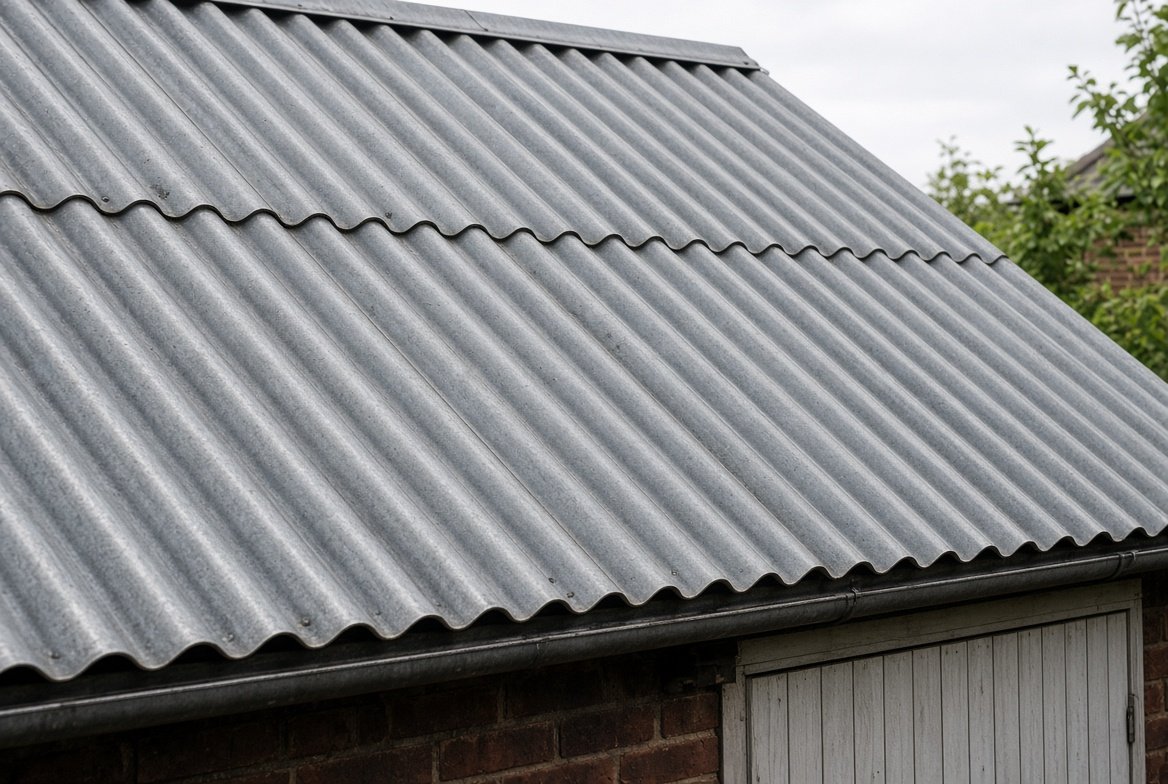
A tin roof is one of the most recognisable roofs in the world. People use the term for any metal roof made of corrugated or profiled sheets, from old galvanised iron on a barn to modern coated steel on a garage or garden room. In practice, a “tin roof” is rarely made of tin. It is normally steel or iron with a zinc coating, or a modern painted steel sheet.
This guide explains what a tin roof is, the main types, how long they last, the pros and cons, how flashings work on corrugated sheets and what to check before you buy. For a wider look at metal coverings, see our metal roof guide.
What Is a Tin Roof?
The name is a historic leftover. Early metal roofs were sometimes made from iron sheet coated in tin, and the name stuck even after galvanised and painted steel replaced them. Today, a tin roof usually means one of three things:
- Corrugated iron or galvanised steel: the classic wavy sheets, coated in zinc to prevent rust.
- Box profile or trapezoidal steel sheets: flat-topped ribs, common on farm buildings, garages and industrial units.
- Standing seam metal: a more modern, smooth system with raised seams. Some people call this a standing seam tin roof. See our guide to the standing seam roof for how it differs.
Types of Tin Roofing Sheet
Corrugated Galvanised Sheets
The traditional choice. Wavy corrugated sheets with a zinc coating, strong for their weight and cheap. They suit sheds, barns, outbuildings and rustic buildings.
Want a number specific to your roof?
Get matched with local roofers for a free, no obligation quote.
Coated or Painted Steel Sheets
Steel sheets with a factory-applied colour coating over the zinc layer. They resist rust better, come in many colours and often carry longer guarantees.
Tile-Effect Sheets
Metal sheets pressed to look like rows of roof tiles. They are light and quick to fit, and popular on extensions and garages. Our guide to lightweight and low pitch roof tiles compares them with other options.
Insulated Roof Panels
Metal sheets bonded to an insulation core. They give a roof, insulation and ceiling in one panel and are common on workshops and garden rooms.
Advantages of a Tin Roof
- Low cost. Corrugated sheet is one of the cheapest roof coverings.
- Light weight. It puts little load on the structure.
- Quick to install. Large sheets cover a lot of roof per hour.
- Works at low pitch. Many sheets can be used at much shallower angles than tiles.
- Durable. Properly coated sheets can last decades.
- Fire resistant. Metal does not burn.
- Easy to replace. Damaged sheets can be swapped without disturbing the rest.
Disadvantages of a Tin Roof
- Rust. Cut edges, scratches and fixing holes can start to rust if they are not treated.
- Noise. Rain and hail can be loud without insulation underneath.
- Condensation. Metal is a cold surface, so moisture can form underneath, especially in garages and workshops.
- Heat gain. Uninsulated metal can get hot in summer.
- Dents. Thin sheets can dent from hail, ladders or foot traffic.
- Appearance. The industrial look suits some buildings but not all, and may not be allowed in some planning areas.
How Long Does a Tin Roof Last?
Lifespan depends on the coating, the thickness of the sheet, the environment and the fixing. As a general guide:
- Basic galvanised corrugated sheets: often 20 to 40 years.
- Painted or coated steel sheets: commonly 30 years or more with the right guarantee.
- Roofs near the coast or in polluted areas can age faster, because salt and chemicals attack the coating.
Warning: Old Corrugated Roofs May Contain Asbestos
Corrugated sheets made of fibre cement look very similar to metal ones, and many of those fitted before about 2000 contain asbestos. If you have an old garage or barn roof and are not sure what it is made from, do not drill, cut, scrub or break it. Have a sample tested and use a licensed contractor if asbestos is confirmed. Our guide to garage roof replacement covers this in more detail.
What Pitch Does a Tin Roof Need?
Metal sheeting can work at lower pitches than tiles. Many profiles are used from roughly 5 to 10 degrees, depending on the profile and the laps, and standing seam systems can go lower. Always check the manufacturer’s minimum for your product. If you are not sure of your roof angle, use our roof pitch calculator.
Laps and Fixings on Corrugated Sheets
- Side laps: sheets overlap along the sides by at least one corrugation, and more in exposed locations.
- End laps: where a sheet has to be joined along its length, the overlap needs to be larger on low pitches. Follow the manufacturer’s guidance.
- Fixings: screws or nails with sealing washers are fixed through the sheet into the purlins or battens beneath. They are normally fixed on the crest of the corrugation, not in the trough, so that water does not sit around the holes.
- Fixings count: more fixings are needed at edges and corners, where wind lift is highest.
Corrugated Roof Flashing
Corrugated and profiled sheets cannot be flashed in the same way as tiles, because the surface is wavy. Where the sheet meets a wall, a chimney or a ridge, the gaps are closed with specially shaped pieces.
- Profile fillers (foam or rubber): shaped to fit the wave and close the gaps under ridges and at the eaves.
- Wall flashings: metal flashings tucked into the wall and dressed over the sheet, sealed with a compatible sealant.
- Ridge and hip caps: formed from matching metal and fixed over the top of the sheets.
- Barge flashings: cover the gable edges and keep wind-driven rain out.
Use flashings made from compatible metals, and keep dissimilar metals apart to avoid corrosion. Our guide to roof flashing explains the basics of how they work.
Maintaining a Tin Roof
- Inspect once a year for loose fixings, rust spots, dents and damaged sealant.
- Touch up scratches and cut edges with a suitable paint or coating.
- Replace corroded or loose fixings with matching ones.
- Keep the gutters and surface clear of leaves and debris.
- Avoid walking on the sheets. Use boards or crawl ladders when access is needed.
Frequently Asked Questions
What is a tin roof made of?
Usually galvanised or coated steel, not tin. The name comes from older roofs that used tin-coated iron.
How long does a tin roof last?
Basic galvanised sheets often last 20 to 40 years, and coated steel can last 30 years or more, depending on conditions.
Are tin roofs noisy?
They can be, especially in heavy rain or hail. Insulation or a sound-absorbing layer under the sheets reduces the noise a lot.
Can a tin roof be installed at a low pitch?
Often yes, from around 5 to 10 degrees depending on the profile and laps. Check the manufacturer’s guidance.
How do you flash a corrugated tin roof?
With profile fillers at ridges and eaves, metal wall flashings sealed to the wall and barge flashings along the gable edges, using compatible metals and sealants.
How can I tell if my corrugated roof has asbestos?
Fibre-cement sheets look similar to metal but are thicker, heavier and not magnetic. Do not disturb them. Have a sample tested if you are unsure.
Final Thoughts
A tin roof is a low-cost, lightweight and quick way to cover a garage, outbuilding or extension, as long as you deal with condensation, noise and the details around the edges. Choose a good coating, fix the sheets correctly, and check old corrugated roofs for asbestos before touching them.
Get a professional assessment
If you are unsure how much life your current roof has left, a local roofer can give you an honest assessment as part of a free inspection. Browse vetted roofers through our roofer directory, or get a quick replacement estimate using our free cost calculator.