
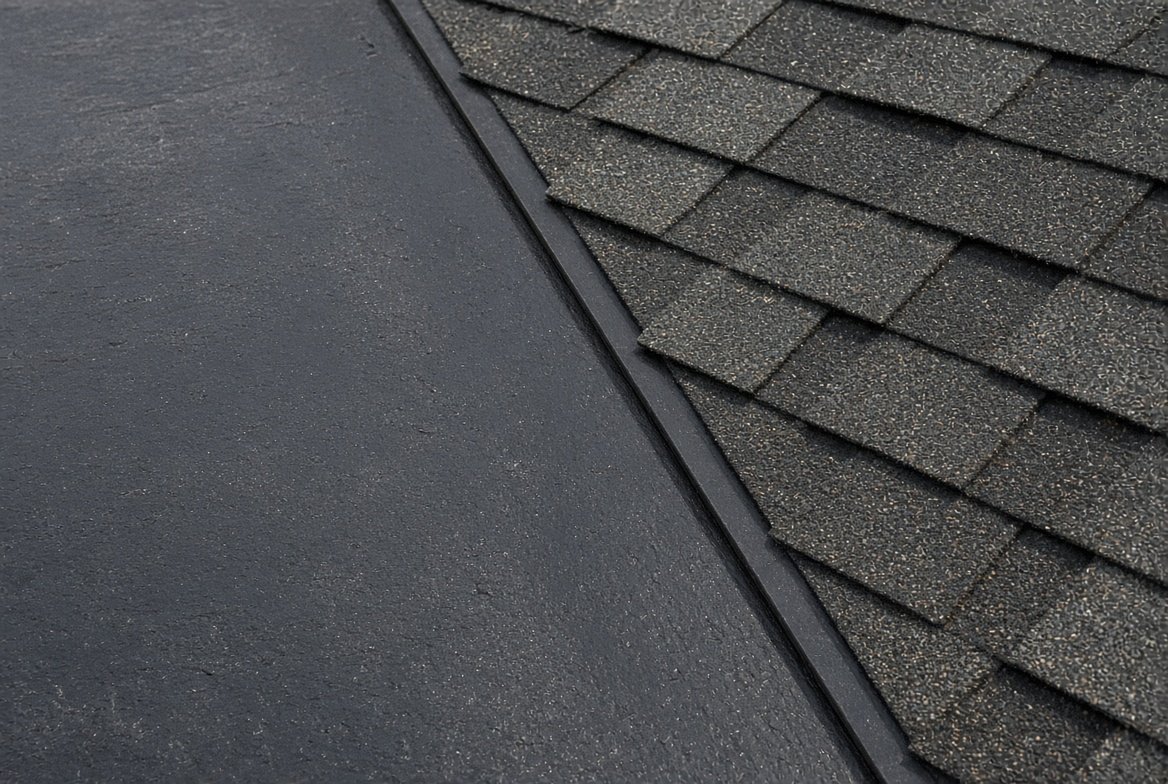
“Asphalt roof” means two very different things depending on where you are. In the UK, asphalt roofing usually refers to mastic asphalt, a hot-applied, seamless waterproof layer used on flat roofs, balconies and walkways. In the US, and in many online guides, it usually means asphalt shingles, thin fibreglass-based tiles coated in bitumen and mineral granules. Both are made from bitumen, but they are used in completely different ways.
This guide explains both, how they compare, how long they last and where each is used in the UK. If you are specifically interested in shingles, our guide to roof shingles goes into more detail.
Mastic Asphalt Roofing (the UK Meaning)
Mastic asphalt is a blend of bitumen and fine limestone aggregate. It is heated until it flows like a thick liquid, spread over the roof deck, and left to cool into a hard, seamless waterproof surface. It has been used on British roofs for well over a century, including on many historic buildings and flat-roofed extensions.
How Mastic Asphalt Is Laid
- Prepare the deck. The surface must be clean, dry and sound, and an isolating layer such as sheathing felt is usually laid first.
- Heat the asphalt. It is melted in a mobile cauldron on site.
- Spread in two coats. The hot material is spread by hand and floated smooth, normally in two layers that together give a thickness of about 20 mm.
- Dress the details. Upstands, edges and outlets are formed, usually with extra reinforcement at corners.
- Add a protective finish. Solar reflective paint, chippings or paving can be added to shield the surface from sunlight and wear.
Advantages of Mastic Asphalt
- Seamless. There are no joints or laps for water to find.
- Long life. Well-laid asphalt can last 30 years or more, and many historic roofs have lasted much longer.
- Hard-wearing. It copes with foot traffic, which is why it is common on balconies and roof terraces.
- Good on complex shapes. It can be moulded around corners and details.
- Repairable. Damaged areas can often be cut out and patched.
Disadvantages of Mastic Asphalt
- Hot work. The process involves molten material and carries a fire and burn risk, so only trained contractors should do it.
- Weight. It is heavy compared with single ply or felt.
- Cost. It is usually more expensive than felt.
- Specialist skills. Fewer contractors offer it than other flat roof coverings.
- Cracking if the structure moves. It can crack over time if the deck flexes or is badly supported.
Asphalt Shingles (the US Meaning)
Asphalt shingles are thin, flat roof tiles made from a fibreglass mat coated in bitumen and covered with mineral granules. They are the most popular roofing material in North America and are sold in the UK mainly for sheds, summerhouses, garages and some low-cost outbuildings.
Want a number specific to your roof?
Get matched with local roofers for a free, no obligation quote.
Types of Asphalt Shingle
- 3-tab shingles: flat, uniform and the cheapest option. They have a shorter life than the others.
- Architectural (laminated) shingles: thicker, with a layered, dimensional look and a longer life.
- Premium shingles: heavier and designed to imitate slate or cedar.
Advantages of Asphalt Shingles
- Low cost and easy to fit.
- Lightweight compared with concrete or clay tiles.
- Available in many colours.
- Can be cut to follow curves and awkward shapes.
Disadvantages of Asphalt Shingles
- Shorter life. Typical lifespans are around 20 to 30 years, and often less in the UK’s wet climate.
- Less common here. They are not standard on UK homes, and fewer roofers are familiar with them.
- Need a solid deck. They are fixed to plywood or similar boarding, not to battens.
- Moss and algae. They can grow moss in damp, shaded areas.
- Granule loss. The surface wears over time and washes into the gutters.
Asphalt Roof Types Compared
| Feature | Mastic asphalt | Asphalt shingles |
|---|---|---|
| Common use in the UK | Flat roofs, balconies, walkways | Sheds, garages, outbuildings |
| Form | Seamless poured layer | Individual overlapping shingles |
| Typical lifespan | 30 years or more | 20 to 30 years |
| Roof type | Flat or very low pitch | Pitched |
| Installation | Hot-applied by specialists | Nailed to a solid deck |
| Cost level | Medium to high | Low |
Where Asphalt Roofing Makes Sense
- Balconies and roof terraces: mastic asphalt is a classic choice because it can be walked on and finished with paving.
- Flat roofs with many details: asphalt moulds around pipes, rooflights and corners.
- Period flat roofs: asphalt matches the original covering on many older buildings.
- Sheds and outbuildings: asphalt shingles are a cheap, light option on a pitched outbuilding roof.
For a wider comparison with felt, EPDM, GRP and single ply, see our flat roof materials guide.
What Pitch Does an Asphalt Roof Need?
Mastic asphalt is designed for flat and very low-pitch roofs, with a fall to move water towards outlets. Asphalt shingles need a pitched roof, and manufacturers set a minimum pitch, so check the data sheet for the product. If you want to measure the slope of a roof, our roof pitch calculator will give you the angle.
Common Asphalt Roof Problems
- Cracks and splits: from structural movement, ageing or foot traffic on an unprotected surface.
- Blistering: trapped moisture or air under the layer.
- Ponding: water standing on the roof, which wears the surface faster.
- Failed upstands and flashings: a common leak point on any flat roof. Our guide to roof flashing explains how these joints are sealed.
- Curling or missing shingles: on pitched asphalt shingle roofs, after storms or with age.
Asphalt Roof Cost Factors
Costs depend on the type of asphalt, the thickness, the size of the roof, the number of details and access. Mastic asphalt generally costs more than felt, and asphalt shingles are among the cheaper pitched coverings. Prices vary widely, so get several written quotes that include the specification, details and guarantee.
Questions to Ask Your Roofer
- Is this mastic asphalt or asphalt shingle, and why is it right for this roof?
- What is the total thickness, and how many coats will be laid?
- How will the upstands, edges and outlets be finished?
- What fire safety precautions will you take during hot work?
- What guarantee do you give, and what does it cover?
Frequently Asked Questions
What is an asphalt roof?
In the UK it usually means mastic asphalt, a hot-applied seamless flat roof covering. Elsewhere it often means asphalt shingles, a pitched roof covering made from bitumen-coated tiles.
How long does an asphalt roof last?
Mastic asphalt commonly lasts 30 years or more. Asphalt shingles typically last 20 to 30 years, and sometimes less in damp climates.
Is mastic asphalt better than felt?
It is seamless and longer-lasting, but heavier and usually more expensive. Felt is cheaper and widely used, but has joints that can fail.
Are asphalt shingles used in the UK?
They are used mainly on sheds, summerhouses and outbuildings. Tiles and slate are far more common on UK homes.
Can I lay asphalt myself?
Mastic asphalt should be left to trained contractors because it involves molten material. Asphalt shingles are easier, but a poor job still causes leaks.
Can asphalt be repaired?
Yes. Damaged areas of mastic asphalt can be cut out and patched, and individual shingles can be replaced. Widespread cracking usually means the roof is near the end of its life.
Final Thoughts
Asphalt roofing covers two very different products, and the right one depends on the roof. Mastic asphalt is a durable seamless choice for flat roofs, balconies and complex details, while asphalt shingles are a low-cost pitched option for outbuildings. Check which one is being quoted, ask for the full specification and use a contractor with real experience of the system.
Get a professional assessment
If you are unsure how much life your current roof has left, a local roofer can give you an honest assessment as part of a free inspection. Browse vetted roofers through our roofer directory, or get a quick replacement estimate using our free cost calculator.