
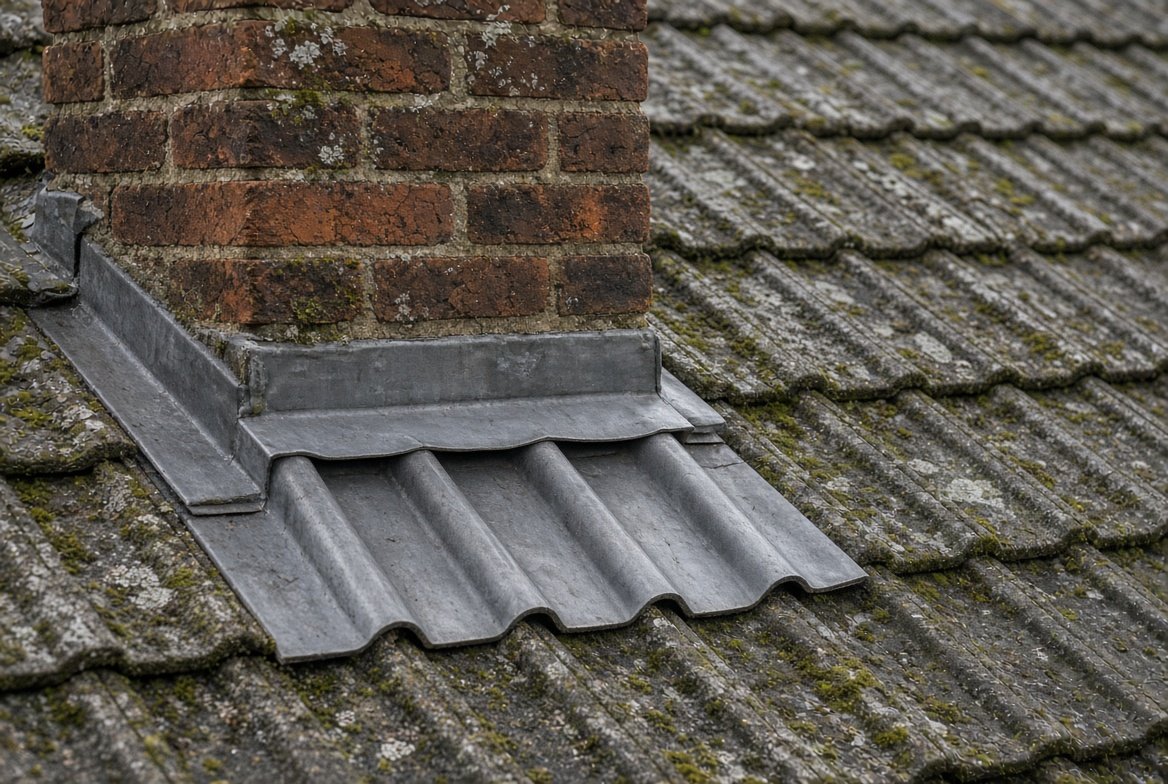
Flashing rarely gets noticed until it fails, but it is one of the most important parts of any roof. It is the thin material fitted at joints and junctions to stop water getting in, and a large share of roof leaks trace back to flashing that has cracked, corroded, or simply worked loose over time.
What flashing actually does
A roof covering, whether tiles, slate, or a flat roof membrane, is good at shedding water off a continuous surface. The problem is joints. Anywhere a roof meets a wall, chimney, dormer, or another roof plane, there is a gap that plain tiles or slates cannot seal on their own. Flashing bridges that gap, directing water back onto the roof surface instead of letting it seep into the structure underneath.
Common flashing materials
| Material | Typical lifespan | Notes |
|---|---|---|
| Lead | 50 years or more | Traditional choice, highly durable, easy to dress around complex shapes |
| Aluminium | 20 to 30 years | Lighter and cheaper than lead, but less flexible for detailed work |
| Zinc | 30 to 40 years | Good corrosion resistance, common on higher spec projects |
| Lead alternative membranes | 20 to 25 years | Synthetic products designed to mimic lead at a lower cost, increasingly popular |
Lead remains the benchmark material for good reason. It can be shaped by hand around chimneys, valleys, and awkward junctions in a way that rigid materials cannot easily match, and a well fitted lead flashing detail can genuinely outlast several roof coverings above it. For lead codes, step flashings and how lead is fitted, read our lead flashing guide.
Where flashing is used
Want a number specific to your roof?
Get matched with local roofers for a free, no obligation quote.
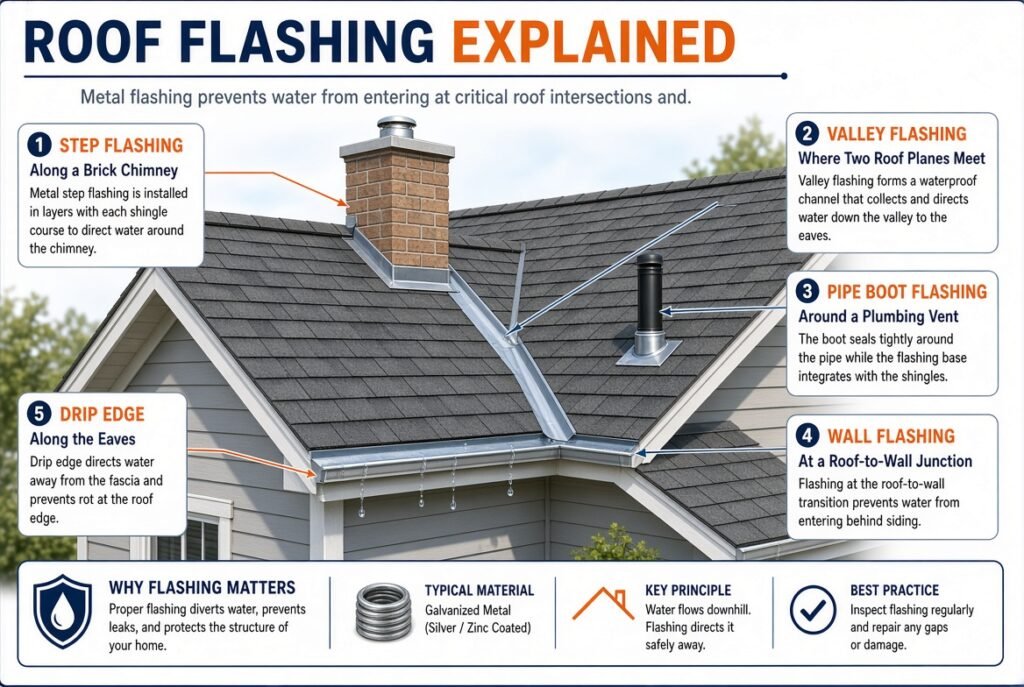
- Chimney flashing. Wraps around the base of a chimney stack where it passes through the roof, one of the most leak prone junctions on any house
- Valley flashing. Sits in the internal angle where two roof slopes meet, channelling a large volume of water during heavy rain
- Gable end flashing. Runs along the edge of a gable roof where the tiles meet the gable wall, an area also discussed in our guide on gable end wall condition and insurance
- Dormer and roof window flashing. Seals the junction where a dormer or skylight structure breaks through the main roof plane
- Abutment flashing. Used where a roof meets a vertical wall, such as at an extension junction
Signs your flashing needs attention
- Visible cracking, splitting, or corrosion on the flashing material itself
- Flashing that has visibly lifted, curled, or pulled away from the wall or joint
- Staining or damp patches on ceilings directly below a chimney, valley, or dormer
- Missing sections, sometimes the result of storm damage or, less commonly, lead theft from older lead flashing
Any of these are worth having checked promptly, since flashing failures tend to let water in gradually rather than obviously, meaning damage can build up for some time before it is noticed inside the property.
How much does flashing repair or replacement cost
Cost depends heavily on the length and complexity of the flashing run, the material used, and access. A small chimney flashing repair is generally one of the more affordable roofing jobs, while a full valley or abutment flashing replacement on a larger roof costs more, particularly if scaffolding is needed for safe access. Getting a written, itemised quote matters here just as much as for a full re-roof. Our guide on reading a roofing quote covers what a fair breakdown should include.
Lead flashing standards
In the UK, lead flashing work is generally expected to follow guidance set by the Lead Sheet Association, the trade body for lead sheet in construction, which publishes detailed technical standards for thickness, fixing, and detailing. Asking a roofer whether their lead work follows these standards is a reasonable question if you want reassurance about quality.
Can flashing be repaired, or does it need full replacement
Small, localised damage, such as a short section that has lifted, can sometimes be re-dressed or resealed rather than fully replaced, which is the cheaper option where it is safely possible. Widespread cracking, corrosion, or flashing that is simply past its expected lifespan usually calls for full replacement, since patch repairs on failing flashing tend to be a short term fix rather than a lasting one.
Frequently asked questions
What is the best material for roof flashing?
Lead is generally considered the best all round option due to its durability and flexibility around complex shapes, though aluminium and zinc are reasonable, lower cost alternatives for simpler details.
How long does roof flashing last?
Lead flashing can last 50 years or more when properly installed. Aluminium and lead alternative membranes typically last 20 to 30 years.
Why does my chimney keep leaking?
Chimney flashing is one of the most common leak points on a roof, since it sits at a complex junction exposed to constant water flow. Cracked, corroded, or poorly fitted flashing is the most frequent cause.
Is flashing covered by a roof guarantee?
This varies by roofer and guarantee terms. It is worth asking specifically whether flashing work is included in any workmanship guarantee offered, since it is sometimes treated separately from the main roof covering.
This guide is independent editorial content. It is not sponsored.
Get a professional assessment
If you are unsure how much life your current roof has left, a local roofer can give you an honest assessment as part of a free inspection. Browse vetted roofers through our roofer directory, or get a quick replacement estimate using our free cost calculator.