
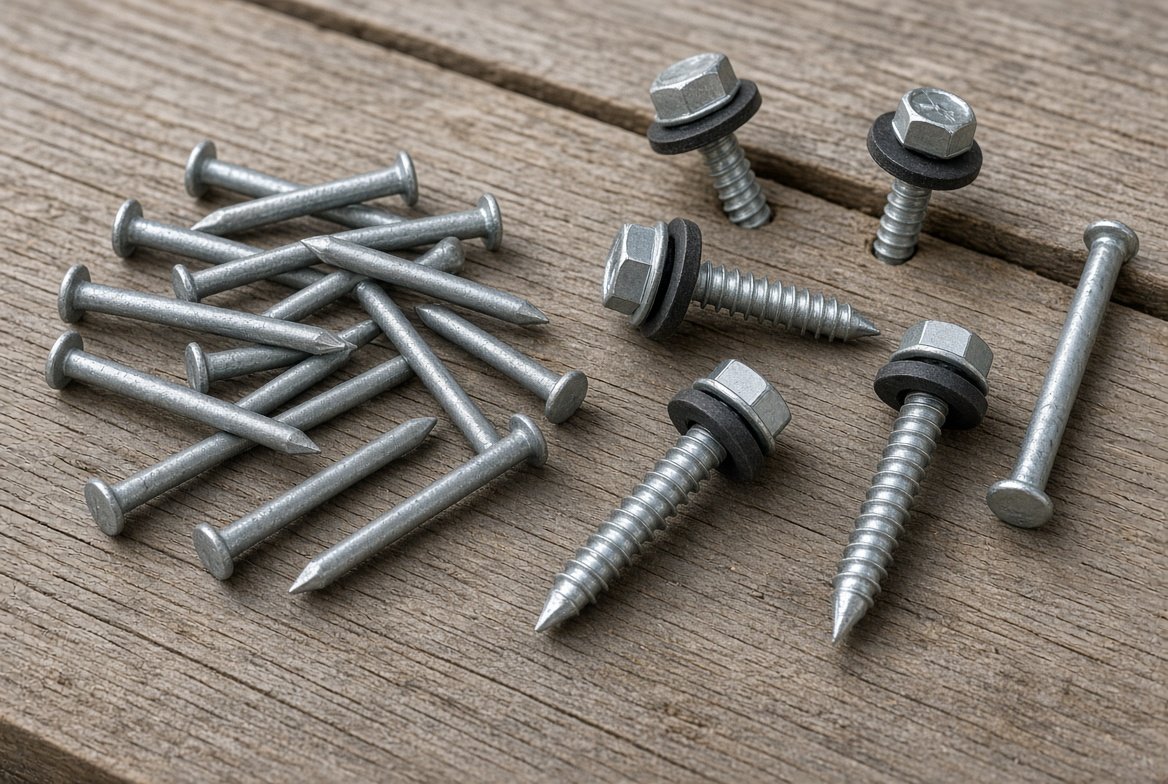
Roof fixings are cheap, small and easy to ignore, but they hold the whole roof together. A tile that slips, a slate that slides out or a sheet that lifts in a gale usually comes down to a fixing that has corroded, was too short or was never fitted properly. Choosing the right nail or screw, in the right material, can add decades to a roof. This guide explains which roofing screws, nails and fixings to use for tiles, slates, battens, flashings, sheet roofing and trims, how to avoid corrosion and the mistakes that cause early failure.
Why Roof Fixings Matter
Roofs face constant wind uplift, rain, frost and temperature swings. Fixings resist uplift and keep the covering in place, and they have to do it for as long as the roof lasts. A fixing that rusts through in 20 years can fail on a roof designed to last 80. In the UK, the standard for slating and tiling is BS 5534, and roof coverings, underlays and fixings are meant to work together as a system. Always check the tile or sheet maker’s specification, because it takes precedence over general advice.
Fixing Materials
- Galvanised steel: widely used and low cost, suitable for many general jobs, but it can corrode sooner in coastal or polluted areas.
- Stainless steel: highly corrosion resistant and a good choice for coastal sites and long-life roofs, usually at a higher cost.
- Aluminium alloy: common for tile nails, light and rust-free, but not for use against certain metals or in contact with wet lime or cement.
- Copper: traditional for slate nails and lead flashing, durable but costly, and it should not touch aluminium or galvanised steel in damp conditions.
- Composite or coated fixings: specialist options for certain slate and tile systems.
Avoid Mixing Metals
When two different metals touch in damp conditions, one can corrode the other. Copper run-off, for example, can corrode aluminium and galvanised steel. Use fixings that match, or are compatible with, the material they hold, and never mix copper fixings with aluminium or galvanised components unless the maker says it is fine.
What to Use Where
| Job | Typical fixing | Notes |
|---|---|---|
| Battens to rafters | Galvanised or stainless nails or screws | Must go well into the rafter and meet the specification. See our roof battens guide |
| Concrete and clay tiles | Tile nails or clips, in aluminium alloy, stainless or galvanised steel | Length depends on the tile and batten, so follow the maker |
| Natural slate | Copper, stainless or composite slate nails | Must last as long as the slate, so choose durable materials. See our slate roof guide |
| Ridge and hip tiles | Stainless screws, clips or system fixings | Dry ridge kits come with their own fixings. See our guide to dry ridge and ridge tiles |
| Lead flashing | Copper clout nails, lead clips and wedges | Lead is usually held at the top edge and clipped, not nailed through the exposed face. See our lead flashing guide |
| Metal roof sheets | Self-drilling or self-tapping screws with sealing washers | Fixed through the crests. See our corrugated roofing sheets guide |
| Plastic and polycarbonate sheets | Screws with sealing washers in oversized holes | Allow for expansion. See our polycarbonate roofing sheets guide |
| Bitumen sheets and felt | Capped nails or clout nails, as the product specifies | Fix through the crests on sheets, and along edges on felt |
| Trims, eaves trays and gutter brackets | Corrosion-resistant screws | Long enough to reach solid timber |
Nails, Screws and Staples
- Nails: the traditional choice for tiles, slates and battens. They are quick to fit and flex slightly, but poorly driven nails can pull out or crack tiles.
- Screws: better for sheets, trims, ridge details and anywhere you need a strong, adjustable fixing. Use screws made for roofing, with the right head, washer and corrosion protection.
- Staples: sometimes used to hold membranes in place temporarily, but they do not replace battens and proper fixings for the covering.
- Nail guns: speed up batten and tile fixing, but they must be set correctly. Over-driven nails can pierce or crack tiles, and under-driven ones leave heads proud.
Length, Gauge and Number of Fixings
Nail and screw length depends on what is being fixed and what it is fixed into, and the right length should go well through the covering and into solid timber. Tile nails are commonly in the region of 38 to 65 mm, depending on the tile and batten, and batten fixings are usually longer. Fixing patterns depend on roof pitch, exposure and tile type. Many roofs need every tile, or most tiles, fixed at the edges and in exposed areas, and fewer in sheltered areas, with clips as an extra. Always follow the maker’s specification and the wind-load requirements, and ask your roofer which pattern they are using.
Want a number specific to your roof?
Get matched with local roofers for a free, no obligation quote.
Corrosion and Failure Signs
- Slipped or missing tiles and slates with no obvious storm cause.
- Rust streaks on tiles, slates, ridge or lead around fixings.
- Nail sickness, where corroded steel nails in slate roofs fail and slates slide out of place.
- Loose or lifted sheets that rattle in the wind.
- Fixings backing out because of poor timber or overdriving.
- Stains or damp around screw heads on metal roofs where sealing washers have perished.
If you see slipped tiles, our guide to how to replace roof tiles explains simple repairs and when to call a roofer.
Common Roof Fixing Mistakes
- Using the wrong metal for the job, or mixing incompatible metals.
- Choosing fixings that will rust long before the covering wears out.
- Fixings that are too short to reach solid timber.
- Over-driving nails, which cracks tiles and pierces underlay.
- Under-fixing the edges, verges and ridges, where wind loads are highest.
- Fixing through the high point of the sheet profile, instead of the crest where the maker specifies.
- Over-tightening screws and crushing sealing washers.
- Reusing old, corroded nails.
Safety and Asbestos
Working at height is dangerous. Use proper access and edge protection, keep nails and screws in a pouch rather than loose on the roof and never work alone.
Eye and hand protection. Wear eye protection when using nail guns, drills or cutting sheets, and gloves for sharp edges.
Asbestos warning. Do not drill, nail or screw into old corrugated cement sheets, soffits or boards that may contain asbestos. Get them identified by a competent surveyor before any work. The HSE asbestos guidance explains the rules.
Frequently Asked Questions
What nails should I use for roof tiles?
Corrosion-resistant tile nails, commonly aluminium alloy, stainless or galvanised steel, in a length suited to the tile and batten. Follow the tile manufacturer’s specification.
What is the best fixing for slate?
Copper, stainless steel or composite slate nails are the usual choices, because they need to last as long as the slate.
Can I use ordinary screws on a roof?
Not for roofing sheets. Use screws made for roofing with sealing washers and corrosion protection, and check they suit the material you are fixing.
What are roofing clout nails used for?
They have wide, flat heads and are used for felt, lead flashing and general roofing jobs, depending on the material and specification.
What is nail sickness?
Corrosion of steel nails holding slate, which causes slates to slip and the roof to leak. It is a common failure on older slate roofs.
How many fixings does each tile need?
It depends on the tile, roof pitch and exposure. Many roofs need every tile fixed in exposed areas and the edges, so follow the tile maker’s specification and ask your roofer.
Final Thoughts
The right roof fixing is the one that matches the material, will last as long as the roof and is long enough to bite into solid timber. Choose compatible metals, use the specified fixing pattern and avoid shortcuts around the edges and ridge. Work safely, and never drill into old cement sheets without checking for asbestos.
Get a professional assessment
If you are unsure how much life your current roof has left, a local roofer can give you an honest assessment as part of a free inspection. Browse vetted roofers through our roofer directory, or get a quick replacement estimate using our free cost calculator.