
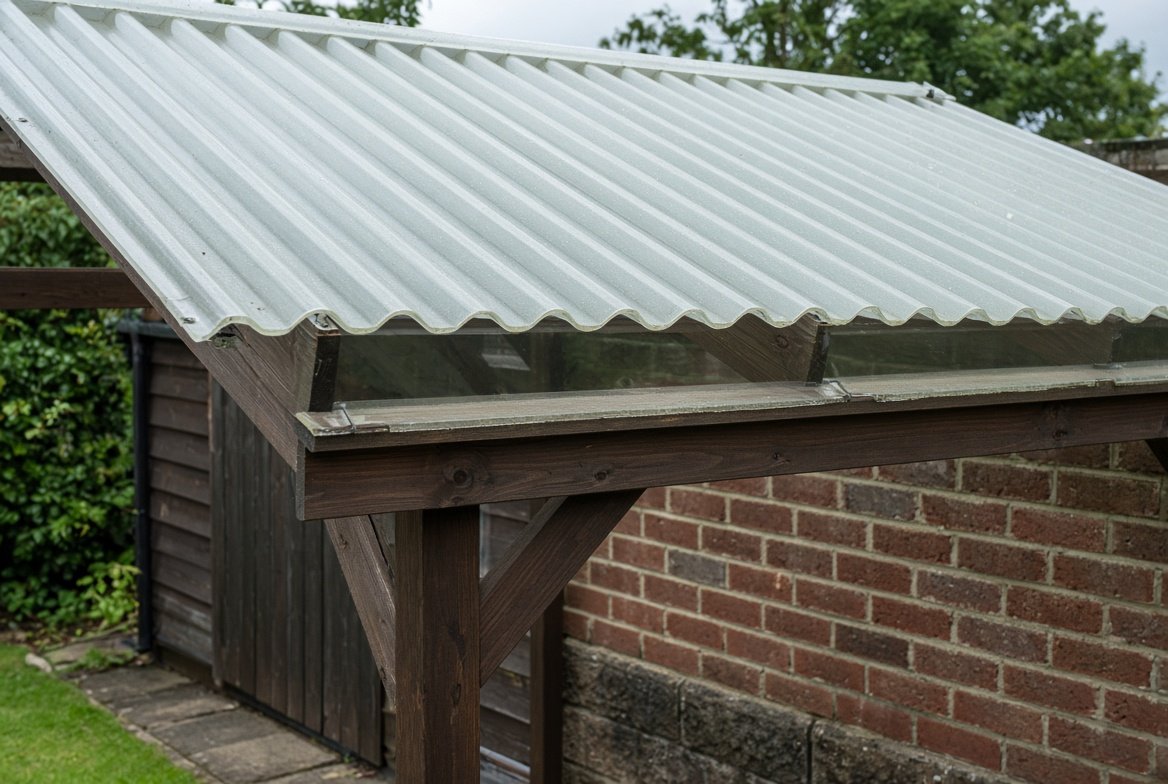
Plastic roofing sheets are the cheapest and lightest way to cover a shed, lean-to, carport, greenhouse or patio. They let light through, resist rust and rot and can be cut and fitted with basic tools. But “plastic” covers several very different materials, and the cheapest corrugated PVC behaves nothing like a good multiwall polycarbonate sheet. This guide explains the main types of plastic roofing, where each one works, sizes, pitch, fixing, lifespan and the places where plastic is the wrong choice.
What Counts as a Plastic Roofing Sheet?
The term covers any sheet roofing made from a plastic polymer rather than metal, bitumen or cement. The most common are PVC and uPVC, polycarbonate, acrylic (often sold under the name perspex), and glass reinforced plastic, or GRP. They come clear, tinted, opal or opaque, in corrugated, box profile, flat and multiwall forms. Many are made to match metal and other roofing sheets, so a clear panel can sit in the roof as a rooflight. Our guide to corrugated roofing sheets explains how profiles match.
Types of Plastic Roofing Sheet
| Type | Typical use | Pros | Cons |
|---|---|---|---|
| PVC or uPVC corrugated and box profile | Sheds, lean-tos, carports, rooflights in metal roofs | Low cost, light, many profiles | Can yellow, become brittle and expand in heat |
| Polycarbonate (multiwall or solid) | Carports, canopies, conservatory roofs, patios | Impact resistant, UV protected, good insulation in multiwall | Costs more, needs correct sealing |
| Acrylic (perspex) | Small canopies and glazing | Very clear, glass-like | More brittle than polycarbonate |
| GRP translucent sheets | Industrial and agricultural rooflights | Strong and diffuses light | Can fade and weather at the surface |
For a full look at polycarbonate, see our guide to polycarbonate roofing sheets.
PVC and uPVC Roofing Sheets
PVC corrugated sheets are the standard cheap clear roofing in garden centres and builders’ merchants. They are light, easy to cut and available in clear, opal and coloured versions. They suit sheds, lean-tos and open structures, and they are often used to bring daylight into a metal or bitumen roof. The downsides are that the plastic expands and contracts with temperature, can discolour over time and is less impact resistant than polycarbonate. Quality varies a lot, and thicker, UV-protected sheets last better.
Want a number specific to your roof?
Get matched with local roofers for a free, no obligation quote.
Plastic Roofing Compared With Other Sheet Materials
- Light: plastic lets through daylight, while steel, bitumen and fibre cement do not.
- Weight: plastic is very light, so it needs a lighter frame than tiles or heavy sheets.
- Strength: steel is stronger and spans further, while plastic sheets need closer support.
- Insulation: multiwall polycarbonate insulates better than corrugated PVC or steel.
- Life: good plastic can last 10 to 20 years, though basic PVC may be shorter, while coated steel often lasts longer.
Our overview of the patio roof options shows how plastic compares with louvres, glass and solid roofs for outdoor spaces.
Sizes
Sizes vary by manufacturer and profile, so check the data sheet. As a general guide, corrugated and box profile plastic sheets are often sold in lengths from around 1.5 to 3.7 metres, with an overall width in the region of 750 to 950 mm, and the useful cover width is a little less because of the side lap. Flat and multiwall sheets come in a wider range, and many suppliers cut to length. Always measure the cover width, not the overall width, when you work out how many sheets you need.
Minimum Pitch and Laps
Plastic roofs must slope so water drains and does not pool. Corrugated plastic sheets are often quoted with a minimum pitch in the region of 10 degrees, with a lower figure sometimes allowed for sealed or longer-lap systems, and multiwall polycarbonate is often quoted from about 5 degrees. These figures vary, so always check the supplier’s information. Shallower roofs need larger end laps and sealant. If you are not sure of your roof’s angle, our roof pitch calculator shows how to measure it, and our mono pitch roof guide covers single-slope designs.
How to Fit Plastic Roofing Sheets
This is an overview, and the manufacturer’s instructions always come first.
- Check the frame. Purlins or rails must be level, solid and spaced as the manufacturer recommends, which is closer than for steel.
- Lay out the sheets. Start at the end facing away from the prevailing wind, so side laps face away from it.
- Cut carefully. Use a fine-toothed saw or a sharp blade, support the sheet and wear eye protection.
- Drill oversized holes. Drill through the crest of the profile, larger than the screw, so the sheet can expand.
- Fix with sealing washers. Use the correct screws and washers, and do not overtighten.
- Overlap and seal. Use the recommended side and end laps, and add sealing strips or sealant where specified.
- Finish the edges. Fit ridge, wall and end trims. Our guide to roof edge trim explains the options.
Where Plastic Roofing Works Well
- Sheds, log stores and garden buildings.
- Lean-tos and carports.
- Pergolas and open patios.
- Greenhouses and growing areas.
- Rooflights within metal or bitumen roofs.
Where Plastic Roofing Is Not Suitable
- Habitable rooms. Most plastic sheets give poor insulation, so a roof over a living space normally needs a different build-up, as explained in our guide to conservatory roof replacement.
- Near heat sources. Plastic can soften or melt near chimneys, flues, barbecues and heaters.
- Where walking is needed. Plastic sheets cannot carry a person.
- Where fire rules apply. Plastic roofs close to a boundary can be restricted, so check the building regulations.
- Heavy snow areas without proper support. Sheets need closer rafters or glazing bars to carry snow loads.
How Long Does Plastic Roofing Last?
As a general guide, good UV-protected plastic roofing sheets can last 10 to 20 years, while cheap, unprotected PVC may yellow, crack or become brittle much sooner. Lifespan depends on sun exposure, the quality of the sheet, whether the UV side is facing up and how well it is fixed. Check the guarantee and what it requires.
Cleaning and Maintenance
- Clean with warm soapy water and a soft cloth or brush, and rinse well.
- Avoid abrasive pads, strong solvents and pressure washers, which can scratch or damage the surface.
- Clear leaves and debris from the surface and the gutter.
- Check fixings and sealant once a year, and replace any cracked sheets promptly.
Safety and Asbestos
Working at height is dangerous. Plastic roofing sheets are fragile and will not take a person’s weight. Use crawling boards that span the supports, never step directly on the sheets and do not work alone.
Asbestos warning. If you are replacing old corrugated sheets, they may be cement and may contain asbestos. Do not drill, break or scrub them, and get them identified by a competent surveyor before any work. The HSE asbestos guidance explains the rules.
Planning and Building Rules
Replacing roof sheets like for like normally does not need planning permission in England. New outbuildings, carports, lean-tos and any building close to a boundary may be covered by planning and building regulation rules on size, height and fire safety. Scotland, Wales and Northern Ireland have their own systems, and listed buildings and conservation areas may have extra restrictions.
Frequently Asked Questions
What is the best plastic roofing sheet?
Multiwall polycarbonate is generally the strongest and best insulated, while corrugated PVC is the cheapest. The best choice depends on the building, the budget and how long you want it to last.
How long do plastic roof sheets last?
Often 10 to 20 years for good UV-protected sheets, and less for cheap PVC. Fitting the sheet the right way up and using the correct fixings helps.
Can you walk on plastic roofing sheets?
No. They are fragile, so use crawling boards that span the supports and never step directly on them.
What pitch do plastic roofing sheets need?
Often around 10 degrees for corrugated PVC and about 5 degrees or more for multiwall polycarbonate. Check the product data sheet.
Why has my plastic roofing gone yellow?
Usually UV damage, especially on cheap or unprotected PVC or sheets fitted upside down. Replacement is the usual fix.
Can I use plastic roofing for a room that is lived in?
Not normally. Plastic sheets give poor insulation, and a habitable room needs a roof that meets building regulations, so ask building control or a roofer.
Final Thoughts
Plastic roofing sheets are a light, affordable way to cover and brighten simple structures, as long as you choose the right type, fit it with room to expand and stay off the roof. Check the pitch and support, fix it with proper washers and keep an eye on UV damage over time. For old cement sheets, assume asbestos until proven otherwise.
Get a professional assessment
If you are unsure how much life your current roof has left, a local roofer can give you an honest assessment as part of a free inspection. Browse vetted roofers through our roofer directory, or get a quick replacement estimate using our free cost calculator.