
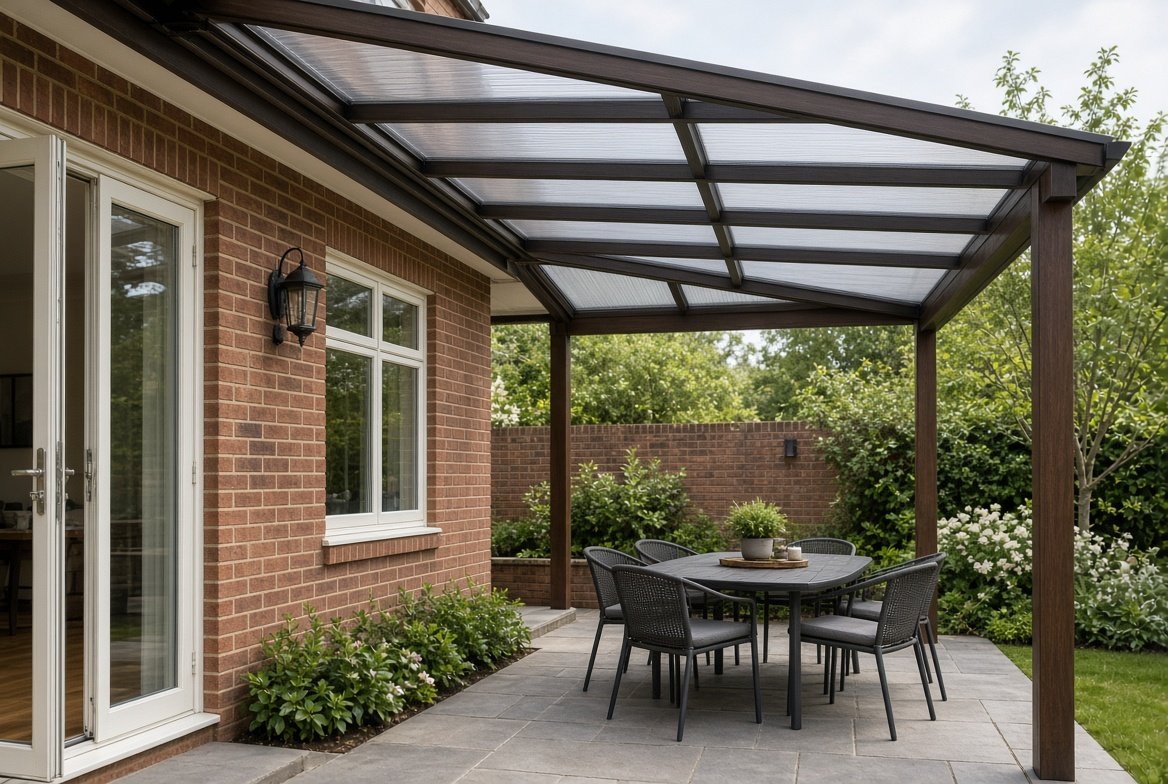
A roof over the patio turns an outdoor space into somewhere you can use in most weather. It gives shade in summer, shelter from the rain and a place to sit when the weather is unpredictable. The right choice depends on how much cover you want, how it connects to your house and how much you want to spend.
This guide covers the main patio roof ideas, including pergolas, lean-to roofs, canopies and solid roofs, how to make them waterproof, how they attach to the house and the rules to check. For general roof shapes, see our guide to roof types explained.
Patio Roof Ideas
Louvred (Adjustable) Pergola Roof
A pergola with adjustable slats that open for sun and close to keep out rain. It gives control over light and shade, and the gutters hidden in the frame carry the water away. It costs more than a basic pergola but is very flexible.
Polycarbonate or Glass Roof
Clear or tinted sheets on a metal or timber frame. They let in light and keep the rain out. Polycarbonate is cheap and light, while glass looks smarter but is heavier and costs more.
Want a number specific to your roof?
Get matched with local roofers for a free, no obligation quote.
Lean-To Patio Roof
A single slope that rises towards the house wall. It sheds water easily and is simple to build. Our mono pitch roof guide explains why this shape works so well for covered outdoor spaces.
Solid Insulated Roof
A fully weatherproof roof, normally with insulated panels, tiles or a metal covering. It is the most robust option and makes the space feel like part of the house. It costs more and usually needs building regulations approval.
Metal Roof
A lightweight metal roof in corrugated, standing seam or tile-effect form. It is quick to fit and works at low pitch. See our metal roof guide for the main types.
Fabric Canopy or Shade Sail
The cheapest and simplest cover, good for shade and light rain, but not for heavy weather or winter use. Retractable awnings are a more flexible version.
Flat Roof Canopy or Porch Roof
A simple flat canopy over a door or a small patio. Our guide to porch cost in the UK covers the roof options and price ranges for small covered areas.
Patio Roof Options Compared
| Option | Waterproof? | Light | Cost level | Best for |
|---|---|---|---|---|
| Louvred pergola | Yes, when closed | Adjustable | High | Flexible shade and cover |
| Polycarbonate or glass | Yes | High | Low to high | Bright covered patios |
| Lean-to with tiles or metal | Yes | Low | Medium to high | Year-round outdoor rooms |
| Insulated solid roof | Yes | Low, unless roof windows | High | Extension-style spaces |
| Fabric canopy | Light rain only | High | Low | Summer shade |
How to Make a Patio Roof Waterproof
- Use a sloping roof. A fall of a few degrees helps water to run off. Flat covers can pond and leak.
- Choose a suitable covering. Polycarbonate, glass, metal, tiles and membranes all work when installed properly. See our guide to flat roof materials for the options on shallow roofs.
- Seal the joints. Use the manufacturer’s glazing bars, tapes and sealants.
- Add a gutter. Collect the water and take it to a downpipe or a drain, not onto the patio.
- Waterproof the wall junction. This is the most common leak point.
Attaching a Patio Roof or Pergola to the House
An attached roof is stronger and gives better shelter, but it needs care. The roof is normally fixed to a timber or metal beam called a wall plate or ledger, bolted into the masonry. A flashing, usually lead, is dressed over the junction, so water does not run down behind the beam into the wall. Our guide to roof flashing explains how this works. The posts at the far side carry the rest of the load, and they need proper foundations.
If the wall is cavity brick, stone or render, the fixings must go through into solid material, and the damp-proof course must not be bridged. A poor attachment can cause damp in the house, so use an experienced installer.
Free-Standing vs Attached
- Attached: uses the house wall for support, so it is cheaper and more sheltered, but it needs careful waterproofing.
- Free-standing: sits on four or more posts, with no connection to the wall. It avoids damp problems and can go anywhere, but it needs more posts and foundations.
Planning Permission and Building Regulations
Rules depend on the size, height and position of the structure.
- Open pergolas and light canopies are often allowed without planning permission, within height and position limits.
- A solid roof attached to the house can count as an extension, which has its own size and height limits.
- Listed buildings, conservation areas and houses where permitted development rights have been removed have extra rules.
- Building regulations may apply to larger or enclosed structures, glazing and anything that is attached to the house.
Always check with your local planning authority and building control before you build.
Cost Factors
- Size: a bigger cover needs more posts, beams and covering.
- Roof type: fabric is cheapest, then polycarbonate, tiles or metal, and finally louvred and insulated roofs.
- Frame material: timber, aluminium or steel.
- Foundations and groundwork.
- Drainage: gutters and soakaways.
- Electrics and lighting.
- Installer: a specialist charges more than a general builder but knows the product.
Because costs vary so widely, get several quotes and ask what each includes.
Questions to Ask Your Installer
- How is the roof attached to the house, and how is the wall junction waterproofed?
- Where does the water go from the gutter?
- What is the covering, and what is its guarantee?
- Does the structure need planning permission or building regulations approval?
- How will the posts be fixed, and how deep are the foundations?
Frequently Asked Questions
What is the best roof for a patio?
It depends on the use. Louvred pergolas are the most flexible, polycarbonate or glass are bright and affordable, and solid insulated roofs give year-round use.
How do I waterproof a pergola roof?
Use a sloping roof with a waterproof covering such as polycarbonate, glass or metal, seal the joints, add a gutter and flash the wall junction.
Do I need planning permission for a patio roof?
Often not for an open pergola or a light canopy, but it depends on the size, height, position and whether the property is listed or in a conservation area. Check locally.
Can I attach a pergola to my house?
Yes. It must be fixed securely to the wall with a proper flashing so that water cannot get behind it.
What is the cheapest way to roof a patio?
A fabric canopy or a polycarbonate roof on a simple frame is usually the cheapest. Solid, glazed or louvred roofs cost more.
Can a patio roof be a solid roof?
Yes. A tiled or metal roof with insulated panels gives a weatherproof outdoor room, but it usually needs building regulations approval and may count as an extension.
Final Thoughts
A patio roof can double your usable outdoor space, if you choose a covering that suits your needs and deal carefully with the water. Think about light, shelter and budget, pay attention to the junction with the house and check the planning rules before you start.
Get a professional assessment
If you are unsure how much life your current roof has left, a local roofer can give you an honest assessment as part of a free inspection. Browse vetted roofers through our roofer directory, or get a quick replacement estimate using our free cost calculator.