
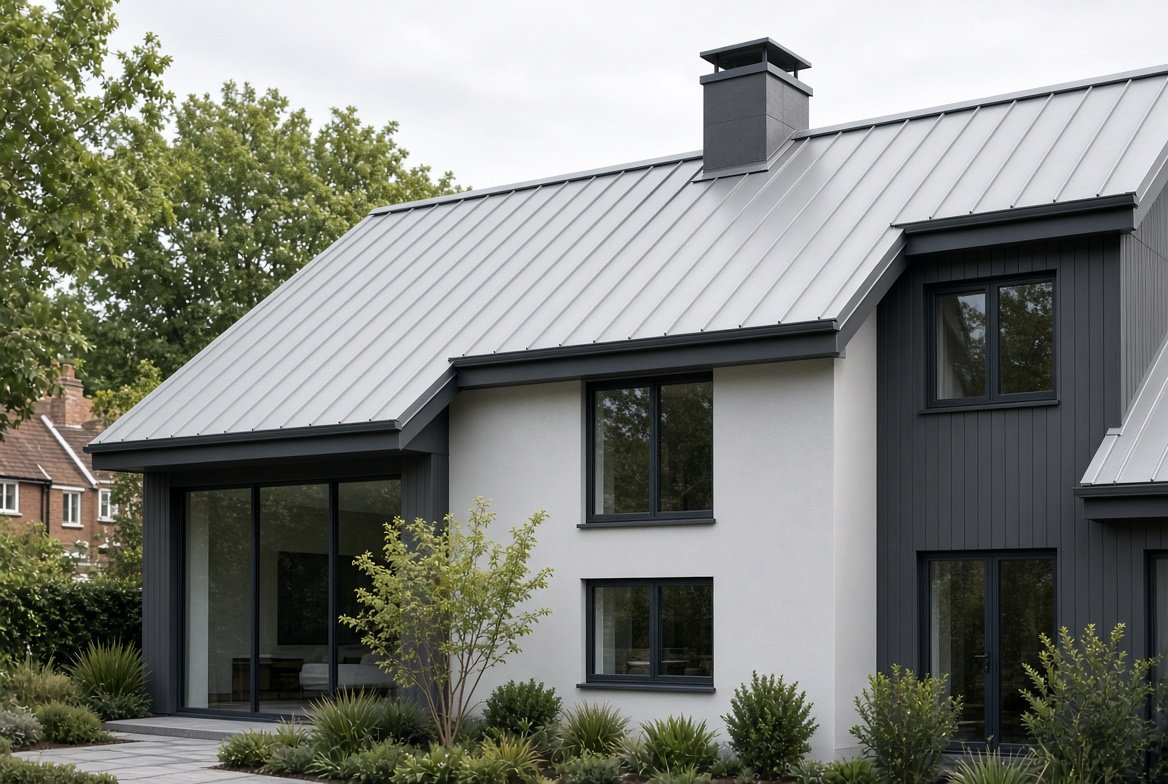
Aluminium roofing is light, rust-proof and long-lasting, which makes it popular for modern extensions, garages, garden rooms, coastal homes and commercial buildings. It comes as standing seam panels, corrugated or profiled sheets, tile-effect sheets and flat sheet systems, so it suits many different roof shapes.
This guide explains the main types of aluminium roofing, its pros and cons, how long it lasts, what pitch it needs and what to watch out for when you choose a system. For a wider comparison of roofing metals, see our metal roof guide.
What Is an Aluminium Roof?
An aluminium roof is covered in sheets or panels of aluminium alloy, normally with a protective factory-applied coating. The metal resists corrosion naturally, because it forms a thin oxide layer on the surface. The coating adds colour, UV protection and extra durability.
You will see it called aluminium roofing, aluminium roof sheets, aluminium roof panels or an aluminium roof system. In the US the spelling is aluminum, but they are the same product.
Want a number specific to your roof?
Get matched with local roofers for a free, no obligation quote.
Types of Aluminium Roofing
Standing Seam Aluminium
Long panels joined with raised seams and hidden fixings. It gives a smooth, modern look and works at low pitches. See our guide to the standing seam roof for how it works.
Corrugated and Profiled Sheets
Wavy or box-profile sheets, fixed with screws. They are cheap and quick to fit, and are used on garages, barns and outbuildings.
Tile-Effect Aluminium Sheets
Sheets pressed to resemble rows of roof tiles. They are very light and quick to install, often used on extensions and conservatories. Our guide to lightweight and low pitch roof tiles compares them with other options.
Flat Aluminium Sheet Roofs
Aluminium sheets with welded or sealed joints can be used on flat or very low-pitch roofs, balconies and canopies. They need careful detailing to deal with expansion and drainage.
Insulated Aluminium Panels
Aluminium skins bonded to an insulating core. They give an insulated roof in one piece and are common on garden rooms, workshops and commercial buildings.
Advantages of Aluminium Roofing
- Light weight. Aluminium is much lighter than steel, tiles or slate, so it puts little load on the structure.
- No rust. It resists corrosion, including in coastal and polluted areas.
- Long life. With a good coating, aluminium roofs often last 40 years or more.
- Works at low pitch. Many systems can be used at much shallower angles than tiles.
- Colour range. Factory coatings come in many colours and finishes.
- Recyclable. Aluminium keeps its value and can be recycled again and again.
- Fire resistant. It does not burn.
- Low maintenance. It needs no painting and little upkeep.
Disadvantages of Aluminium Roofing
- Cost. It usually costs more than steel sheeting and more than concrete tiles.
- Dents easily. Aluminium is softer than steel, so hail, branches and foot traffic can mark it.
- Thermal movement. It expands and contracts more than steel with temperature, so fixings and joints must allow for movement.
- Noise. Rain and hail can be loud without insulation underneath.
- Condensation. Like all metal roofs, it is a cold surface, so the build-up must control moisture.
- Contact with other metals. It can corrode where it touches copper or some treated timbers, so material choices matter.
How Long Does an Aluminium Roof Last?
Aluminium itself does not rust, so the life of a roof usually depends on the coating and the quality of the installation. Good systems with a quality coating commonly last 40 to 60 years, and some manufacturers give long guarantees on the finish. Damage to the coating, poor fixings or contact with incompatible metals will shorten that.
What Pitch Does an Aluminium Roof Need?
Standing seam aluminium is often used from around 5 degrees or less, while corrugated and tile-effect sheets typically need a steeper roof. The exact minimum depends on the product, the laps and the exposure, so check the manufacturer’s guidance. If you are not sure of your roof angle, our roof pitch calculator will tell you.
Aluminium vs Steel vs Copper vs Zinc
| Metal | Weight | Rust risk | Cost level | Typical life |
|---|---|---|---|---|
| Aluminium | Very light | None | Medium to high | 40 to 60 years |
| Coated steel | Light | If coating is damaged | Low to medium | 30 to 50 years |
| Zinc | Light | None, forms patina | High | 50 years or more |
| Copper | Light | None, forms patina | Very high | 100 years or more |
How an Aluminium Roof Is Built Up
A typical aluminium roof is laid on a solid deck or on purlins, depending on the system. Between the deck and the metal there is usually a separating layer, and insulation is placed above or below the deck. Because the metal is cold, condensation control matters, and most designers prefer a warm roof build-up. Our guide to warm roof construction explains how the layers fit together.
Flashings and Details
Wherever the roof meets a wall, a chimney or a rooflight, flashings keep the water out. On aluminium roofs, flashings are normally made from aluminium too, to avoid reactions between different metals. Our guide to roof flashing explains the basics.
Aluminium Roofs on Garages and Outbuildings
Aluminium sheets and panels are widely used on garages and garden rooms because they are light and easy to fit. If you are replacing an old roof, check for asbestos in any corrugated sheets before you touch them. Our guide to garage roof replacement covers the safety points.
Repairing an Aluminium Roof
Small dents and scratches may be cosmetic and can be left or touched up with matching paint. Leaks usually start at fixings, joints, flashings or damaged seams. Common repairs include replacing loose fixings with matching ones, resealing joints with a compatible sealant and replacing damaged sections. Always use fixings and sealants that suit aluminium, and avoid contact with copper.
Maintaining an Aluminium Roof
- Inspect it once a year for dents, loose fixings and damaged sealant.
- Clear leaves and debris from gutters and valleys.
- Wash the surface gently with water and a soft brush if it gets dirty.
- Do not use harsh chemicals or abrasive tools.
- Avoid walking on the roof, and use boards if you need access.
Questions to Ask Your Installer
- Which aluminium system do you recommend, and why is it suited to my roof?
- What is the minimum pitch, and does my roof meet it?
- How will thermal movement, condensation and rain noise be handled?
- What is the full build-up from deck to metal?
- What coating does the aluminium have, and what is the guarantee?
- Do you have experience with this specific system?
Frequently Asked Questions
Is aluminium good for roofing?
Yes. It is light, does not rust and lasts a long time, though it costs more than steel and can dent more easily.
How long does an aluminium roof last?
With a good coating and correct installation, commonly 40 to 60 years.
Is aluminium roofing better than steel?
Aluminium is lighter and does not rust, but steel is cheaper and stronger against dents. The best choice depends on your budget and where the roof is.
Can you put an aluminium roof on a low-pitch roof?
Often yes, especially with standing seam systems, which can work from around 5 degrees or less. Always check the manufacturer’s minimum pitch.
Is aluminium roofing noisy in the rain?
It can be without insulation or an acoustic layer under the metal. A proper build-up reduces the noise a lot.
Can aluminium be used near the coast?
Yes. It resists salt and corrosion better than many other metals, though the coating should be suitable for marine environments.
Final Thoughts
Aluminium roofing is a smart choice for modern buildings, coastal areas and structures that cannot carry heavy loads. It costs more than basic steel, and it needs correct detailing for movement and condensation. Choose a good coating, check the minimum pitch and use an installer who knows the system.
Get a professional assessment
If you are unsure how much life your current roof has left, a local roofer can give you an honest assessment as part of a free inspection. Browse vetted roofers through our roofer directory, or get a quick replacement estimate using our free cost calculator.