
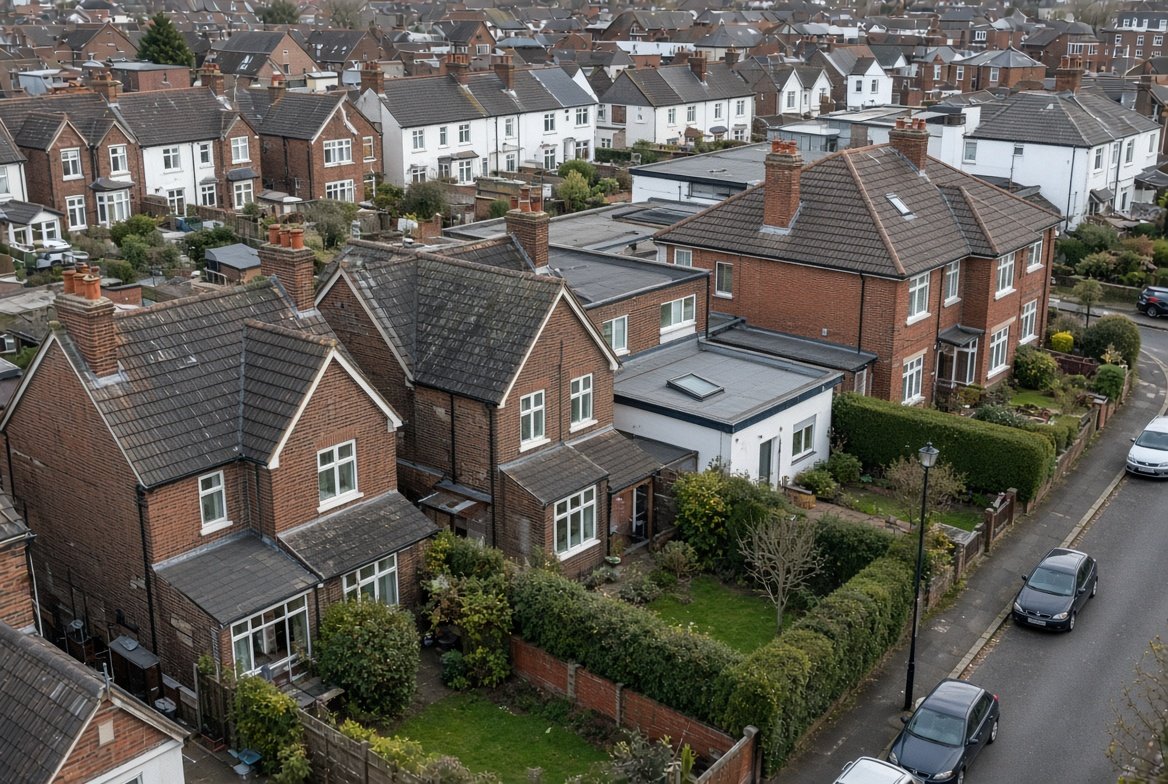
Roof shape affects far more than how a house looks from the street. It changes cost, how well the roof handles wind and rain, how much usable loft space you get, and even what materials are practical to use. Here is a clear overview of the main roof shapes found across the UK, with links to a deeper guide on each one.
Gable roof
The most common roof shape in the UK by a wide margin, with two sloped sides meeting at a central ridge and a triangular gable wall at each end. It is simple to build, generally the most affordable pitched roof shape, and gives good usable loft space thanks to the full-height gable wall. Our guides on what a gable end is and the seven types of gable roof cover this shape in full detail.
Hip roof
Slopes on all four sides rather than having a flat gable wall, meeting at a ridge or a single point. This gives excellent wind resistance, since there is no flat vertical surface for side-on wind to push against, but it generally costs more to build and gives somewhat less usable loft space than a gable design. Our hip roof guide explains the main types, and our gable versus hip roof comparison covers the practical trade-offs between the two shapes in depth.
Flat roof
Not perfectly level, but built with a slight fall so water can drain away, usually between 1 and 5 degrees. Common on extensions, garages, and modern architectural designs where a quick, cost effective covering is wanted. Our flat roof guide covers materials, insulation, and typical costs.
Want a number specific to your roof?
Get matched with local roofers for a free, no obligation quote.
Mansard roof
Has steep, near vertical sides on all four faces with a much shallower or flat section on top, historically valued for maximising interior loft space without dramatically changing a building’s external height. Closely associated with period London properties and higher-end loft conversions. See our mansard roof guide for cost and planning permission details.
Pitched roof, as a general category
Technically, gable, hip, and mansard roofs are all types of pitched roof, since the term simply describes any roof with a noticeable slope rather than one specific shape. Our pitched roof guide covers the angle measurements, minimum pitch requirements by material, and how pitch affects material choice across any of these shapes.
Dormer roofs
Not a whole-roof shape on their own, but a structure added to an existing pitched roof to create extra headroom and space in a loft conversion. Dormers come in several forms, including flat roof, pitched, and L-shaped designs. Our dormer conversion guide covers types, costs, and permitted development rules.
Other roof shapes seen in the UK
- Skillion, or shed roof. A single sloping plane, often used on extensions, garden rooms, or modern minimalist designs, covered in our mono pitch roof guide
- Dutch gable. A small gable sitting on top of an otherwise hipped roof, combining features of both shapes, covered in our gable terminology guide
- Gambrel roof. Two slopes on each side, with the lower slope steeper than the upper, more commonly seen on barns and outbuildings than UK houses
- Saltbox roof. An asymmetrical design with one long slope and one much shorter slope, a traditional style more common in New England style architecture than typical UK housing
- Butterfly roof. Two surfaces sloping inward toward a central point, a distinctive modern design occasionally seen on architect designed new builds
Which roof shape is most common in the UK
Gable roofs dominate UK residential housing, largely because they are straightforward to build, cost effective, and well suited to the terraced, semi-detached, and detached housing that makes up most of the country’s housing stock. Hip roofs are the next most common, often chosen for detached properties in more exposed locations. Flat roofs are widespread on extensions and garages rather than whole houses, and mansard designs remain concentrated in period city properties, particularly London.
How roof shape affects your options
- Budget. Gable roofs are generally the most affordable shape to build or replace, while hip and mansard designs cost more due to their added structural complexity
- Weather exposure. Hip roofs handle high wind locations better, while gable roofs need proper gable end bracing to perform well in exposed areas
- Loft space plans. If a future loft conversion is likely, gable and mansard shapes generally offer more usable headroom than a standard hip roof
- Material choice. Roof shape and pitch together determine which coverings are suitable, covered in our roof tile material guide, or in our metal roof guide if you are considering zinc or standing seam
Frequently asked questions
What is the most common roof shape in the UK?
The gable roof, by a wide margin, due to its simplicity, lower cost, and good use of loft space compared to more complex shapes.
Which roof shape is best for high wind areas?
Hip roofs generally perform best in exposed, high wind locations, since they have no flat gable wall for wind to push directly against.
Can I change my roof’s shape?
It is possible but is a significant structural project, typically needing both planning permission and building regulations approval, rather than a simple repair or like for like replacement.
Does roof shape affect insurance?
Shape can be one factor among several an insurer considers, alongside property age, location, and maintenance history, though a well maintained roof of any common shape is not treated as high risk on its own.
This guide is independent editorial content. It is not sponsored.
Get a professional assessment
If you are unsure how much life your current roof has left, a local roofer can give you an honest assessment as part of a free inspection. Browse vetted roofers through our roofer directory, or get a quick replacement estimate using our free cost calculator.