
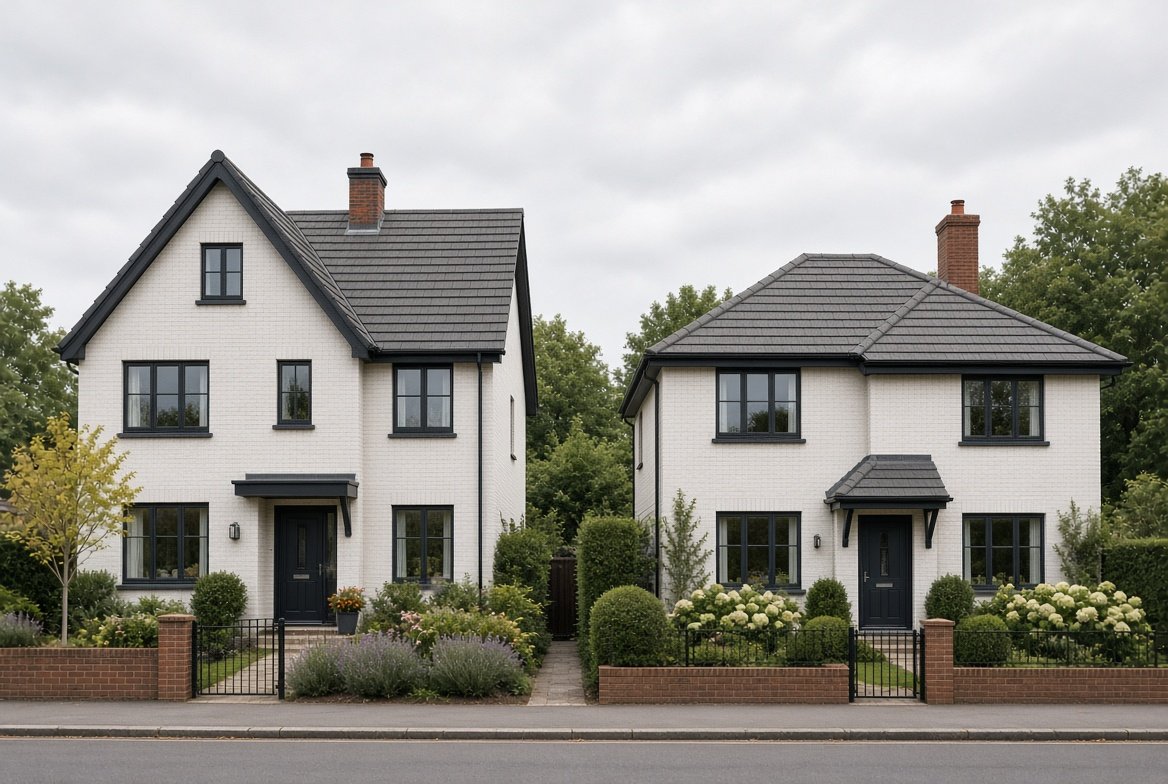
If you are choosing a roof shape for a new build, an extension, or deciding whether to change your roofline during a replacement, the two options that come up again and again are gable and hip roofs. Both are common across the UK, but they behave very differently when it comes to cost, wind resistance, and usable space. Here is how to choose between them properly.
The basic difference
A gable roof has two sloped sides that meet at a ridge, with a triangular wall, called the gable end, at each end of the building. A hip roof slopes on all four sides and has no vertical gable wall at all, with all sides meeting at a central point or ridge.
This single difference in shape is what drives almost every other difference between the two, from how much they cost to how they hold up in bad weather. If you want to see how hip roofs are built and the main hip roof types, read our hip roof guide.
Cost
Gable roofs are simpler to frame, since they need fewer angled cuts and less complex timber work. This generally makes them 10 to 15 percent cheaper than an equivalent hip roof of the same size and material. Hip roofs need more timber, more complex framing around each hip, and more roofer hours to build correctly, all of which adds to labour cost. For a full breakdown of gable roof pricing, see our gable roof cost guide.
Want a number specific to your roof?
Get matched with local roofers for a free, no obligation quote.
Wind and weather resistance
Hip roofs are more aerodynamic. Because wind is deflected from all four sloped sides rather than hitting a flat vertical wall, hip roofs are a common choice in exposed coastal areas, upland regions, or anywhere that sees frequent strong winds.
Gable roofs can be more vulnerable at the gable end wall if it is not properly braced. This is exactly the issue covered in our guide on why insurers are asking more questions about gable end walls. A well built and properly maintained gable roof is still a sound, standard choice across most of the UK, but it is worth being aware of this difference if you live somewhere particularly exposed.
Loft space and headroom
Gable roofs generally give more usable loft space. The full triangular shape of a gable end leaves more vertical headroom throughout the loft than a hip roof, where all four sides slope inward and eat into usable space, particularly near the edges of the room.
If a loft conversion is something you are considering now or in the future, this is one of the more important practical differences between the two roof types. Many homeowners planning a future conversion choose a gable roof specifically for this reason.
Maintenance
A hip roof has more valleys, the internal angles where two roof planes meet, than a gable roof does. Valleys are the most common place for leaks to develop over time, since water concentrates there rather than running straight off a single slope. A gable roof, with its simpler shape, generally has fewer of these vulnerable points and can be slightly easier and cheaper to maintain over its lifetime.
Side by side comparison
| Gable roof | Hip roof | |
|---|---|---|
| Typical cost | Lower | 10 to 15 percent higher |
| Wind resistance | Good, needs proper bracing | Excellent |
| Loft space | More usable | Less usable |
| Maintenance | Simpler, fewer valleys | More valleys to maintain |
| Best suited to | Most UK homes, loft conversions | Exposed or high wind locations |
Which should you choose
If cost and usable loft space matter most to you, and your property is not in a particularly exposed location, a gable roof is usually the more practical and economical choice. It is also why it remains the most common roof shape across the UK.
If your property sits somewhere with regular high winds, such as an exposed coastal area or an elevated position with little shelter, a hip roof’s extra wind resistance can be worth the higher cost, particularly for long term peace of mind.
Frequently asked questions
Is a gable roof cheaper than a hip roof?
Yes, generally by around 10 to 15 percent for a comparable size and material, mainly due to simpler framing and less labour.
Which roof type is better for a loft conversion?
A gable roof usually offers more usable headroom throughout the loft, making it the more common choice for homeowners planning a future conversion.
Can I convert a hip roof to a gable roof?
This is a significant structural job. It usually needs planning permission or a lawful development certificate, building regulations approval and often a structural engineer, so always check with your local planning authority before you start. The Planning Portal is a good place to begin.
Do gable roofs need extra maintenance in windy areas?
Not necessarily extra maintenance, but the gable end wall benefits from a check of its wall ties and bracing every few years, particularly on older properties. See our maintenance checklist for a full seasonal routine.
This guide is independent editorial content. It is not sponsored.
Get a professional assessment
If you are unsure how much life your current roof has left, a local roofer can give you an honest assessment as part of a free inspection. Browse vetted roofers through our roofer directory, or get a quick replacement estimate using our free cost calculator.