
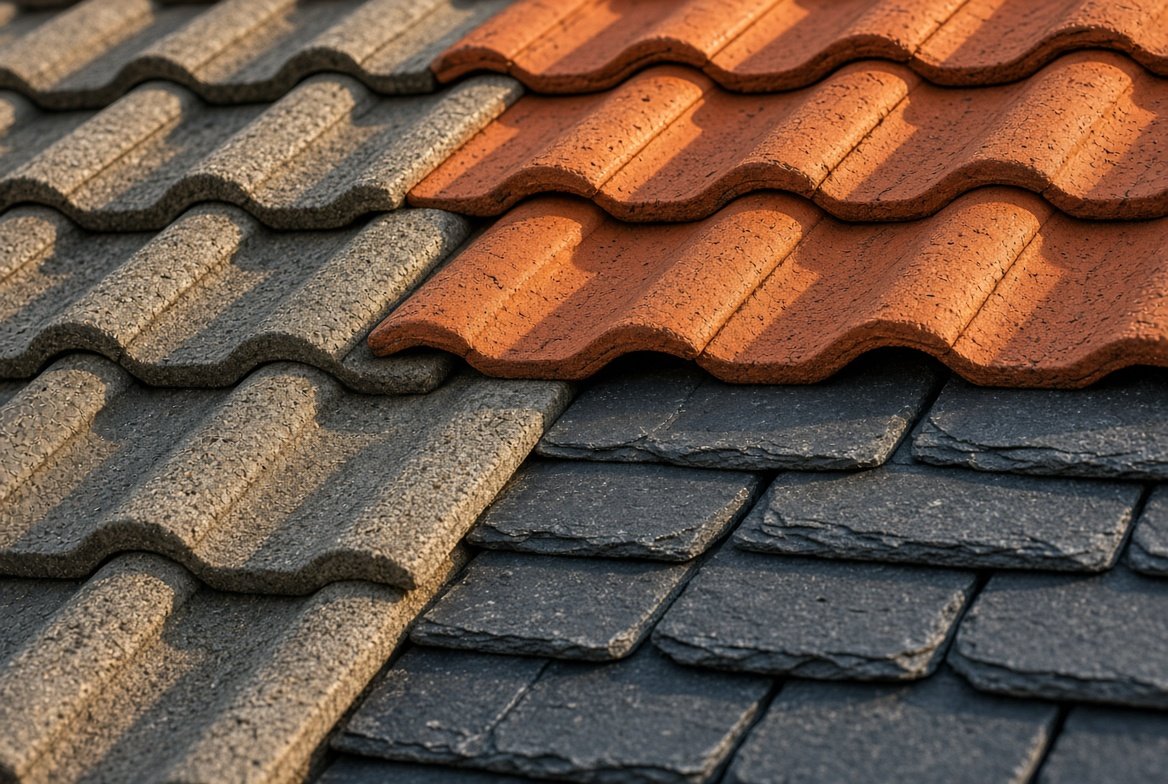
Walk down almost any UK street and you will see several different roof tile types without realising it. The material your roof is covered in affects far more than looks. It changes cost, weight, lifespan, and even whether you need planning permission in some areas. Here is how the main options compare.
Concrete roof tiles
Concrete is the most widely used roofing tile material in the UK, and for good reason. It is affordable, comes in a wide range of colours and profiles, and performs well in UK weather. A concrete tile roof typically lasts 40 to 60 years, and it is often the default choice on new build estates and standard re-roofing projects. Marley is one of the best known UK manufacturers of concrete roof tiles, and their products are found on a huge number of homes across the country. Our concrete roof tiles guide covers the main profiles and how to match tiles you already have.
The main downside is weight. Concrete tiles are heavier than most alternatives, which means the roof structure needs to be built or checked to carry that load, particularly on older properties being re-roofed for the first time in decades. For typical pricing by size and region, see our gable roof cost guide, or for per-tile and per-m² prices across concrete, clay and slate, see our roof tiles price guide.
Clay roof tiles
Clay tiles have been used on UK roofs for centuries, and they remain a popular choice, especially in conservation areas and on period properties where planning rules often specify clay to match the local character. Clay tiles hold their colour better than concrete over time, since the colour runs through the whole tile rather than sitting as a surface coating, and they typically last 60 to 100 years or more.
Want a number specific to your roof?
Get matched with local roofers for a free, no obligation quote.
They cost more than concrete, generally speaking, and they are also on the heavier side, though usually slightly lighter than an equivalent concrete tile. Common clay styles include plain tiles, pantiles, and rosemary tiles, each with a different profile and regional tradition behind it.
Natural slate tiles
Natural slate is the premium option. It is thin, strong, and can last 80 to 100 years or more when properly installed, which is why you will often see original slate roofs still performing well on Victorian and Edwardian houses. Welsh slate is particularly well regarded and often specified for listed buildings and conservation work.
Slate costs considerably more than concrete or clay, both for the material itself and for the skilled labour needed to install it correctly. It is one of the longest lasting options available, which is part of why it remains popular for restoration work on older UK homes.
Composite and synthetic tiles
Composite tiles are a newer option, made from materials like recycled polymer or resin designed to mimic the look of slate or clay at a fraction of the weight. They are popular for renovation projects where the existing roof structure cannot support heavier natural materials, since composite tiles are often light enough to be laid without additional structural reinforcement.
Lifespan is typically 40 to 50 years, and while the appearance has improved significantly in recent years, some homeowners still find it doesn’t quite match the depth and texture of genuine slate or clay up close.
Interlocking versus plain tiles
Beyond material, tiles also differ in how they are laid. Interlocking tiles have a profile that locks neighbouring tiles together, which generally means fewer tiles are needed to cover the same area and installation is quicker. Plain tiles are small, flat, and laid in overlapping rows without interlocking edges, giving a traditional look that is often required on period properties, but needing more tiles and more labour to install.
Comparison at a glance
| Material | Typical lifespan | Weight | Relative cost |
|---|---|---|---|
| Concrete | 40 to 60 years | Heaviest | Lowest |
| Clay | 60 to 100 years | Heavy | Medium |
| Natural slate | 80 to 100 years or more | Moderate | Highest |
| Composite | 40 to 50 years | Lightest | Medium to high |
How to choose the right tile for your home
- Check local planning rules first. Conservation areas and listed buildings often specify an exact material or style you must match
- Have your roof structure assessed before choosing a heavier material like natural slate or concrete, especially on an older property. A local roofer can check this as part of a free inspection
- Think about long term value, not just upfront cost. A more expensive material that lasts twice as long can work out cheaper per year of use, a point covered in more detail in our guide on how long a roof should last
- Match your neighbours where it matters. On terraced or semi-detached homes, a wildly different tile style can affect kerb appeal and resale value
- Keep maintenance in mind. Whatever material you choose, our maintenance checklist covers the seasonal checks that help any tile type last its full lifespan
Frequently asked questions
What is the cheapest roof tile material?
Concrete tiles are generally the most affordable option for both material and installation, which is why they remain the most common choice across the UK.
Which roof tile lasts the longest?
Natural slate typically has the longest lifespan, often 80 to 100 years or more, though clay tiles are also known for exceptional longevity.
Can I mix tile types on the same roof?
It is technically possible but rarely recommended, since different materials often have different weights, fixing methods, and thermal movement characteristics that can create maintenance issues over time.
Do I need planning permission to change my roof tiles?
A straightforward like for like replacement usually does not need planning permission. Changing to a visibly different material or colour can require permission, particularly in conservation areas. Always check with your local council first.
This guide is independent editorial content. It is not sponsored.
Get a professional assessment
If you are unsure how much life your current roof has left, a local roofer can give you an honest assessment as part of a free inspection. Browse vetted roofers through our roofer directory, or get a quick replacement estimate using our free cost calculator.