
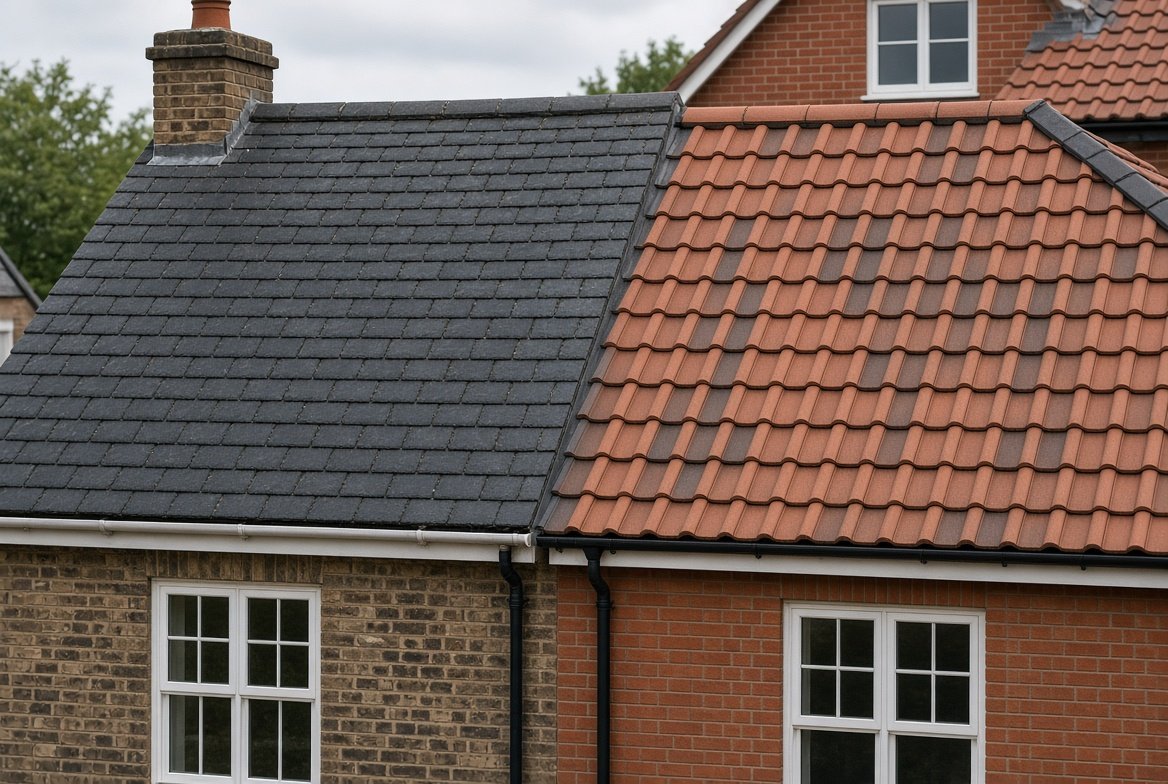
Slate and tile are the two classic choices for a pitched roof in the UK. Both are long-lasting and attractive, but they differ in cost, weight, lifespan and look. Choosing between them is one of the biggest decisions in any re-roof, because the covering affects the structure, the budget and the character of the house.
This guide compares slate and tile side by side, covering natural slate, Spanish and Welsh slate, clay tiles and concrete tiles, so you can see which one suits your roof. For a deeper look at slate itself, see our slate roof guide.
Slate vs Tile at a Glance
| Feature | Natural slate | Clay tile | Concrete tile |
|---|---|---|---|
| Lifespan | 80 to 100+ years | 60 to 100 years | 40 to 60 years |
| Fitted cost per m² | About £130 to £280 | About £100 to £210 | About £75 to £170 |
| Weight | Light to medium | Medium to heavy | Heavy |
| Minimum pitch | Often 20 to 25 degrees | Often 35 degrees for plain tiles | From about 15 degrees for many interlocking types |
| Colour over time | Stable | Stable | Can fade |
| Look | Fine, sleek, traditional | Warm, textured | Varies, many profiles |
These figures are typical UK ranges. Prices vary by region, supplier and roof shape, and individual products differ. For more on pricing, see our roof tiles price guide.
Natural Slate Roofs
Natural slate is split from rock into thin, flat sheets. It has a fine, elegant look and is one of the longest-lasting roofing materials available. Many slate roofs on older homes are still performing after a century or more.
Want a number specific to your roof?
Get matched with local roofers for a free, no obligation quote.
Spanish Slate vs Welsh Slate
- Spanish slate: the mainstream choice. It is widely available, consistent in colour and costs less than Welsh slate.
- Welsh slate: the heritage option, often specified on listed buildings and in conservation areas. It costs significantly more.
- Other imports: slate from other countries is also sold and varies in quality, so ask about the origin and the guarantee.
Pros of Slate
- Very long life.
- Holds its colour and does not fade.
- Fire resistant and low maintenance.
- Works at moderately low pitches.
- Adds character and value to period homes.
Cons of Slate
- Higher cost than most tiles.
- Needs a skilled slater, which can limit your options.
- Brittle, so individual slates break if walked on.
- Poor-quality imports can delaminate early.
Clay Tile Roofs
Clay tiles are fired from natural clay and give a warm, textured finish. They suit traditional homes and hold their colour for decades. Plain clay tiles are small and laid in overlapping rows, while pantiles and interlocking clay tiles are larger. See our clay roof tiles guide for detail.
Pros of Clay Tiles
- Long life and strong colour retention.
- Traditional look for period and country homes.
- Lower cost than slate.
- Good resistance to frost and weather.
Cons of Clay Tiles
- More expensive than concrete.
- Plain clay tiles need a fairly steep roof.
- Can be heavy, so the structure must be checked.
Concrete Tile Roofs
Concrete tiles are the most common covering on British homes. They are affordable, quick to fit and available in many profiles and colours. Our concrete roof tiles guide explains the range.
Pros of Concrete Tiles
- Lowest cost of the three.
- Large interlocking tiles lay quickly.
- Many suit low pitches.
- Easy to match and replace.
Cons of Concrete Tiles
- Heavy, so older roofs may need checking.
- The surface colour can fade over time.
- Shorter life than slate or clay.
- Moss and algae can build up on shaded roofs.
Which Is Better Value Over Time?
Concrete costs the least upfront, but it also wears out sooner, so the cost per year of life can be closer than the sticker price suggests. Slate and clay cost more at the start, but they may only be fitted once in your ownership of the house. If you plan to stay a long time, a longer-lasting covering often pays off. If you are selling soon, the right covering for the street and the property matters more.
Which Is Better for Your Roof?
- Tight budget: concrete tiles.
- Period home or conservation area: slate or clay, often required by planners.
- Long-term investment: slate or clay.
- Low pitch roof: interlocking concrete tile or slate at a suitable pitch. See our guide to lightweight and low pitch roof tiles.
- Weight concerns: natural slate is usually lighter than concrete or clay.
- Matching an existing roof: choose the same type, even if another would be cheaper.
Before you decide, check the pitch of your roof against the minimum for each covering. Our roof pitch calculator will give you the angle.
Frequently Asked Questions
Is slate better than tile for a roof?
Slate generally lasts longer and holds its colour, while tiles cost less. The better choice depends on your budget, the style of your house and how long you plan to stay.
Is slate cheaper than clay tile?
No. Natural slate usually costs more than clay and much more than concrete, particularly Welsh slate.
What is the difference between Spanish and Welsh slate?
Spanish slate is more widely available and cheaper, while Welsh slate is a premium heritage product, often used on listed buildings.
Which lasts longer, slate or tile?
Natural slate often lasts 80 to 100 years or more. Clay tiles typically last 60 to 100 years and concrete tiles 40 to 60 years.
Is slate heavier than tile?
Natural slate is generally lighter than concrete tiles and often lighter than clay, though it depends on the product and the thickness.
Can I replace a slate roof with tiles?
Often yes, but the structure may need strengthening if the tiles are heavier, and planning rules may require slate in some areas. Check with a roofer and your local planning authority.
Final Thoughts
There is no single winner between slate and tile. Concrete is the budget choice, clay is the warm traditional option, and slate is the premium long-life choice. Check the pitch, the structure and any planning rules, then compare detailed quotes on each covering before you decide.
Get a professional assessment
If you are unsure how much life your current roof has left, a local roofer can give you an honest assessment as part of a free inspection. Browse vetted roofers through our roofer directory, or get a quick replacement estimate using our free cost calculator.