
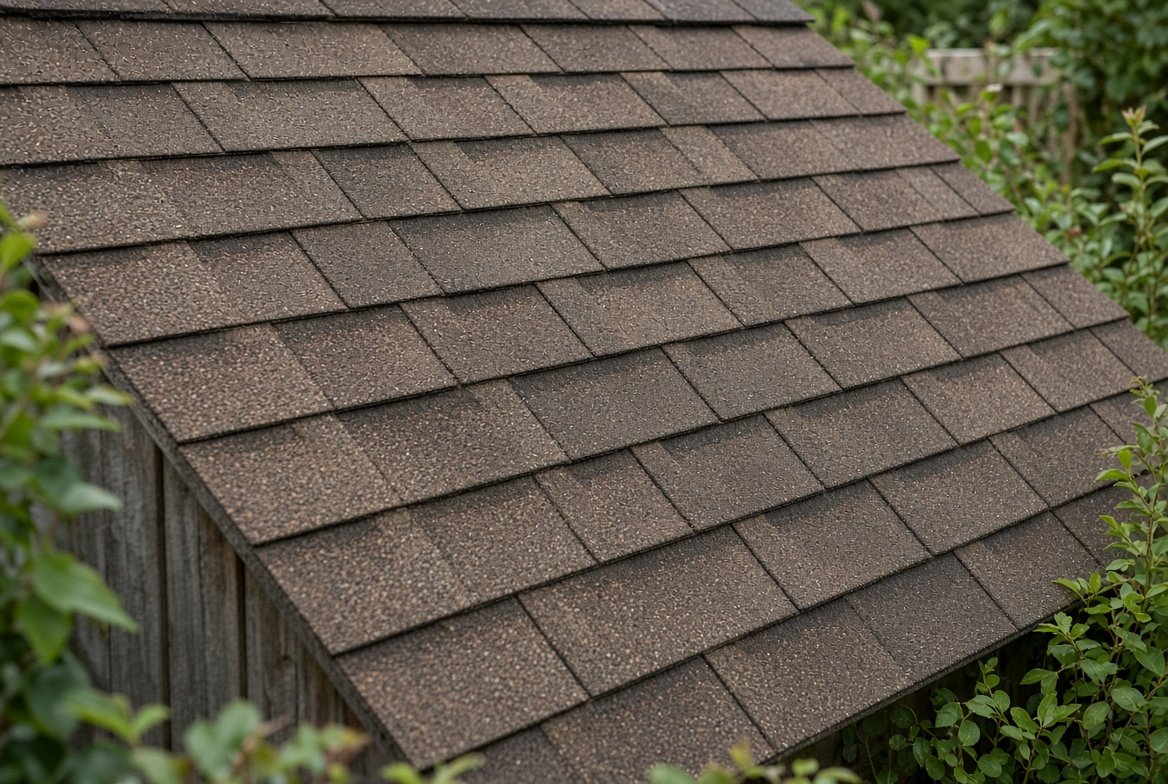
Search online for roof shingles and most of what comes up is American, and for good reason. Shingles are the default roofing material across most of the United States, but the picture in the UK is almost entirely different. Here is what the term actually means on this side of the Atlantic, and where shingles genuinely fit into UK roofing.
What a shingle actually is
A shingle is a flat, overlapping piece of roofing material, laid in rows from the eaves up to the ridge, similar in principle to a tile but generally thinner and lighter. In the United States, this almost always means asphalt shingles, made from a fibreglass or cellulose base coated in asphalt with mineral granules on top. In the UK and much of Europe, the same basic product is usually called a bitumen shingle instead, and it plays a far smaller role in residential roofing than it does in North America.
Why UK house roofs use tiles instead
According to the English Housing Survey, around 93 percent of UK dwellings have a pitched roof, and the overwhelming majority are covered in concrete tiles, at roughly 58 percent, with clay tiles and natural slate making up most of the rest. Bitumen shingles are not considered a suitable choice for a UK house roof, mainly because of the country’s wet, windy climate. A thin asphalt or bitumen layer simply does not resist UK wind uplift and constant damp as well as a thicker interlocking tile or slate, and shingles are also not always compatible with standard UK roof construction methods or building regulations for a full house roof.
Where shingles are actually used in the UK
- Sheds and garden buildings. The most common UK use for bitumen shingles, where their low cost and easy installation on a small, low pitch structure outweigh their shorter lifespan
- Garages and outbuildings. Similar reasoning applies, a lower stakes structure where a 15 to 20 year lifespan is perfectly acceptable
- Summerhouses and porches. Small, simple roofs where shingles are quick and affordable to fit
- Cedar or timber shingles on larger structures. With correct specification, some cedar shingle and shake products can be used on larger UK buildings, giving a distinctive natural appearance, though this is a specialist choice rather than a mainstream one
Shingle types compared
| Type | Typical lifespan | Common UK use |
|---|---|---|
| Bitumen or asphalt shingle | 15 to 20 years | Sheds, garages, outbuildings |
| Cedar or timber shingle | 20 to 40 years, with maintenance | Specialist projects, larger structures |
| Metal shingle or tile | 40 to 70 years | Occasional use on houses and extensions |
For comparison, UK house roofing tiles and natural slate generally last far longer, as covered in our roof tile material guide and slate roof guide.
Want a number specific to your roof?
Get matched with local roofers for a free, no obligation quote.
Minimum pitch for shingles
Shingles are not fully waterproof on their own in the way an interlocking tile system is, which is why they rely on overlap and pitch to shed water effectively. According to general roofing reference sources, a minimum roof pitch of around 18 degrees is typically recommended for shingles without additional underlayment, and steeper pitches perform noticeably better in wet climates like the UK’s.
So should you use shingles on a UK roof
For a house roof, the honest answer for most UK homeowners is no, tiles or slate remain the far more suitable choice given the climate and how UK roofs are typically built. For a shed, garage, or garden building, bitumen shingles are a genuinely sensible, low cost option, and there is little reason to look elsewhere for that kind of smaller structure. For anyone drawn to the specific look of cedar shingles on a larger building, it is a viable option, but one that needs correct specification and an experienced installer rather than a standard bitumen product.
Frequently asked questions
Are roof shingles the same as roof tiles?
Not quite. Shingles are generally thinner, flatter, and rely more heavily on overlap and pitch to keep water out, while tiles are typically thicker and often interlock for a more robust seal.
Can I put asphalt shingles on my UK house?
It is possible in principle but not recommended or common practice, since bitumen shingles are not well suited to the UK’s wet, windy climate for a full house roof, and are not always compatible with standard UK building regulations for that use.
How long do bitumen shingles last on a shed roof?
Typically 15 to 20 years, which is a reasonable lifespan for a low cost, low stakes structure like a shed or garage.
Why do American roofs look so different from UK roofs?
It largely comes down to climate, building tradition, and material availability. Asphalt shingles became the dominant, affordable choice across much of the US, while UK roofing developed around tile and slate, materials better suited to Britain’s weather and long established in local building practice.
This guide is independent editorial content. It is not sponsored.
Get a professional assessment
If you are unsure how much life your current roof has left, a local roofer can give you an honest assessment as part of a free inspection. Browse vetted roofers through our roofer directory, or get a quick replacement estimate using our free cost calculator.