
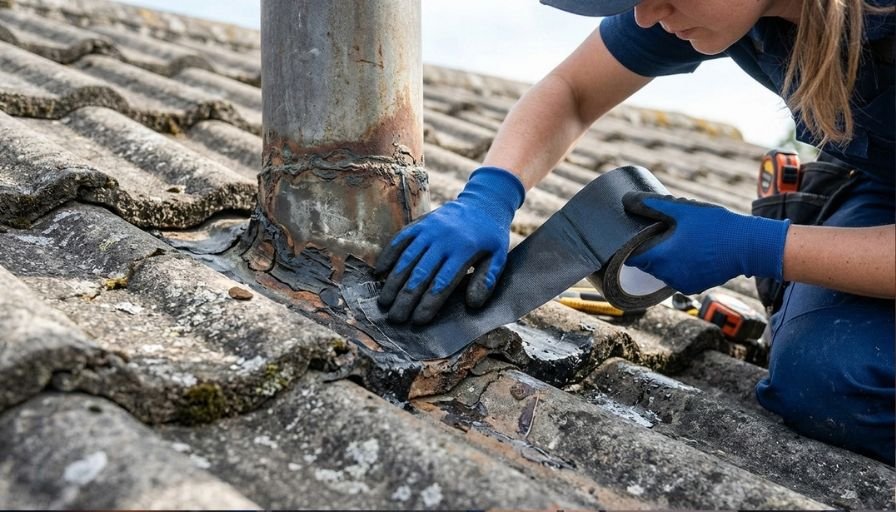
Roof tape has a reputation as a quick fix, and it can be exactly that. A strip of the right tape can seal a small crack, close a gap at a flashing or protect a joint until a proper repair is made. But roof tape is also one of the most misused products in roofing. The wrong type on the wrong surface, or a strip stuck over a roof that is failing, can fail within months and hide the real problem. This guide explains the main types of roof tape, where each works, where tape is not the answer, how to apply it and how long it lasts.
What Is Roof Tape?
Roof tape is a self-adhesive strip used to seal, patch or join roofing materials. It usually has a strong sticky layer, often butyl rubber or bitumen, on a flexible backing such as aluminium foil, fabric or rubber. It is used on pitched and flat roofs, on sheet roofing, around pipes and flashings and at the joints of membranes. Some tapes are designed for temporary repairs, while others are used as part of a permanent system, such as seam tape in an EPDM roof or joint tape on a breathable membrane.
Types of Roof Tape
| Type | Description | Typical use | Notes |
|---|---|---|---|
| Bitumen flashing tape | Self-adhesive bitumen strip, often with an aluminium face | Sealing flashings, chimneys, skylights and small gaps | Needs a foil or protective face for UV resistance |
| Butyl rubber tape | Flexible rubber-based adhesive tape | Sheet laps, pipes, vents and general sealing | Strong grip, many widths and finishes |
| Double-sided butyl sealing tape | Sticky both sides, used between layers | Sealing laps in metal, bitumen and plastic sheets | Placed under the lap before fixing |
| Aluminium foil tape | Foil with a strong adhesive | Sealing the ends of polycarbonate sheets and some ducts | Use the type the sheet maker specifies |
| EPDM seam and flashing tape | Rubber tape designed for EPDM membranes | Joining and repairing EPDM roofs | Needs the matching primer and clean surface |
| Membrane joint tape | Acrylic or similar tape for underlay laps | Sealing joints in breathable roof membranes | Use the tape approved by the membrane maker |
Where Roof Tape Works Well
- Small cracks and splits in sound felt or metal sheets, as a short-term repair.
- Gaps at the edges of flashings, where a small area has lifted.
- Around pipes, vents and fittings that pass through the roof.
- Sheet laps, where a sealing tape stops water travelling between overlapped sheets.
- Membrane joints and penetrations, where the manufacturer specifies a tape.
- Emergency protection, to limit water damage until a roofer can fix the problem.
For flat roofs, a repair tape or patch is a common first aid, but the underlying cause matters. Our flat roof repair guide explains how to find the source of a leak and when a patch is enough.
Where Roof Tape Is Not the Answer
- Failing flashing. A corroded or lifting flashing needs repair or replacement, not tape over the top. See our guides to lead flashing and roof flashing.
- Widespread cracking or blistering. A tired covering needs a repair plan, a coating or replacement.
- Wet, dirty or crumbling surfaces. Most tapes need a clean, dry, sound surface to stick.
- Standing water. Ponding on a flat roof speeds up failure, and tape will not fix the fall.
- Structural problems. Sagging decks, rotten timber and moving joints are beyond tape.
- Wrong material. Some roof coverings, including many single ply membranes, need welded repairs or system-specific products.
Choosing the Right Tape
- Identify the roof material. Felt, EPDM, GRP, metal, plastic and tiles all need different products.
- Decide if it is a temporary or permanent job. Temporary repair tapes are not the same as system tapes that form part of the roof.
- Check the surface condition. If the roof is dry, clean and sound, tape can work. If it is old, wet or flaking, deal with the surface first.
- Check UV and temperature ratings. Exposed tape needs a UV-resistant face, and many adhesives have minimum application temperatures.
- Check the width and thickness. Wide tapes cover more of the damage, and thicker ones are more durable.
- Follow the maker’s advice. Roofing system makers often specify the tapes and primers that keep the guarantee valid.
For small gaps and joints, a sealant may be a better fit than tape. Our guide to roof coatings and sealants explains the differences.
Want a number specific to your roof?
Get matched with local roofers for a free, no obligation quote.
How to Apply Roof Tape
This is a general guide, and the product’s instructions always come first.
- Check the weather. Choose a dry day above the minimum temperature on the product. Cold, damp conditions weaken the bond.
- Clean the surface. Remove moss, dirt, loose material and old sealant, then let it dry fully.
- Prime if required. Many tapes need a primer, especially on metal, concrete, old felt and EPDM.
- Cut the tape to size. Allow it to extend well beyond the damage on all sides, usually by at least several centimetres.
- Peel and place. Remove the backing gradually, and press the tape into place without stretching it or trapping air.
- Press firmly. Roll or press the whole strip, especially the edges, so it bonds fully.
- Overlap properly. Where tapes meet, overlap them in the direction water flows, so water runs over the joint.
- Check and monitor. Inspect the repair after the next rainfall and over the following weeks.
Roof Tape and Membrane Systems
On some roofs, tape is part of the system, not a repair. EPDM roofs use rubber seam and flashing tapes at joins and upstands, as explained in our EPDM rubber roofing guide. Breathable underlays often use joint tape at laps and penetrations, as covered in our guide to roof membranes. Polycarbonate sheets use aluminium and breather tapes on their edges, as explained in our polycarbonate roofing sheets guide. In each case, use the tapes the manufacturer specifies.
How Long Does Roof Tape Last?
Lifespan varies widely. A good quality tape applied correctly to a clean, sound surface can last for several years, and system tapes can last as long as the roof itself. A cheap or temporary tape, a strip applied to a dirty or damp surface or one exposed to strong sunlight without a protective face may fail within months. A patch on an old, failing roof often has little effect on the life of the roof, because water finds another route. Treat tape as a short-term measure unless the product is designed as a permanent repair.
Common Mistakes
- Applying tape to a wet, dusty or flaking surface.
- Using general-purpose tape, such as duct tape, which fails quickly outdoors.
- Choosing a tape that is not compatible with the roofing material.
- Not extending the tape far enough beyond the damage.
- Stretching the tape, which makes it shrink back and lift at the edges.
- Trapping air under the tape, which can allow water to travel.
- Ignoring the cause of the leak, such as a blocked outlet or failing flashing.
- Forgetting to check the repair after rain.
Safety and Asbestos
Working at height is dangerous. Roofs are slippery, especially when wet, and tape jobs often involve reaching to edges and flashings. Use a stable ladder or platform, never work alone and never step on rooflights or fragile sheets.
Asbestos warning. Older garages and outbuildings may have corrugated cement roof sheets that contain asbestos. Do not drill, scrub, scrape or tape over damaged sheets without advice, and get them identified by a competent surveyor before any work. The HSE asbestos guidance explains the rules.
Frequently Asked Questions
Does roof repair tape work?
For small cracks, gaps and joints on a clean, dry, sound surface, yes, as a temporary or short-term repair. It is not a substitute for repairing a failing roof.
What is flashing tape?
A self-adhesive strip, often bitumen or butyl with a protective face, used to seal the junctions where a roof meets walls, chimneys and other features.
Can I use duct tape on a roof?
No. It is not designed for outdoor exposure and will fail quickly. Use a roofing tape made for your material.
Will roof tape stick to a wet roof?
Most do not bond well to wet surfaces, though some products are designed for damp conditions. Check the label, and dry and clean the surface where possible.
How long does roof tape last?
Anywhere from months for cheap or poorly applied tape to several years for good products on sound surfaces. System tapes forming part of a roof can last as long as the roof.
Can tape fix a leaking flashing?
It can seal a small gap for a while, but a corroded, lifted or cracked flashing usually needs proper repair or replacement.
Final Thoughts
Roof tape is a useful tool when it is matched to the material, applied to a clean, dry surface and treated as a short-term fix. Use system tapes where the manufacturer specifies them, find and fix the cause of any leak and replace failing flashings and coverings properly. Work safely at height, and treat old cement sheets as asbestos until proven otherwise.
Get a professional assessment
If you are unsure how much life your current roof has left, a local roofer can give you an honest assessment as part of a free inspection. Browse vetted roofers through our roofer directory, or get a quick replacement estimate using our free cost calculator.