
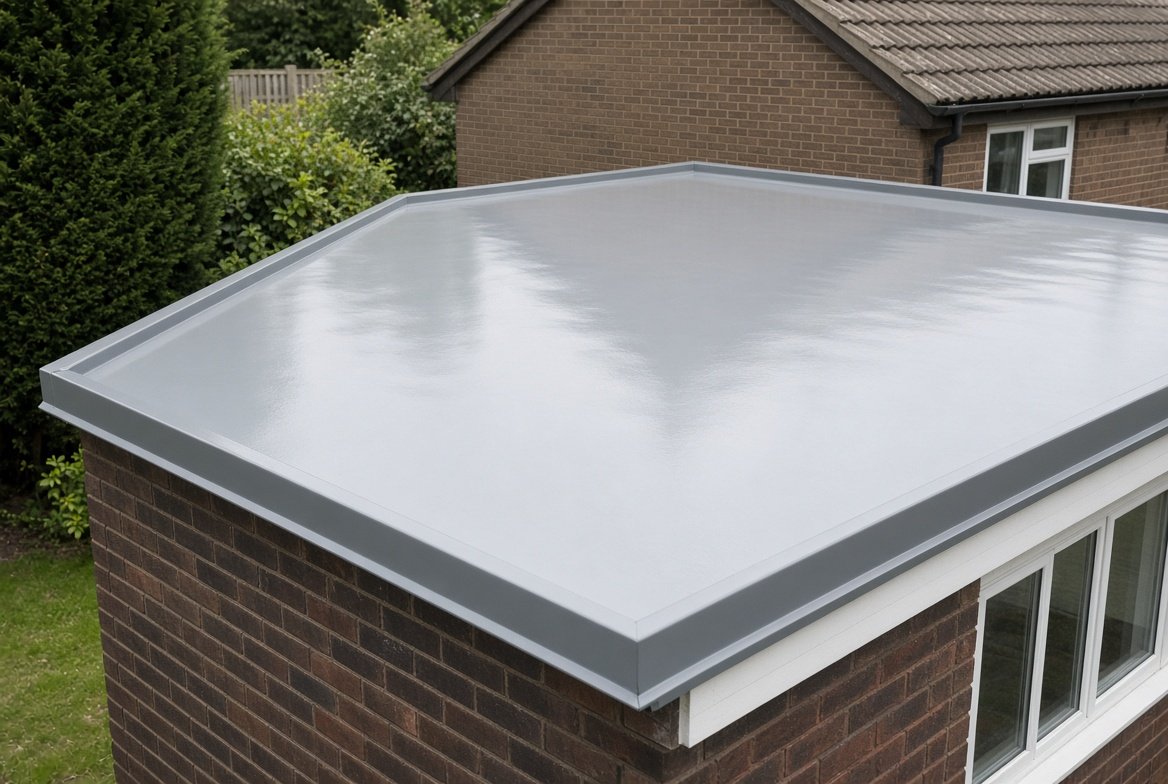
GRP roofing, better known as fibreglass roofing, is one of the most popular coverings for flat roofs on UK garages, extensions, dormers and porches. It cures into a hard, seamless waterproof shell, which means no laps or welded joins to fail, and it can be walked on and finished in a choice of colours. It also has weaknesses, especially if it is fitted in poor weather or on a deck that moves. This guide explains how GRP roofing works, what it is made of, how long it lasts, what it typically costs, the DIY route and the problems to look out for.
What Is GRP Roofing?
GRP stands for glass reinforced plastic. A GRP roof is made on site by brushing or rolling liquid polyester resin over a layer of glass fibre matting. A hardener, called a catalyst, is mixed into the resin so that it sets solid within a short time. Once the laminate has cured, a coloured topcoat is applied to protect it from sunlight and give it a finished look. Because the layers are formed in place, the roof becomes a single continuous membrane, even around corners, upstands and outlets. It is normally laid onto a timber deck such as OSB3 or exterior grade plywood. Our flat roof materials guide compares it with the other main flat roof coverings.
How a GRP Roof Is Built
- Deck. A sound, dry, smooth deck, laid to a fall so water runs towards the outlet or gutter. Joints between boards need to be tight and well supported.
- Insulation (optional). On a warm roof, insulation sits on top of the deck with a suitable board above it. See our guide to warm roof construction.
- Edge trims. Drip edges and fillets are fixed first and laminated into the roof. The roof edge trim guide explains the common types.
- Laminate. Resin and glass fibre matting are laid in one or more layers and rolled out to remove air.
- Topcoat. A pigmented topcoat gives colour and UV protection, and some systems include a slip-resistant finish.
- Details. Upstands, outlets, rooflights and abutments are formed in the same material to keep the roof continuous.
How Long Does a GRP Roof Last?
As a general guide, a well-installed GRP roof typically lasts 25 to 30 years or more, depending on the quality of the materials and workmanship, the movement in the deck and the maintenance it receives. Many manufacturers offer guarantees, but the terms vary, so ask what is covered and who has to fit it. GRP does not tolerate poor preparation, so the installation quality has more effect on lifespan than the label on the tin.
GRP Compared With Other Flat Roof Coverings
| Covering | Typical lifespan | Character | Main weakness |
|---|---|---|---|
| GRP fibreglass | 25 to 30+ years | Rigid, seamless, walkable | Can crack if the deck moves, weather sensitive to fit |
| EPDM rubber | 30 to 50 years | Flexible, few joins | Needs careful bonding and edge detailing |
| Torch-on felt | 15 to 20 years | Layered bitumen sheets | Laps and shorter lifespan |
| Single ply | 25 to 35 years | Welded sheet | Needs specialist welding |
If you are weighing GRP against rubber, our EPDM rubber roofing guide explains how the two differ in cost, flexibility and installation.
Want a number specific to your roof?
Get matched with local roofers for a free, no obligation quote.
Pros and Cons of GRP Roofing
Advantages
- Seamless, so fewer places for water to get in.
- Hard-wearing and suitable for light foot traffic.
- Works well on awkward shapes, small roofs and details.
- Available in several colours and finishes.
- Does not use a naked flame to fit.
Disadvantages
- Rigid, so it can crack if the deck or building moves.
- Must be fitted in dry, mild weather onto a dry deck.
- Needs correct resin mixing and good technique, so quality varies between installers.
- Repairs need matching resin and matting, and colours may not match perfectly.
- Usually costs more than felt.
GRP Roof Cost in the UK
Prices vary widely with roof size, deck condition, insulation and region, and different UK price guides give different figures, so treat these as general guides based on 2026 data. Small roofs usually cost more per square metre because setting up and detailing carry fixed costs.
| Item | Typical range | Notes |
|---|---|---|
| Supplied and fitted, per m² | Roughly £75 to £160 | Assumes a sound deck |
| Single garage roof | About £1,500 to £3,500 | Depends on size and access |
| Extension roof (20 to 40 m²) | About £2,500 to £6,000 | Rooflights and insulation add cost |
| New deck, if needed | Roughly £25 to £45 per m² extra | Rotten boards must be replaced first |
| Insulated GRP roof | Higher | Depends on insulation thickness |
London and the South East are often 15 to 25 percent above the national average. Ask for an itemised quote, and for garage roofs see our garage roof replacement guide.
Weather and Conditions for Fitting
GRP is sensitive to weather. The deck must be dry, and the resin should be applied in dry, mild conditions within the temperature range shown on the manufacturer’s data sheet. Rain, frost and heavy damp can stop the resin curing properly, leaving a tacky or weak surface. Too much heat can make it cure too quickly and trap air. A good installer will check the forecast, protect the work as it cures and not rush the job.
GRP Roof Kits and DIY
GRP roof kits typically include resin, catalyst, glass fibre matting, topcoat, brushes and rollers, and are sized to suit your roof. They can suit a small, simple roof such as a shed or small garage if you are confident and careful. This is an overview only, and the manufacturer’s instructions always come first.
- Prepare the deck. Replace rotten boards, make joints tight and flat, and clean and dry the surface.
- Fit the trims. Install edge trims and fillets so water runs off cleanly.
- Cut the matting. Cut pieces to size with overlaps, and have everything ready before mixing resin.
- Mix the resin. Add the catalyst in the exact ratio specified, because too little or too much affects the cure.
- Lay the laminate. Brush resin onto the deck, lay the matting and roll out air bubbles until the fibres are fully wetted.
- Let it cure. Keep it dry and clean until it is hard to the touch.
- Apply the topcoat. Roll on the coloured topcoat evenly, following the recommended coverage.
A large or complex roof, or any roof above head height with poor access, is better left to a professional.
Common GRP Roof Problems
- Cracks. Caused by movement in the deck, thin laminate or building settlement.
- Blisters. Usually damp in the deck or trapped air under the laminate.
- Leaks at trims and upstands. Poor detailing at edges, corners and outlets. Blocked outlets can also cause ponding, as explained in our guide to the roof gully.
- Delamination. Layers lifting because of contamination or poor wetting out.
- Faded or chalky topcoat. Sunlight and age wear the colour, and it can be recoated.
- Tacky surface. A sign that the resin did not cure properly, often from the wrong catalyst ratio or poor weather.
- Impact damage. Dropped tools or falling branches can crack the surface.
Small cracks and blisters can often be repaired by cleaning, grinding back to sound material, patching with resin and matting and recoating. Widespread cracking, soft decking or repeated leaks usually mean it is time for a new roof. If you are unsure, a roofer can inspect it and give a repair or replace recommendation. GRP valleys are a related detail, covered in our guide to the GRP valley.
Falls and Drainage
A flat roof needs a fall so water drains away instead of ponding. A minimum finished fall of around 1 in 80 is commonly quoted for GRP, with a steeper design fall often used to allow for deflection, but always check the manufacturer’s requirements. Outlets, gutters and trims must be clear and secure, because standing water shortens the roof’s life.
Safety, Asbestos and Fire
Working at height is dangerous. Use a stable ladder or platform, edge protection where needed, and never work alone on a roof.
Chemicals and fire. Polyester resin gives off strong fumes and is flammable, and the catalyst can cause skin and eye damage. Work in good ventilation, keep flames and sparks well away, wear gloves, eye protection and a suitable respirator, and follow the safety data sheet. Never mix more resin than you can use before it sets.
Asbestos warning. Old garages and outbuildings often have corrugated cement roof sheets that may contain asbestos. Do not drill, break or scrub damaged sheets, and get them identified by a competent surveyor before any work.
Regulations
Re-covering a flat roof like for like normally does not need planning permission in England. Building regulations may require insulation to be upgraded when a substantial part of the roof covering is renewed, so check with building control. Scotland, Wales and Northern Ireland have their own rules, and listed buildings or conservation areas may have extra restrictions.
Frequently Asked Questions
How long does a GRP roof last?
Typically 25 to 30 years or more when installed correctly, though cracks, ponding and poor workmanship can shorten it.
Is GRP better than EPDM?
Neither is better in every case. GRP is seamless and hard-wearing but rigid, while EPDM is flexible and usually longer-lasting but depends on its bond and edge details.
Can I fit a GRP roof myself?
On a small, simple roof with a kit and the manufacturer’s instructions, yes. Large or complex roofs and anything involving heights are better left to a professional.
Why has my fibreglass roof cracked?
Usually movement in the deck or building, a thin laminate or impact damage. Small cracks can often be repaired, but check the deck is sound first.
Can GRP be fitted in winter?
It is best avoided. Cold, damp or frosty conditions can stop the resin curing properly, so choose a dry, mild day.
How much does a GRP roof cost?
As a general guide, roughly £75 to £160 per square metre fitted, or £1,500 to £3,500 for a single garage, with big variation between regions and firms.
Final Thoughts
GRP roofing is a tough, seamless and attractive option for flat roofs when it is fitted well on a sound, dry deck in the right weather. Choose a reputable installer, ask about the laminate, trims and guarantee, and make sure the fall and outlets are right. Treat old cement sheets as asbestos until proven otherwise, and handle resin and catalyst with care.
Get a professional assessment
If you are unsure how much life your current roof has left, a local roofer can give you an honest assessment as part of a free inspection. Browse vetted roofers through our roofer directory, or get a quick replacement estimate using our free cost calculator.