
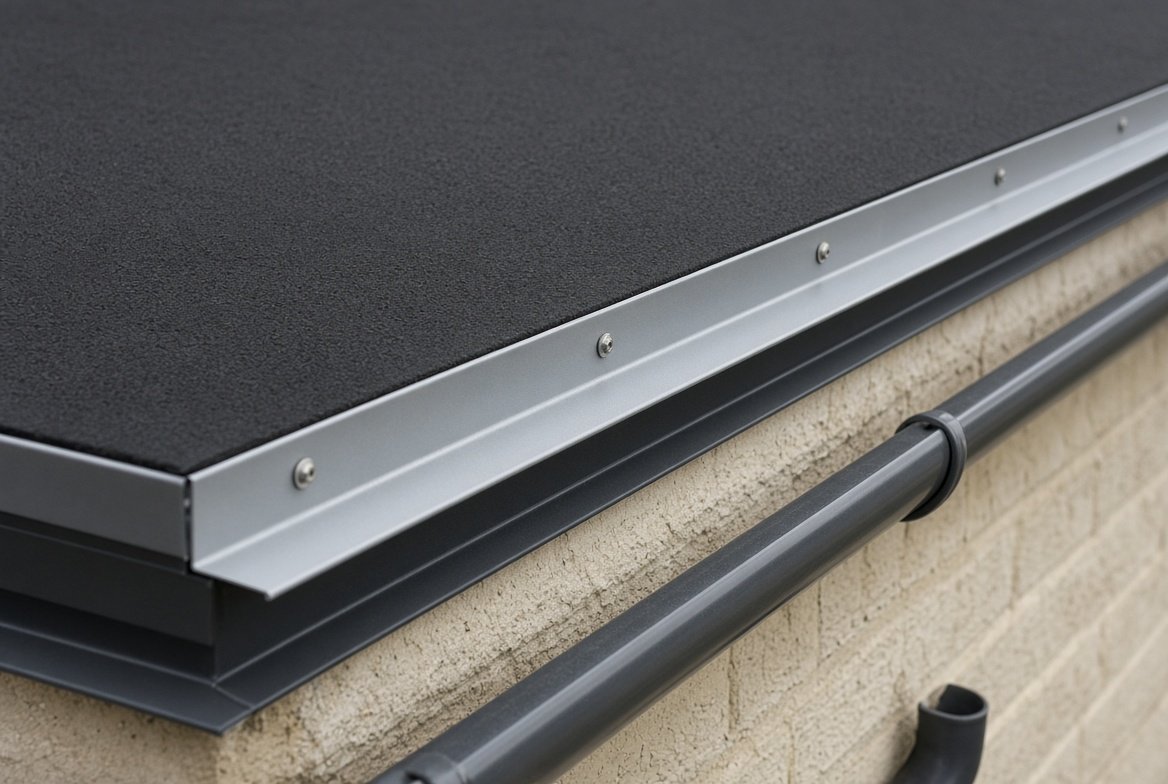
The edge of a roof is where weather, wind and water all meet, and it is one of the most common places for problems to start. Roof edge trim finishes that edge neatly, holds the covering down, guides rainwater into the gutter and keeps wind and rain out of the structure. A good trim is cheap compared with the damage a poor edge can cause.
This guide explains the main types of roof edge trim, what they are made from, where they are used, how they are fitted and the common mistakes to avoid. It covers flat roofs, pitched roofs and sheet roofs.
What Is a Roof Edge Trim?
A roof edge trim is a profile fitted around the edge of a roof to finish it and protect it. Depending on the roof, it can do several jobs at once:
- Hold the waterproof covering or the edge tiles in place.
- Direct water away from the fascia and into the gutter.
- Stop wind from lifting the edge of the covering.
- Keep out birds, insects and debris.
- Give the roof a clean, finished look.
You may also hear it called roof edging, roof edge protection, drip edge, drip trim, fascia trim, verge trim or edge flashing. The name often depends on the type of roof and where the trim is fitted.
Want a number specific to your roof?
Get matched with local roofers for a free, no obligation quote.
Types of Roof Edge Trim
Drip Edge or Gutter Trim
Used at the eaves of flat and low-pitch roofs. It has a downward lip that projects over the gutter so that water falls into it rather than running behind the fascia. This is the most important trim on a roof that drains to a gutter. Our guide to EPDM roof edge trim explains the details for rubber roofs.
Fascia Trim
Covers the front edge of the roof deck and often the top of the fascia board. It gives a neat finish and protects the timber from water.
Verge Trim and Dry Verge Units
Used along the sloping edges of a pitched roof at a gable end. A dry verge system fixes the edge tiles mechanically instead of with mortar, which holds up better to weather and movement. Our guide to dry verge roofing explains how it works, including the end caps that finish the verge.
Roof Tile Edging
Plastic or metal profiles that finish the edge of a tiled roof at the eaves or the verge. Some are designed to keep birds out and let air in.
End Caps
Small covers that finish the end of a ridge, hip or verge unit. They keep out birds, insects and rain, and give a neat appearance.
Edge Trim for Sheet Roofs
Profiled sheet roofs on garages, barns and outbuildings use barge flashings, eaves fillers and corner trims shaped to fit the sheet profile.
What Are Roof Edge Trims Made From?
- Aluminium: the most popular choice. Light, strong, corrosion resistant and available in many colours.
- uPVC: cheap and low maintenance, but it can become brittle with age and distort in strong sun.
- Galvanised or coated steel: tougher, used on larger and commercial roofs.
- GRP: moulded trims used with fibreglass roofs.
- Lead and copper: used on traditional and high-end roofs, where appearance and long life matter.
Roof Edge Trim by Roof Type
| Roof type | Typical trim | Main job |
|---|---|---|
| Flat roof (EPDM, felt, GRP) | Drip edge or gutter trim | Hold the membrane and throw water into the gutter |
| Tiled pitched roof, eaves | Eaves tray and edging or vent strip | Support the underlay and let air in |
| Tiled pitched roof, verge | Dry verge unit and end caps | Fix edge tiles and keep out the weather |
| Metal sheet roof | Barge flashing and eaves filler | Close gaps in the profile |
On a pitched roof, the eaves also depend on the support under the underlay. Our guide to the eaves tray explains how the underlay is supported at the edge, and our article on over fascia vents covers how air gets into the roof space at the same point.
How Roof Edge Trim Is Fitted
- Check the edge. The fascia, deck or rafter ends must be sound and straight. Any rotten timber must be repaired first.
- Lay the roof covering up to the edge. The membrane, tiles or sheets are positioned according to the trim design.
- Fix the trim. It is screwed, nailed or clipped along the edge at the manufacturer’s spacing, with the drip lip projecting over the gutter.
- Join the lengths. Pieces overlap or are joined with connectors, and the joints are sealed.
- Fit corners and end caps. Pre-formed pieces keep the corners watertight.
- Check the water path. Water should fall cleanly into the gutter, without running behind the fascia.
Common Mistakes
- Drip too short. Water runs behind the fascia instead of into the gutter.
- Gutter in the wrong position. If the gutter is too low or too far from the edge, the water misses it.
- Unsealed joints and corners. Water gets in at the weakest points.
- Wrong fixings. Rusty or unsuitable fixings stain the trim and fail early.
- Fixing to rotten timber. The trim will not hold and the roof fails at the edge.
- Mixing metals. Contact between different metals can cause corrosion. See our guide to roof valleys and guttering for what to check around the gutters.
- Ignoring ventilation. Trims that block the air gap can cause condensation in the roof space.
Do You Need to Replace the Trim?
Look for these signs:
- Bent, cracked or missing sections.
- Rust, staining or flaking paint.
- Water marks on the fascia below.
- Gaps or lifting at joints and corners.
- Tiles or membrane lifting at the edge.
Often, the trim can be replaced without redoing the whole roof, but the covering at the edge may need to be re-bonded or re-laid. A roofer can tell you which is needed.
What to Ask Your Roofer
- What type and material of edge trim will be used?
- How far will the drip project over the gutter?
- Will corner pieces, end caps and joint sealers be used?
- Is the trim approved by the manufacturer of the roof covering?
- Does the guarantee include the trims and edge details?
Frequently Asked Questions
What is roof edge trim?
It is a profile fitted around the edge of a roof to finish it, hold the covering and guide water into the gutter or away from the walls.
What is the best material for roof edge trim?
Aluminium is the most popular because it is light, strong and does not corrode. uPVC is a cheaper alternative, and steel suits large or commercial roofs.
What is the difference between a drip edge and a fascia trim?
A drip edge has a projecting lip that throws water into the gutter. A fascia trim covers the front of the roof edge and the top of the fascia board. Many products combine both.
Do I need edge trim on a flat roof?
Yes. It holds the membrane in place, gives a clean edge and keeps water off the fascia. A roof without one is likely to leak or rot the edge.
What are roof end caps?
End caps are small covers that finish the ends of ridge, hip or verge units. They keep out birds, insects and rain.
Can I replace roof edge trim myself?
On a low roof, it is possible, but working at height is risky and poor details cause leaks. Many people use a roofer.
Final Thoughts
Roof edge trim is a small part of the roof that has a big job. A good trim, fitted with the right overhang and sealed joints, protects the fascia and keeps water out of the structure. When you compare quotes, ask what trims are included and how the edges will be finished.
Get a professional assessment
If you are unsure how much life your current roof has left, a local roofer can give you an honest assessment as part of a free inspection. Browse vetted roofers through our roofer directory, or get a quick replacement estimate using our free cost calculator.