
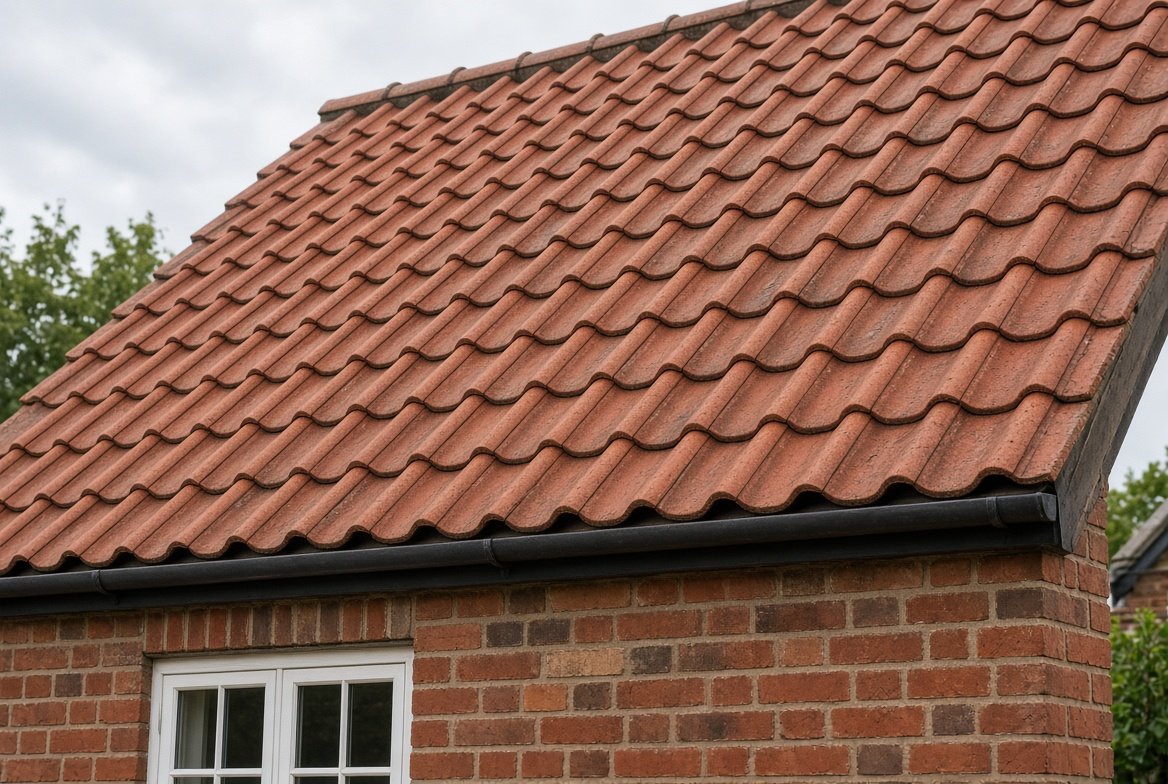
Pantiles are one of the most recognisable roof tiles in Britain. Their wavy S-shaped profile gives a rolling, rhythmic look, and you will see them on cottages, barns and terraces, especially along the east coast of England. They are also making a comeback on new homes where a traditional look is wanted.
This guide explains what pantiles are, the different types, what they cost, what pitch they need and how they compare with other tiles. If you are looking at tiles in general, our clay roof tiles guide is a good companion.
What Is a Pantile?
A pantile, also called a pan tile, is a roof tile with an S-shaped curve. One side of the curve rises into a rounded rib, and the other dips into a valley. The tiles overlap along the sides, so that the rib of one tile fits over the dip of the next, forming channels that shed water.
Pantiles are a single-lap tile. Each tile overlaps the one beside it only once, unlike plain tiles, which are laid in overlapping rows several layers deep. This makes a pantile roof lighter than a double-lap plain tile roof and quicker to lay.
Want a number specific to your roof?
Get matched with local roofers for a free, no obligation quote.
Where Pantiles Are Used
Pantiles have a long history in the UK. They were brought over from the Low Countries, and they became very common in East Anglia, Lincolnshire, Yorkshire and the north-east coast. You will see them on farm buildings, terraces, seaside houses and many older homes in those areas.
Today they are used on:
- Period homes and barn conversions where a traditional look is important.
- New builds designed to blend with local character.
- Extensions that need to match an existing pantile roof.
- Outbuildings and garages.
Types of Pantile
Clay Pantiles
The traditional choice. Clay pantiles are usually fired in the classic orange-red colour, though other shades exist. They weather well and hold their colour for decades. They cost more than concrete, and some local varieties are handmade.
Glazed Pantiles
Some clay pantiles have a glossy glaze, often black or dark grey. They are common on coastal and Georgian buildings, where the shiny surface is part of the look.
Concrete Pantiles
Concrete versions give a similar profile at a lower price. They are heavier and the colour is applied on the surface, so it can fade over time. For more on how they behave, read our concrete roof tiles guide.
Reclaimed Pantiles
Old pantiles are often reused, especially on listed buildings and when matching an existing roof. They carry the colour and character of age, though the quality and the number available vary.
Pantile Roof Pros and Cons
Advantages
- Distinctive look. The wavy profile is very recognisable and gives a lot of character.
- Lighter than plain tiles. Single-lap tiles weigh less per square metre than double-lap clay plain tiles.
- Quick to lay. Fewer tiles per square metre means shorter installation time.
- Durable. Clay pantiles can last 60 years or more.
- Matches local styles. A pantile roof helps new work blend into the street.
Disadvantages
- Higher cost than basic concrete tiles. Clay and handmade pantiles are expensive.
- Minimum pitch. They need a certain slope to shed water, and the lowest pitch depends on the product.
- Matching is hard. Pantiles vary by region and maker, so finding an exact match for an old roof can take time.
- Wind lift. The shape can let wind get underneath, so good fixing is important in exposed areas.
- Special details. Ridges, hips and verges need correct pantile accessories.
What Pitch Do Pantiles Need?
The minimum pitch depends on the pantile and the roof’s exposure. As a general guide, many clay pantiles need to be laid at around 30 degrees or more, while some concrete and modern pantile ranges can go lower. Always check the manufacturer’s minimum for your tile and your area. If you are not sure what your roof angle is, use our roof pitch calculator.
How Many Pantiles Do You Need?
The number depends on the size of the tile and the gauge, which is the spacing between the battens. As a rough guide, pantiles need somewhere in the region of 16 to 20 tiles per square metre, though this varies with the product. Your supplier will give you the exact figure and tell you how many extra to order for cutting and breakage.
Pantile Roof Cost
Pantiles cost more than basic concrete tiles and are usually priced between concrete and handmade clay. The cost is affected by the material, whether you choose new or reclaimed tiles, the roof shape and how easy it is to reach. To see typical ranges, read our roof tiles price guide. Reclaimed pantiles can be cheaper, but they need sorting, and quality varies.
Ridge, Hip and Verge Details
A pantile roof is finished with ridge tiles and special pieces at the hips and the edges. At a gable end, the verge can be finished with mortar or with a dry verge system, which is simpler to maintain. Our article on dry verge roofing explains how it works.
Maintaining a Pantile Roof
- Check for slipped, cracked or missing tiles after strong winds.
- Look at the mortar on the ridge, hips and verges and repair it when it cracks.
- Clear moss and debris from the channels, where water can collect.
- Keep the gutters clear, so that water does not back up at the eaves.
- Replace broken tiles with matching ones as soon as possible. Our guide on how to replace roof tiles explains the process and when to call a roofer.
Pantile vs Plain Tile
| Feature | Pantile | Clay plain tile |
|---|---|---|
| Laying | Single lap | Double lap |
| Weight | Lighter | Heavier |
| Look | Wavy, rhythmic | Flat, uniform |
| Speed to lay | Faster | Slower |
| Typical area | East coast and north-east England | South-east England and across the UK |
Frequently Asked Questions
What is a pantile roof?
A pantile roof is covered in S-shaped tiles that overlap along the sides to form channels that carry water away. They are common on traditional buildings, especially on the east coast of England.
What is the difference between a pantile and a pan tile?
There is no difference. Both terms describe the same S-shaped roof tile.
Are pantiles clay or concrete?
Both. Traditional pantiles are clay, while concrete versions give a similar look at lower cost.
What pitch do pantiles need?
Many clay pantiles need around 30 degrees or more, but the minimum depends on the product. Check the manufacturer’s data sheet.
How long do pantiles last?
Clay pantiles can last 60 years or more when installed well and looked after. Concrete pantiles generally last 40 to 60 years.
Can I mix old and new pantiles?
Yes, but make sure the profile and size match. New tiles will look brighter at first and blend in as they weather.
Final Thoughts
Pantiles combine character, durability and a relatively light weight, which is why they have lasted for centuries on British roofs. Choose clay for the traditional look, concrete if the budget is tight, and always check the minimum pitch and the details at the edges. A roofer familiar with pantiles will get the finish right.
Get a professional assessment
If you are unsure how much life your current roof has left, a local roofer can give you an honest assessment as part of a free inspection. Browse vetted roofers through our roofer directory, or get a quick replacement estimate using our free cost calculator.