
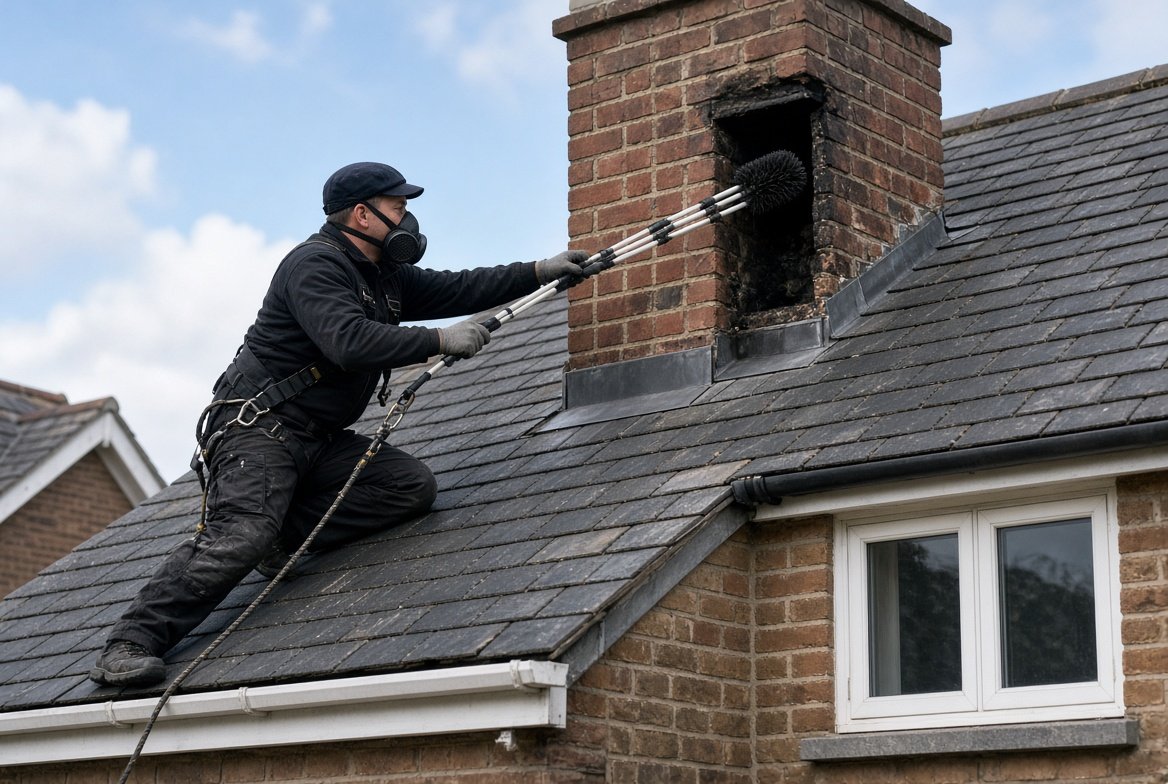
A chimney sweep is one of the cheapest and most important jobs in home maintenance. A clean flue burns better, reduces the risk of a chimney fire and carbon monoxide problems and, for many households, is a condition of home insurance. Prices are modest, but they vary by appliance, region and what is included. This guide explains what a chimney sweep typically costs in the UK in 2026, how often you should have one, what happens during a visit, what the certificate is for and how to choose a reliable sweep. All figures are general guides based on UK price guides.
How Much Does a Chimney Sweep Cost?
As a general guide, a chimney sweep typically costs about £50 to £120 per chimney in the UK, with most open fires and stoves falling around £60 to £110. Prices are higher in London and the South East, commonly in the region of £75 to £160 per chimney, and a little lower in some parts of the North and Wales. Sweeping a second flue on the same visit usually costs less than booking two separate call-outs.
Chimney Sweep Cost by Appliance
| Appliance | Typical price | Notes |
|---|---|---|
| Open fireplace (coal or wood) | About £60 to £110 | Usually the quickest to sweep |
| Wood-burning or multi-fuel stove | About £70 to £130 | Takes longer because of the baffle plate and tar build-up |
| Gas fire with a flue | About £60 to £110 | Gas appliances also need a Gas Safe service |
| Inglenook or large open chimney | About £90 to £160 | Larger flue, more soot |
| Range cooker flue | About £80 to £150 | Often longer and more complex |
| Second flue, same visit | Often about £40 to £60 extra | Cheaper than a separate visit |
| Sweep with CCTV inspection | Often about £100 or more | Useful for lined flues and problems |
What Affects the Price?
- Type of appliance. Stoves need the baffle removed and refitted, and burning wood at low temperatures leaves sticky creosote that is harder to clear.
- Chimney height and bends. Tall or twisting flues take longer, and roof access can add time.
- Condition of the flue. Heavy soot, tar or a bird nest means more work.
- Number of chimneys. Extra flues are usually cheaper per flue.
- Region. London and the South East are noticeably above the national average.
- Extras. CCTV inspection, smoke tests, bird nest removal, a certificate and cap or pot repairs can add to the bill.
- Time of year. Some sweeps are busier in autumn, and booking out of season can be easier and sometimes cheaper.
How Often Should a Chimney Be Swept?
Advice varies with the fuel and how much you use the fire. As a general guide, many sweeps recommend at least once a year for smokeless fuel and for stoves in regular use, and more often, sometimes twice a year, for wood or house coal burned heavily on an open fire. A sweep will also advise you based on your flue, your fuel and how often you light it. Extra sweeps are worth having:
- Before the first fire after a long gap.
- Before installing a new stove or opening up an old fireplace.
- After a chimney fire.
- If you notice smoke, smells or soot coming back into the room.
- If birds have been nesting in the flue.
Check your insurance policy and the appliance manufacturer’s instructions, since some set their own requirements.
Want a number specific to your roof?
Get matched with local roofers for a free, no obligation quote.
Signs Your Chimney Needs Sweeping
- A tarry smell, even when the fire is not lit.
- Soot falling into the fireplace or room.
- Black or dark staining on the fire surround.
- Smoke coming back into the room.
- The fire is slow to light or burns weakly.
- Dark smoke from the chimney top.
- Visible creosote or glossy tar deposits on the stove or flue pipe.
What Happens During a Chimney Sweep?
- Preparation. You clear the hearth and room. The sweep lays dust sheets and often brings a vacuum to contain soot.
- Inspection. The sweep checks the fireplace, flue entrance and, where possible, the pot or terminal.
- Sweeping. Rods and brushes are pushed up the flue, or down from the top, to dislodge soot and tar. On a stove, the baffle and parts may be removed first.
- Smoke test. Smoke is released to check that the flue draws properly and does not leak into other rooms.
- Clean-up. Soot is vacuumed and removed, and the hearth is left tidy.
- Certificate. A sweep certificate is issued for your records.
A typical visit takes around an hour, a little longer for complicated flues. If the sweep spots cracked pointing, a damaged pot or a flashing problem, our guide to chimney repair explains what repairs involve, and our guide to chimney cowls, caps and pots explains how to stop birds and rain getting back in.
Sweep Certificates and Insurance
A sweep certificate records the date, the flue swept and the sweep’s details. Many home insurers ask for proof of regular sweeping, particularly if you use a wood burner or open fire, and a certificate can matter if you ever make a claim. A certificate is often treated as valid for about 12 months, though this depends on your insurer. Keep it with your home insurance documents.
How to Choose a Chimney Sweep
- Check membership of a recognised trade body, such as the National Association of Chimney Sweeps.
- Ask for proof of public liability insurance.
- Make sure a certificate is included in the price.
- Get a clear quote that says what is included, such as the smoke test and inspection.
- Ask about experience with your appliance, especially for stoves and lined flues.
- Be cautious of door-to-door callers and anyone who insists on cash or an unusually low price.
Gas, Oil and Carbon Monoxide
If your chimney serves a gas fire or boiler, the appliance should be serviced by a Gas Safe registered engineer, in addition to any flue cleaning. Carbon monoxide is odourless and dangerous, so fit working alarms in every room with a fire, stove or boiler, and stop using the appliance and get advice if the alarm sounds or you feel unwell.
Can You Sweep a Chimney Yourself?
A simple, straight, unlined flue serving an open fire can be swept by a confident DIYer with rods, a brush and a vacuum, but it is a dirty job that takes care. Stoves, lined flues, tall or bent chimneys and anything that involves climbing onto the roof are better left to a professional. A professional also provides the certificate insurers often ask for. Never climb onto the roof to sweep a chimney yourself.
Chimney Fires
A chimney fire can start when soot or tar ignites, and signs include a loud roaring noise, flames or sparks from the top of the chimney and a strong smell. If you suspect one, close the air supply to the appliance, get everyone out and call 999. Have the chimney inspected and swept before using it again, and check the stack, pots and flashing too, as our roof inspection guide explains. Regular sweeping is the best prevention.
Safety and Asbestos
Working at height is dangerous. Chimney work often needs roof access, so use a sweep with proper equipment, and do not climb onto the roof yourself.
Asbestos warning. Older flue pipes, cement flue sections and boards near a chimney may contain asbestos. Do not drill, cut or break them, and get any suspect material identified by a competent surveyor before work. If you are sharing a chimney with a neighbour, see our guide to terraced house roofs for how shared stacks work.
Frequently Asked Questions
How much does a chimney sweep cost?
As a general guide, roughly £50 to £120 per chimney, with most open fires and stoves around £60 to £110, and London and the South East higher.
How often should I have my chimney swept?
Commonly at least once a year, and more often for heavy wood or house coal use. Ask your sweep and check your insurer’s requirements.
Do I need a chimney sweep certificate?
Often yes for insurance, especially with a wood burner or open fire. Ask for one with every sweep and keep it safe.
Is it cheaper to sweep two chimneys at once?
Usually yes. A second flue on the same visit commonly costs around £40 to £60 extra, rather than a full second call-out.
Can I sweep my own chimney?
A simple unlined open-fire flue is possible for DIY, but stoves, liners and anything requiring roof access should be left to a professional.
What is a CCTV chimney inspection?
A camera is passed through the flue to check for cracks, blockages and damage. It is useful for lined flues and when problems are suspected, and it usually costs extra.
Final Thoughts
A chimney sweep is a small cost that protects your home and your insurance. Sweep at least once a year, more if you burn a lot of wood or coal, choose a sweep who is insured and gives you a certificate, and fit carbon monoxide alarms. Use professionals for roof access, and treat any old cement flue materials as asbestos until proven otherwise.
Get a professional assessment
If you are unsure how much life your current roof has left, a local roofer can give you an honest assessment as part of a free inspection. Browse vetted roofers through our roofer directory, or get a quick replacement estimate using our free cost calculator.