
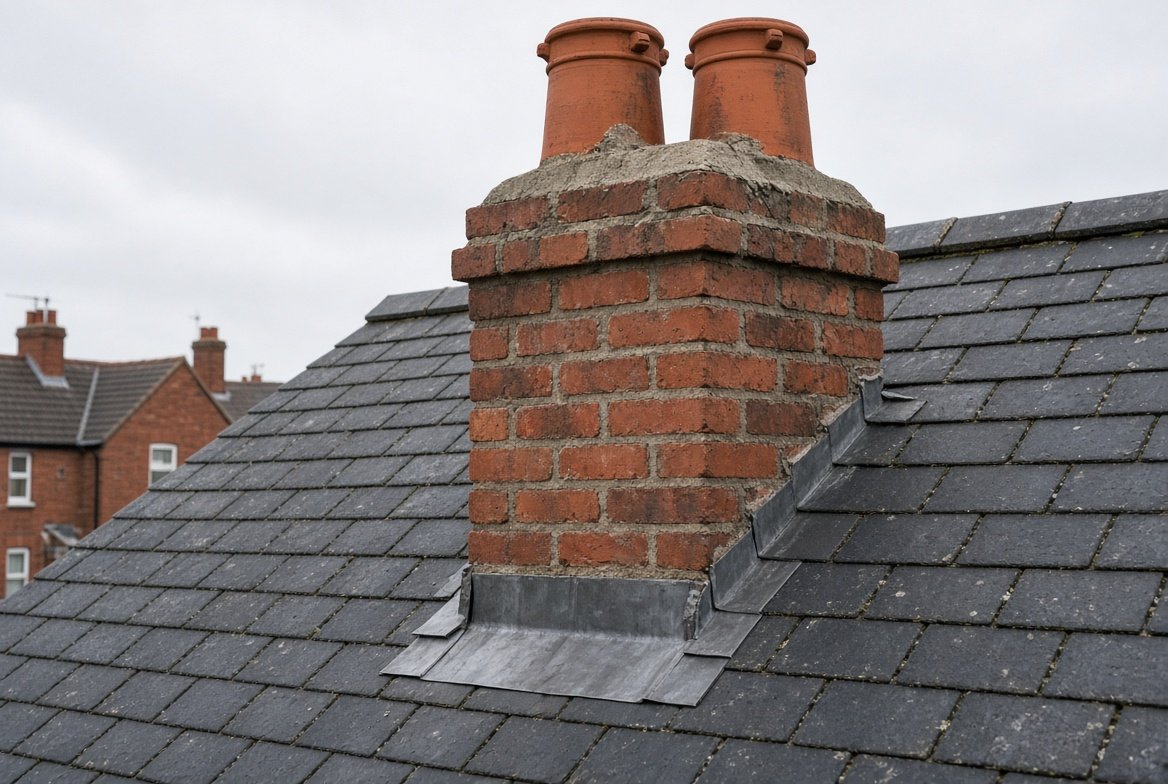
The chimney stack is the most exposed masonry on a house. It sticks up above the roof with wind-driven rain hitting every face, frost working into wet brick all winter and hot, acidic flue gases attacking the mortar from the inside. It is no surprise that chimneys are one of the most common sources of roof leaks, damp patches on chimney breasts and falling debris. This guide explains the signs of chimney trouble, the main repairs, what each one involves, typical UK costs, when removal makes sense and the safety points that matter.
Why Chimney Stacks Fail
- Weather exposure. The stack has no shelter, so rain soaks the brick and mortar and frost cracks them.
- Weak or failed mortar. Joints erode over decades, especially on the windward side.
- Cracked flaunching. The mortar cap that holds the pots in place cracks and lets water in.
- Failing flashing. The lead or other flashing where the stack meets the roof corrodes, lifts or splits.
- Flue gases. Condensation and soot attack the inside of old unlined flues, particularly after a gas boiler or stove is fitted.
- Wrong repairs. Hard cement mortar on soft old brick traps moisture and makes the bricks flake.
Signs Your Chimney Needs Repair
- Crumbling or missing mortar between the bricks.
- Bricks flaking, cracking or spalling on the face.
- A visible lean, or cracks running through the stack.
- Cracked or broken flaunching around the pots.
- Loose, tilted or missing chimney pots.
- Damp patches or staining on the chimney breast inside the house.
- White salt deposits on the brickwork, which show that water is moving through it.
- Gaps, lifted edges or corrosion on the flashing.
- Soot or tar stains on walls near the chimney.
Damp near a chimney breast is more often caused by failed flashing than a failing stack, so the diagnosis matters before anyone quotes for a rebuild. Our dripping roof guide explains how to tell a leak from condensation.
The Parts of a Chimney Stack
- Stack: the brick or stone structure above the roof.
- Pots: the clay or metal pipes on top that carry smoke clear of the stack.
- Flaunching: the sloping mortar bed around the pots that sheds water.
- Flashing and tray: the lead, usually with a damp-proof tray, that seals the stack to the roof.
- Flue liner: the inner pipe, clay, concrete or stainless steel, that protects the brickwork from flue gases.
Common Chimney Repairs Compared
| Repair | What it involves | When it is needed |
|---|---|---|
| Repointing | Raking out loose mortar and refilling the joints | Eroded or crumbling joints |
| Re-flaunching | Removing the cracked cap and bedding the pots in new mortar | Cracked or crumbling mortar at the top |
| Flashing repair or renewal | Dressing or replacing the lead around the base | Leaks at the roof junction |
| Partial or full rebuild | Taking the stack down and rebuilding with new brick, pots and lead | Bricks failing, serious lean or structural damage |
| Flue lining | Fitting a liner inside the flue | New stove or boiler, or a damaged flue |
| Capping off or removal | Sealing a disused flue with a vented cap, or taking the stack away | Chimney no longer used |
Repointing
Repointing means cutting out loose mortar to a sound depth and filling the joints with new mortar. The mortar must suit the brick. Old soft bricks, especially in older homes, generally need a softer lime-based mortar, because hard cement can trap moisture and cause the brick faces to flake. Modern hard bricks tolerate cement mortar better. A good repoint can last for many years and is much cheaper than a rebuild.
Flaunching
The flaunching is the mortar cap around the pots, sloped to shed water. When it cracks, rain gets into the stack and the pots can loosen. Re-flaunching usually pairs well with repointing, since the access costs are shared.
Want a number specific to your roof?
Get matched with local roofers for a free, no obligation quote.
Flashing and the Lead Tray
Many chimney leaks come from the flashing, not the brickwork. The lead steps, aprons and trays seal the stack to the roof, and they can corrode, lift or crack. Our guide to lead flashing explains the types and how they are fitted, and our overview of roof flashing shows common failure points.
Rebuilding a Stack
When brickwork is badly weathered, cracked or leaning, repointing is no longer enough. A rebuild takes the stack down to a sound level, then rebuilds with new or reclaimed brick, new flaunching and pots, and usually new flashing. A rebuild above the roof is much simpler than rebuilding below the roofline, which involves the loft, the chimney breast and wall support.
Flue Lining and Disused Flues
A new stove or boiler normally needs a suitable flue liner. For a disused flue, capping it with a vented cap and a vent at the base lets air move through, which prevents damp. Sealing it completely can cause condensation and staining in the breast.
Chimney Removal
Removing the stack above the roof is relatively simple, and the roof is made good afterwards. Removing the chimney breast inside the house is much more involved, because the stack above and the floors may rely on it, and temporary and permanent supports are needed. Building regulations apply, a structural engineer is usually needed, and in terraced and semi-detached homes the stack is often shared with the neighbour, which brings the Party Wall Act into play. See our guide to terraced house roofs for how shared roofs and stacks work.
Chimney Repair Cost in the UK
Prices vary widely with access, stack size, condition and region, and sources differ, so treat these as general guides based on 2026 UK price guides. Scaffolding is often the biggest variable.
| Job | Typical range | Notes |
|---|---|---|
| Minor repointing patches | About £200 to £350 | Small areas, a few hours |
| Full stack repointing | About £450 to £1,600 | One to two days |
| Re-flaunching | About £150 to £600 | Cheaper when done with other work |
| Lead flashing repair or renewal | About £250 to £1,200 | A common leak source |
| Flue liner | About £600 to £1,500 | For stoves and some boilers |
| Rebuild above roof level | About £1,000 to £3,500 | Large stacks cost more |
| Remove stack above roof | About £900 to £2,200 | Plus making the roof good |
| Chimney breast removal with supports | About £2,500 to £6,000 or more | Needs engineer and building control |
| Scaffold to the stack | About £600 to £2,500 | Often a large share of the bill |
Because access is so expensive, it makes sense to combine chimney work with other jobs that need scaffolding, such as roof repairs or a re-roof. Our guide to new roof cost explains how scaffolding fits into larger projects. For leaks coming from the roof junction, see our roof leak repair cost guide. Ask for a quote that names the specific job, and whether scaffolding is included.
Leaning or Unsafe Chimneys
A visibly leaning stack, large cracks or loose bricks mean the chimney could fall. Keep people and pets away from the area below it, avoid using the fireplace and call a roofer or structural engineer quickly. After a storm, check for fallen bricks and loose pots. Home insurance may cover storm damage, so keep photos and receipts.
Gas, Solid Fuel and Carbon Monoxide
If a chimney serves a gas appliance, boiler or stove, repairs can affect how safely fumes escape. Carbon monoxide is odourless and dangerous, so fit working alarms, never block an in-use flue and use properly registered engineers for gas appliances. The Gas Safe Register lists registered gas engineers. Solid fuel stoves are normally installed and checked by a competent installer, and flues should be swept regularly.
DIY or Professional?
Chimney work is high, awkward and often involves heavy materials, so it should be left to experienced roofers or bricklayers with proper scaffolding. Do not climb a ladder onto the roof to examine or repair a stack. A safe way to check your chimney is to look from the ground with binoculars or a camera.
Safety and Asbestos
Working at height is dangerous. Chimneys are at roof or ridge level, so a full scaffold is the safest way to work. Falling bricks and mortar are a hazard to people below, so the area should be cordoned off.
Asbestos warning. Older flue pipes, cement flue sections, soffits and roof sheets near the chimney may contain asbestos. Do not drill, cut or break them, and get any suspect material identified by a competent surveyor before work.
Rules and Permissions
Repairs and rebuilds like for like normally do not need planning permission in England. Removing a chimney from a listed building or one in a conservation area usually needs consent, and chimney breast removal needs building regulations approval. Shared stacks involve the Party Wall Act. Scotland, Wales and Northern Ireland have their own systems, so check locally.
Frequently Asked Questions
How much does chimney repair cost?
As a general guide, from a few hundred pounds for repointing patches or flaunching to £1,000 to £3,500 or more for a rebuild, with scaffolding a major variable.
How do I know if my chimney needs repointing?
Look for crumbling or recessed mortar, loose bricks, white salt deposits and damp patches on the chimney breast inside.
What is flaunching?
It is the sloped mortar bed around the chimney pots at the top of the stack, which sheds water away from the flue.
Why is my chimney breast damp?
Often failed flashing, cracked flaunching or an uncapped flue letting rain in. Check these before assuming the stack needs rebuilding.
Can I remove my chimney?
Yes, but removing the breast is structural work needing an engineer, building regulations approval and, on shared stacks, party wall procedures. Removing only the stack above the roof is simpler.
Is a leaning chimney dangerous?
It can be. Keep clear, avoid using the fireplace and get a roofer or structural engineer to inspect it promptly.
Final Thoughts
Chimney repair is usually cheaper the earlier it is done. Diagnose the cause first, match the mortar to the brick, check the flashing and flaunching, and combine work to share scaffold costs. Do not take risks at height, check for asbestos on older homes, and never block a flue that serves a gas appliance or stove.
Get a professional assessment
If you are unsure how much life your current roof has left, a local roofer can give you an honest assessment as part of a free inspection. Browse vetted roofers through our roofer directory, or get a quick replacement estimate using our free cost calculator.