
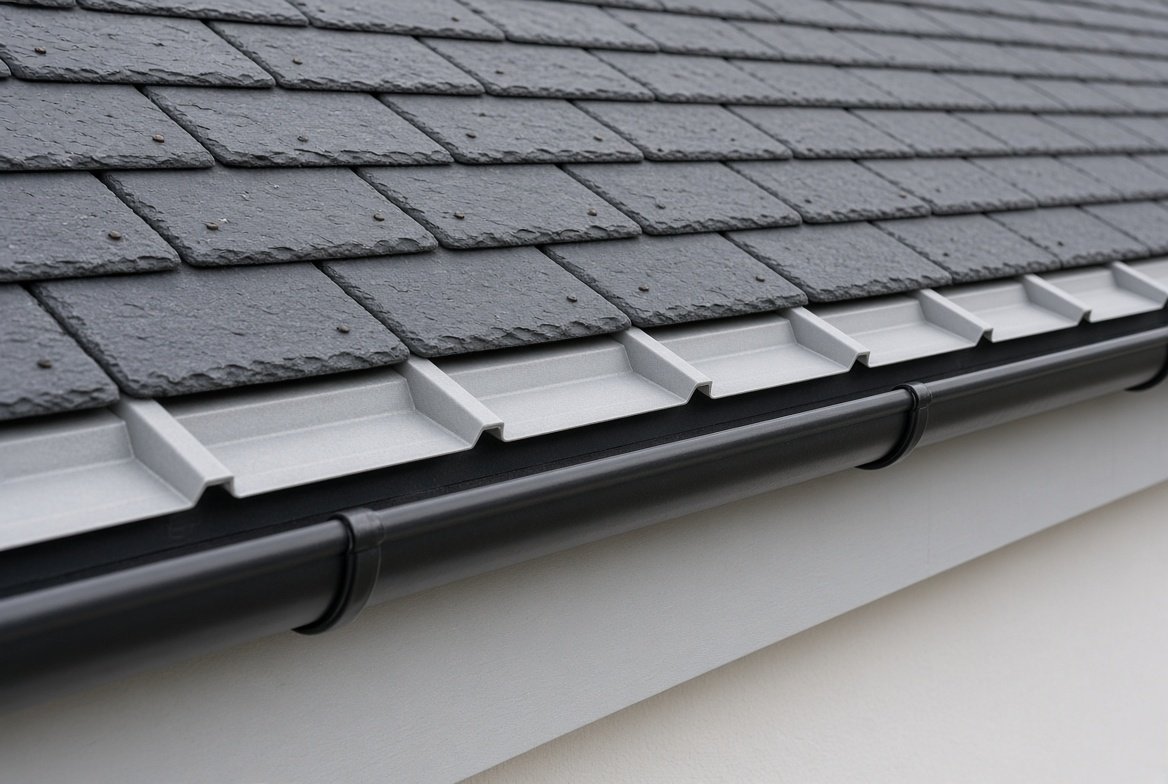
An eaves tray is a strip of plastic fitted at the bottom edge of a pitched roof. Its job is to support the roofing felt or underlay at the eaves and guide any water that gets under the tiles into the gutter. It is a small, cheap part, but it protects some of the most expensive timbers on the roof.
You will also see it called a felt support tray, eaves support tray, eaves protector or eaves protection tray. They all describe the same basic product. If you want to learn about the eaves themselves first, start with our guide on what eaves are.
What Is an Eaves Tray?
An eaves tray is a shaped piece of rigid plastic that sits on top of the fascia board and the ends of the rafters. The underlay lies on top of it and runs down into the gutter. Without the tray, the underlay has to span the gap between the last rafter and the gutter with nothing underneath, and it sags.
That sag is the problem. A dip in the underlay holds water instead of letting it run away. Over the years, this trapped water can soak the fascia and the rafter ends, and eventually cause rot.
Want a number specific to your roof?
Get matched with local roofers for a free, no obligation quote.
Eaves Tray vs Felt Support Tray vs Eaves Protector
The names are used interchangeably across the roofing trade and in builders’ merchants. Some manufacturers use slightly different names for slightly different products, for example:
- Eaves support tray / felt support tray: the standard tray that holds up the underlay at the eaves.
- Eaves protector / eaves protection tray: another name for the same thing, often used when the product is sold as a complete system.
- Tray with ventilation: some designs include slots or a gap that lets air move into the roof space. These are useful when the roof needs eaves ventilation but has no soffit vents.
When you are buying, read the product description rather than relying on the name. Check the size, whether it is suitable for your roof pitch, and whether it works with your type of underlay.
Why an Eaves Tray Matters
- It stops the underlay sagging. A supported underlay keeps its slope, so water runs straight into the gutter.
- It protects the fascia and rafter ends. Water that runs behind the fascia is a common cause of rot at the eaves.
- It reduces the chance of leaks and damp. Wind-driven rain and condensation can reach the eaves, and the tray gives it a clear path out.
- It helps the gutter do its job. If the underlay dips into the gutter or misses it, rainwater can overshoot or run behind it. For more on gutters, see our guide to roof valleys and guttering.
- It helps meet good practice. Manufacturers and roofing standards expect the underlay to be properly supported at the eaves.
How an Eaves Tray Is Fitted
The exact method depends on the product and on whether you are fitting it during a new roof or a repair, so always follow the manufacturer’s instructions. In general, the steps look like this:
- Check the eaves. The fascia and rafter ends need to be sound. Rotten timber must be repaired or replaced first.
- Fix the tray. It is laid on the rafter ends or the top of the fascia, and fixed with nails or screws at each rafter.
- Overlap the lengths. Each piece overlaps the next by the amount stated by the manufacturer, so water cannot run between them.
- Lay the underlay over the tray. It should run down and finish so that the water discharges into the gutter. Our guide to roof felt and underlay explains the types and how they are laid.
- Fix the battens and tiles. Battens go on top, with the first batten set at the right height for the first row of tiles. Read more in our roof battens guide.
Fitting on an Existing Roof
Adding a tray to an existing roof is harder, because the first few rows of tiles, the underlay and sometimes the gutter have to be lifted to get at the rafter ends. It is a job for a roofer, and it is often done at the same time as replacing the fascia and soffit, or while re-roofing. If your gutter is already overflowing or you can see stains on the fascia, mention it when you ask for quotes.
Eaves Trays and Ventilation
The eaves are also where air normally enters the roof space. A tray must never block the airflow. Check that there is a clear route for air to move in at the soffit or through an over-fascia vent, and that insulation in the loft does not get pushed against the eaves and cut it off. Our roof ventilation guide explains how much airflow a roof typically needs and the options for providing it.
Common Mistakes
- Leaving the tray out altogether. This is the most common issue on older roofs, and it shows up as sagging underlay at the eaves.
- Underlay that stops short of the gutter. Water then runs behind the fascia instead of into the gutter.
- Trays that are too short or unsupported. The tray needs fixing at every rafter, or it can sag as well.
- Blocking ventilation. A tray, insulation or a bird guard that closes off the air path leads to condensation in the roof space.
- Not checking the timber first. Fitting a tray over rotten fascia just hides the problem.
Signs You May Need an Eaves Tray
- Underlay visibly sagging or dipping at the eaves when seen from the loft.
- Dark stains or rot on the fascia board or at the rafter ends.
- Gutters that overflow or have water running down behind them.
- Damp patches on the loft timbers near the eaves.
These can have other causes too, such as blocked gutters or slipped tiles. If you are not sure where water is getting in, our article on how to fix a leaking roof can help you narrow it down.
Frequently Asked Questions
What is an eaves tray?
It is a plastic support that sits at the bottom edge of a pitched roof, holding the underlay in place and guiding water into the gutter.
What is the difference between an eaves tray and an eaves protector?
In most cases, none. The terms are used for the same type of product. Always check the product details, as some designs include ventilation features.
Do I need an eaves tray?
If your roof has underlay that runs into a gutter, then yes, it should be supported. Without a tray, the underlay can sag, hold water and damage the fascia and rafter ends over time.
Can I fit an eaves tray myself?
Fitting one on a new roof is straightforward for an experienced builder. On an existing roof it means lifting tiles at the eaves, and working at height, so it is usually best left to a qualified roofer.
Do eaves trays affect ventilation?
They can if they are fitted badly or if insulation or bird guards block the air path. Choose a design that keeps ventilation clear, and check the airflow after the work is done.
Final Thoughts
An eaves tray costs very little compared with the timber and gutter repairs it can help prevent. If you are re-roofing, make sure your quote includes proper eaves support, and keep the airflow clear. If your roof is older and shows stains or sagging at the eaves, it is worth asking a roofer to take a look.
Get a professional assessment
If you are unsure how much life your current roof has left, a local roofer can give you an honest assessment as part of a free inspection. Browse vetted roofers through our roofer directory, or get a quick replacement estimate using our free cost calculator.