
A leaking roof rarely announces itself clearly. Water often enters at one point and travels along beams, felt, or insulation before finally showing up as a stain somewhere else entirely, which is why so many leaks get misdiagnosed at first. Here is how to actually find the source, what to do immediately, and when the job genuinely needs a professional.
The most common causes
- Slipped, cracked, or missing tiles. The single most common cause. A tile only needs to move a few millimetres to break the waterproof overlap with the tile below it, letting rain straight through to the underlay
- Failed flashing. Lead or other flashing around chimneys, walls, and valleys corrodes or lifts over time, especially on older properties. Our roof flashing guide covers this in more detail
- Blocked or overflowing gutters. Water that cannot drain away backs up and can find its way into the roof structure instead
- Cracked ridge mortar. On older, mortar-bedded ridges, cracking allows water in at the very top of the roof, one reason dry ridge systems have largely replaced mortar on modern roofs
- Failing flat roof membrane. Felt, GRP, or EPDM coverings can split, blister, or pull away as they age, particularly where water has been pooling
Is it actually a leak, or condensation?
Before assuming the roof covering has failed, it is worth ruling out condensation, which can look similar but has a completely different cause and fix. If the damp patch appears during cold, dry weather rather than during or after heavy rain, or if you notice widespread light moisture rather than a single wet track, condensation from poor ventilation is a more likely explanation than an actual breach in the roof covering.
How to find the source of a leak
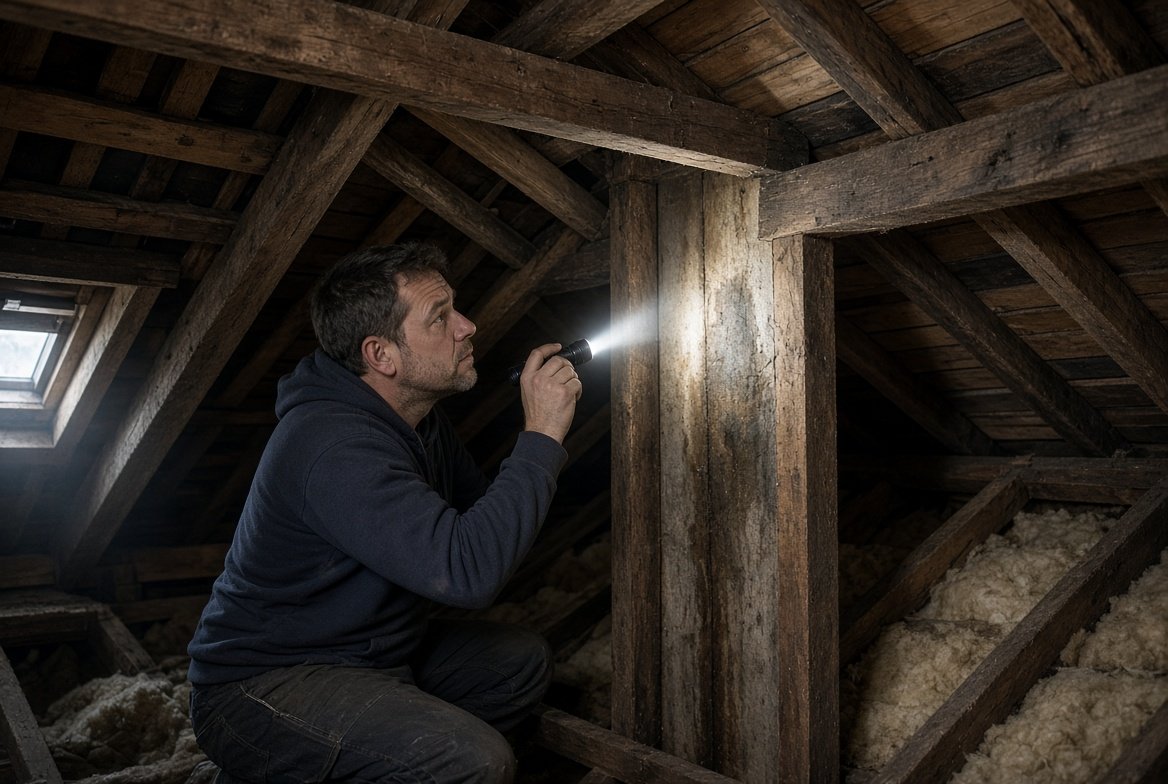
- Check the loft during or shortly after rain, using a torch to look for a visible wet track along rafters, felt, or insulation
- Remember that water travels. The point where it is dripping or staining inside is often not directly below the actual entry point on the roof, sometimes it has run several feet along a beam first
- From ground level, look for slipped or missing tiles, debris sitting in the gutters, and any obviously lifted or damaged flashing around chimneys and walls
- Avoid getting onto the roof itself to inspect closely. Tracing the exact entry point at height is safer left to a roofer with proper access equipment
What to do immediately
- Move furniture and valuables away from the affected area
- Place a bucket under an active drip, and use towels or waterproof sheeting to contain water spreading further
- If water is visibly pooling above a ceiling and the ceiling is starting to bulge, it is safer to pierce a small controlled hole to let it drain than to risk the ceiling collapsing under the weight
- For a small, accessible flat roof leak, a temporary patch with roofing mastic or repair tape can hold until a proper repair is arranged, but this is a short-term measure only, not a fix
Is a leaking roof an emergency
It depends on how much water is coming in. Active, heavy ingress during a storm that threatens ceilings, insulation, or electrics close to water is worth an urgent call-out. A slow stain that only appears during heavy rain is not usually an emergency and can wait for a scheduled repair, though it should not be ignored either, since even small leaks gradually rot structural timber if left unaddressed for long enough.
DIY or call a professional
Ground level inspection, clearing debris from gutters, and containing water indoors are all reasonable for a homeowner to handle. Actual repair work on the roof itself, replacing tiles, resealing flashing, or patching a membrane properly, generally needs a professional, both for safety reasons and because a poor DIY repair can sometimes make the underlying problem harder to diagnose later. You can compare quotes from vetted local roofers through our roofer directory. Our maintenance checklist also covers the regular checks that catch most of these issues before they turn into an active leak in the first place.
Want a number specific to your roof?
Get matched with local roofers for a free, no obligation quote.
Frequently asked questions
What is the most common cause of a roof leak in the UK?
Slipped, cracked, or missing tiles are the most frequent cause, followed closely by failed flashing around chimneys and walls, particularly on older properties.
Can I find a roof leak myself?
You can often narrow it down significantly with a loft inspection during rain and a check of the roof from ground level, but tracing the exact entry point on the roof itself is safer left to a roofer.
How much does it cost to fix a leaking roof?
This varies enormously depending on the cause, from a simple tile replacement to a full flashing or membrane repair. Getting an itemised quote helps you understand exactly what you are paying for.
Will home insurance cover a leaking roof?
This depends on the cause. Sudden storm damage is often covered, while gradual wear and lack of maintenance generally is not. Check your specific policy terms, and keep records of any inspections or repairs.
This guide is independent editorial content. It is not sponsored.
Get a professional assessment
If you are unsure how much life your current roof has left, a local roofer can give you an honest assessment as part of a free inspection. Browse vetted roofers through our roofer directory, or get a quick replacement estimate using our free cost calculator.