
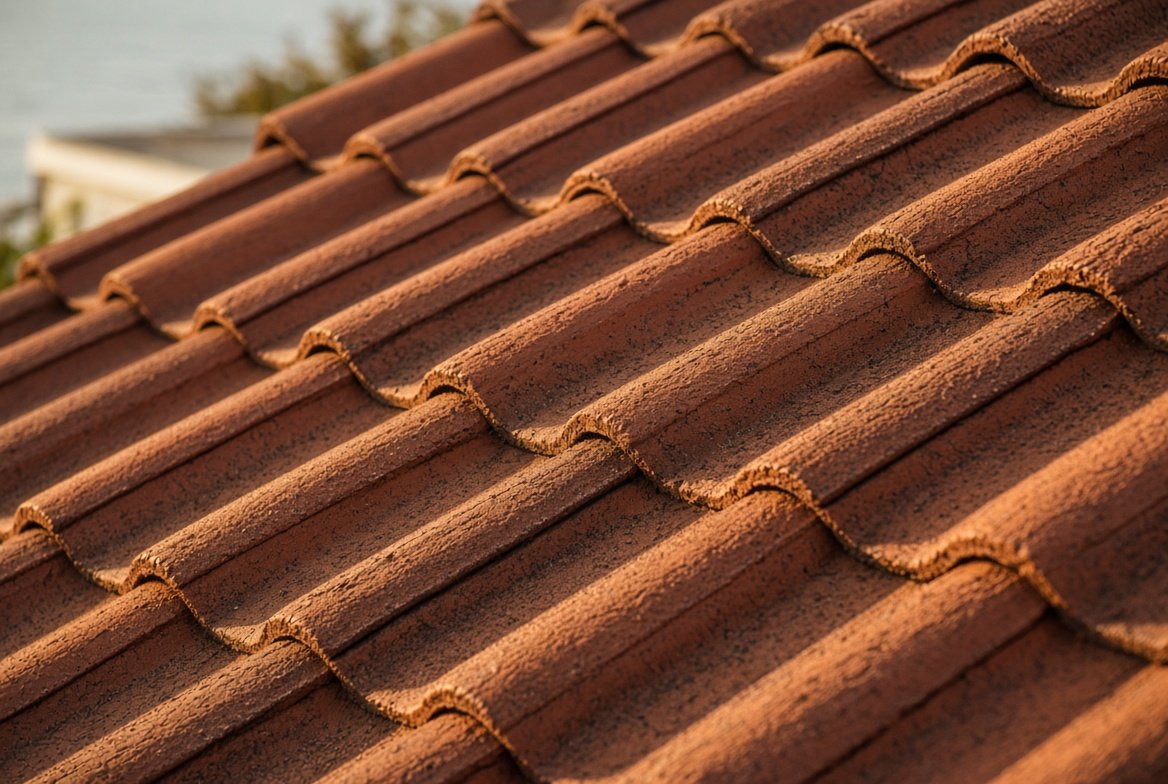
Clay has been used to cover roofs in Britain for centuries, and the variety on offer is wider than most homeowners realise. Drive from Kent up to Norfolk and you will see quite different clay roofs, shaped by local tradition as much as by looks. Here is how the main types compare, and which suits which kind of property.
Why clay tiles remain popular
Clay tiles are made from fired natural clay, and the colour runs right through the tile rather than sitting on the surface as a coating. That is why a clay roof tends to weather gracefully, developing a richer patina over time rather than fading the way some concrete tiles do. Well installed and kept clear of moss and debris, clay tiles can last well over 60 years, and many Victorian clay roofs are still performing perfectly today. Our wider guide to roof tile materials compares clay against concrete, slate, and composite options.
Plain clay tiles
The classic British roof tile. Plain tiles are small, flat, and typically around 265mm by 165mm, laid in a double-lap pattern, meaning every point on the roof is covered by at least two layers of tile. They are the traditional choice for cottages, farmhouses, and Victorian terraces across southern and eastern England. Because of the double-lap laying, they need a fairly steep roof pitch, generally 35 degrees or more, which is worth bearing in mind if your roof is shallower.
Clay pantiles
Pantiles have a distinctive S-shaped profile, with a roll and trough pattern that gives the roof a strongly textured, wavy look. The design has Dutch origins and reached Britain through trade routes in the 17th century, which is why pantiles are so closely associated with the east coast, particularly East Anglia, Lincolnshire, the East Midlands, and parts of the North East. They are laid as a single lap, so they are larger than plain tiles, quicker to fit, and can work on lower pitches, from around 22.5 to 30 degrees.
Want a number specific to your roof?
Get matched with local roofers for a free, no obligation quote.
Rosemary clay tiles
Rosemary is one of the best known names in UK clay roofing. These are slightly smaller than a standard plain tile, and they became popular in the late 19th and early 20th centuries, when machine made clay tiles began to replace handmade ones. Rosemary tiles are still widely specified today, especially in the South East, for period property restorations and for new builds that need to keep a heritage character. With correct installation they commonly last 70 years or more.
Handmade clay tiles
At the premium end, handmade clay tiles are individually crafted, with natural variation in colour and texture from one tile to the next. They are the most expensive option, but often the most authentic for listed buildings and sensitive conservation area work, where a machine made tile would look noticeably too uniform.
Interlocking clay tiles
A more modern option. Larger interlocking clay tiles cover more area per tile, need fewer tiles overall, and cost less to lay than traditional plain tiles, while still giving a clay finish. Many proprietary interlocking designs can be used on lower pitches, roughly 15 to 22 degrees, which opens clay up to roofs that could not take plain tiles.
Comparison at a glance
| Type | Minimum pitch | Typical lifespan | Best for |
|---|---|---|---|
| Plain clay tile | About 35 degrees | 60 to 100 years | Period homes, southern and eastern England |
| Clay pantile | About 22.5 to 30 degrees | 60 to 100 years | East coast, East Anglia, Lincolnshire |
| Rosemary tile | About 35 degrees | 70 years or more | South East period restorations |
| Handmade clay | Depends on profile | 50 to 100 years | Listed buildings, conservation areas |
| Interlocking clay | About 15 to 22 degrees | Comparable to plain clay | Lower pitch roofs, larger budgets |
Minimum pitch is one of the key limits when choosing a tile, covered in more detail in our pitched roof guide. Always check the specific manufacturer’s minimum for the exact product being used.
How much do clay tiles cost
Clay costs more than concrete, though the gap depends heavily on the type. Individual machine made plain tiles from major manufacturers are relatively inexpensive per tile, but the total installed price rises with the labour involved, since small plain tiles take longer to lay than large interlocking ones. Handmade clay sits at the top of the range, commonly quoted between roughly £125 and £275 per square metre for labour and materials combined. On older properties, a structural assessment before re-roofing with clay is worth doing, since clay is heavy and the roof timbers need to carry the load.
Matching your area and property
Even without formal planning restrictions, choosing tiles that suit local building traditions helps a property blend in with its surroundings. Pantiles dominate the east coast, plain tiles are far more common in the south, and in conservation areas or listed buildings the choice is often set for you by the planning authority.
Frequently asked questions
How long do clay roof tiles last?
Typically 60 to 100 years, and sometimes well over a century with regular maintenance such as clearing moss and debris.
What is the difference between plain tiles and pantiles?
Plain tiles are small, flat, and laid in a double-lap pattern. Pantiles are larger, S-shaped, and laid as a single lap, which makes them quicker to fit and suitable for slightly lower pitches.
Are clay tiles better than concrete tiles?
They generally last longer and hold their colour better, but they cost more and are often heavier to install. Concrete remains the more affordable and more common choice for standard re-roofs.
Can I use clay tiles on a low pitch roof?
Traditional plain clay tiles need a steep pitch, usually 35 degrees or more, but interlocking clay tiles are designed to work at lower pitches, so check the exact product specification for your roof.
This guide is independent editorial content. It is not sponsored.
Get a professional assessment
If you are unsure how much life your current roof has left, a local roofer can give you an honest assessment as part of a free inspection. Browse vetted roofers through our roofer directory, or get a quick replacement estimate using our free cost calculator.